

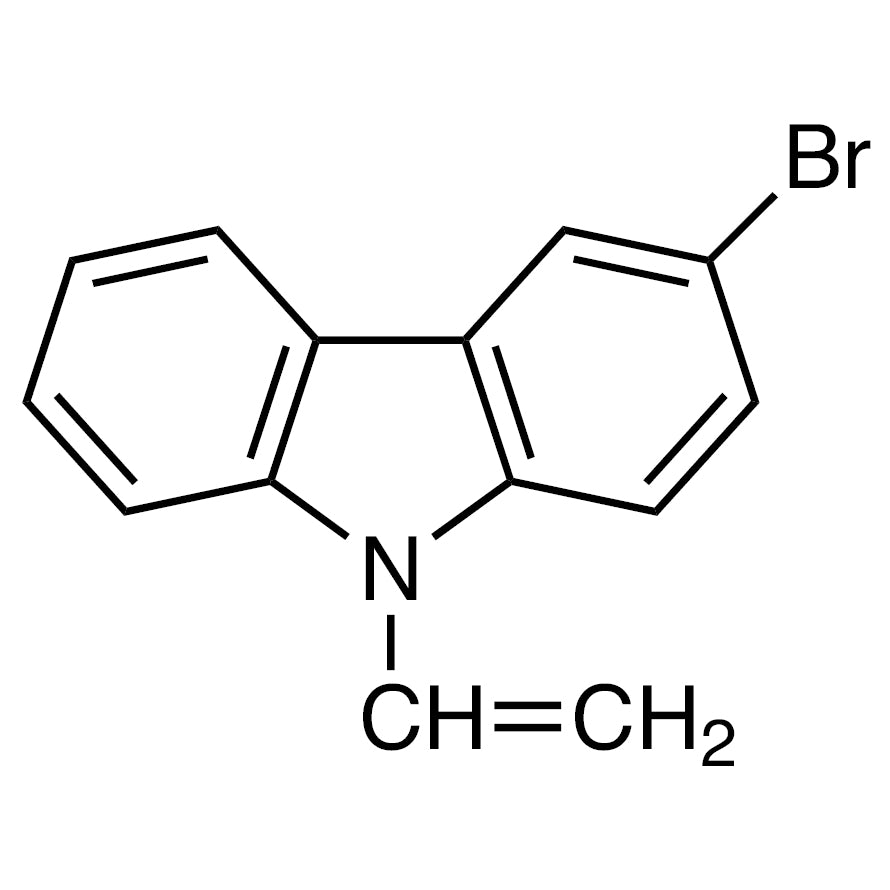
3-Bromo-9-vinyl-9H-carbazole is a chemical compound widely used in materials research, particularly in the development of organic semiconductor materials. This compound plays a crucial role in the synthesis of advanced electronic materials, offering a versatile platform for chemical modification. Its unique molecular structure enables it to be tailored for various technological applications, making it an essential component in modern material science laboratories. Due to its reactivity and structural flexibility, it is frequently employed in the creation of novel materials with specific electronic properties.
The compound's chemical properties, including the presence of bromo and vinyl groups, contribute to its reactivity and adaptability in synthetic processes. These functional groups allow for a wide range of chemical transformations, making it a preferred choice for researchers aiming to develop new materials with tailored properties. Additionally, its molecular stability under certain conditions ensures reliable performance during synthesis and application. These characteristics make it a valuable tool in the hands of scientists working on cutting-edge material innovations.
In Indonesian laboratories, 3-Bromo-9-vinyl-9H-carbazole is commonly used in the study of organic semiconductors. Researchers in Indonesia rely on this compound for its ability to facilitate the synthesis of materials with unique electronic properties. It is particularly useful in the development of optoelectronic devices and solar cell technologies. Its availability through AMI Scientific ensures that Indonesian institutions can access this essential material for their research and development efforts.
TCI brochures (PDF)
- Monomers 2025-05-28 · p. 13
- Building Blocks for Organic Semiconductor 2026-03-24 · p. 19
Related TCI products
- TCI A3812 3998-04-7 9-Allyl-9H-carbazole
- TCI D5426 1214-16-0 3,6-Dibromo-9-vinyl-9H-carbazole
- TCI D5425 1438252-33-5 2,7-Dibromo-9-vinyl-9H-carbazole
- TCI B5502 750573-24-1 9,9'-(5-Bromo-1,3-phenylene)bis(9H-carbazole)
- TCI B5471 177775-87-0 9-Benzoyl-3-bromo-9H-carbazole
- TCI B5461 339576-55-5 9-Benzyl-3-bromo-9H-carbazole
- Organic Semiconductor Development: This compound is ideal for creating organic semiconductors due to its structural versatility and reactivity, enabling the synthesis of materials with tailored electronic properties.
- Optoelectronic Device Fabrication: Its chemical flexibility allows for the design of materials used in optoelectronic devices, where precise electronic behavior is essential.
- Solar Cell Research: The compound's ability to undergo chemical modification makes it suitable for the development of advanced solar cell materials with enhanced performance.
- Material Modification Studies: Its reactive functional groups make it a valuable tool for studying chemical modifications that can improve material properties.
- Advanced Electronic Material Synthesis: The compound's structural characteristics support the synthesis of complex electronic materials used in next-generation technologies.
| Brand | TCI |
|---|---|
| CAS number | 46499-01-8 |
| Molecular formula | — |
| Purity | — |
| Category | Materials Science > Material Building Blocks > Small Molecule Semiconductor Building Blocks |
| Pack sizes | Available in standard laboratory quantities |
| Physical form | Solid (as per standard product description) |
| Storage | Store in a cool, dry place away from light and moisture |
This compound should be stored in a cool, dry environment, away from direct light and moisture to maintain its chemical integrity. It is recommended to use airtight containers made of glass or high-density polyethylene to prevent contamination and degradation. Due to its reactivity, it should be handled with care in a well-ventilated laboratory setting, using appropriate personal protective equipment such as gloves and safety goggles. Avoid exposure to incompatible substances and ensure proper disposal procedures are followed to comply with safety regulations. Regular monitoring of storage conditions is advised to ensure the material remains stable and suitable for use in research applications.
—
Produk Terkait
-
9-Allyl-9H-carbazole TCI A3812
Regular price From Rp 2.068.500,00Regular priceRp 1.461.600,00Sale price From Rp 2.068.500,00 -
3,6-Dibromo-9-vinyl-9H-carbazole TCI D5426
Regular price Rp 4.081.350,00Regular priceRp 2.869.650,00Sale price Rp 4.081.350,00 -
2,7-Dibromo-9-vinyl-9H-carbazole TCI D5425
Regular price Rp 3.870.300,00Regular priceRp 2.721.600,00Sale price Rp 3.870.300,00 -
9,9'-(5-Bromo-1,3-phenylene)bis(9H-carbazole) TCI B5502
Regular price From Rp 2.835.000,00Regular priceRp 1.998.150,00Sale price From Rp 2.835.000,00 -
9-Benzoyl-3-bromo-9H-carbazole TCI B5471
Regular price Rp 1.934.100,00Regular priceRp 1.368.150,00Sale price Rp 1.934.100,00 -
9-Benzyl-3-bromo-9H-carbazole TCI B5461
Regular price From Rp 1.563.450,00Regular priceRp 1.108.800,00Sale price From Rp 1.563.450,00 -
9-Benzyl-2-bromo-9H-carbazole TCI B5460
Regular price From Rp 1.856.400,00Regular priceRp 1.313.550,00Sale price From Rp 1.856.400,00 -
9-(2'-Bromo-4-biphenylyl)carbazole TCI B5312
Regular price From Rp 1.008.000,00Regular priceRp 720.300,00Sale price From Rp 1.008.000,00


