

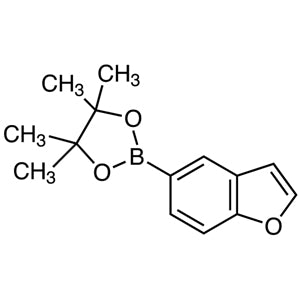
2-(Benzofuran-5-yl)-4,4,5,5-tetramethyl-1,3,2-dioxaborolane is an organoboron compound widely used in organic chemistry laboratories for its versatility in chemical reactions. This reagent plays a crucial role in the synthesis of complex organic molecules, particularly in the development of heterocyclic and aromatic compounds. Its unique structure, containing a boron atom, makes it an essential component in various synthetic pathways. Due to its reactivity and stability under controlled conditions, it is a go-to reagent for researchers aiming to create intricate molecular structures.
The compound's chemical properties, including its reactivity in coupling reactions like the Suzuki-Miyaura reaction, make it a preferred choice for synthetic chemists. The presence of the boron atom allows for efficient participation in substitution reactions and bond formation, enhancing the efficiency of synthetic processes. Its stability in certain conditions ensures that it remains viable for use in multiple experimental setups. These characteristics make it a reliable and effective reagent in both academic and industrial research environments.
In Indonesian laboratories, this compound is commonly used in organic chemistry research, especially in the synthesis of heterocyclic and aromatic compounds. It is a key reagent in the development of pharmaceuticals, industrial chemicals, and other complex molecules. Many research institutions and universities in Indonesia rely on this compound for its ability to facilitate complex chemical transformations. Its application is widespread in both academic and applied research settings, supporting a variety of chemical investigations.
TCI brochures (PDF)
- Suzuki-Miyaura Cross Coupling Reaction 2025-12-01 · p. 18
- Boron Compounds 2025-10-07 · p. 20
- Building Blocks for Organic Semiconductor 2026-03-24 · p. 23
Related TCI products
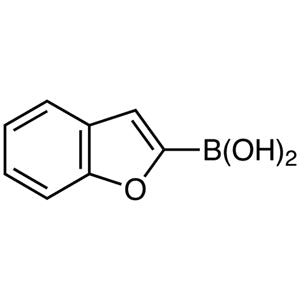
- TCI B2978 98437-24-2 Benzofuran-2-boronic Acid (contains varying amounts of Anhydride)
- TCI T3875 1080632-76-3 2-([1,1':4',1''-Terphenyl]-4-yl)-4,4,5,5-tetramethyl-1,3,2-dioxaborolane
- TCI T3674 922518-84-1 4,4,5,5-Tetramethyl-2-[10-(2-naphthyl)anthracen-9-yl]-1,3,2-dioxaborolane
- TCI T3665 460347-59-5 4,4,5,5-Tetramethyl-2-(10-phenylanthracen-9-yl)-1,3,2-dioxaborolane
- TCI T3322 890042-13-4 4,4,5,5-Tetramethyl-2-(triphenylen-2-yl)-1,3,2-dioxaborolane
- TCI T3306 1149804-35-2 4,4,5,5-Tetramethyl-2-[10-(1-naphthyl)anthracen-9-yl]-1,3,2-dioxaborolane
- Organic synthesis of heterocyclic compounds due to its reactivity in coupling reactions and structural versatility.
- Development of pharmaceuticals and industrial chemicals through efficient bond formation and substitution reactions.
- Research in aromatic compound synthesis where stable and reactive reagents are required for complex molecular structures.
- Support for academic research in chemical engineering and medicinal chemistry for advanced synthetic pathways.
- Use in industrial applications for the production of specialty chemicals requiring precise and controlled chemical reactions.
| Brand | TCI |
|---|---|
| CAS number | 519054-55-8 |
| Molecular formula | — |
| Purity | — |
| Category | Chemistry > Organometallic Reagents > Organoboron [Organometallic Reagents] |
| Pack sizes | — |
| Physical form | — |
| Storage | Store in a cool, dry place away from moisture and direct sunlight |
This compound should be stored in a cool, dry place, away from moisture and direct sunlight to maintain its stability and reactivity. It is recommended to use airtight containers to prevent exposure to air and humidity, which may affect its chemical integrity. General laboratory precautions include handling with care to avoid contamination and ensuring proper ventilation when working with it. Due to its reactivity, it should be stored separately from strong oxidizing agents and incompatible materials. Always follow standard safety protocols when handling organoboron compounds to ensure a safe laboratory environment.
—
Produk Terkait
-
Benzofuran-2-boronicAcid(containsvaryingamountsofAnhydride) TCI B2978
Regular price Rp 1.035.300,00Regular price -
2-([1,1':4',1''-Terphenyl]-4-yl)-4,4,5,5-tetramethyl-1,3,2-dioxaborolane TCI T3875
Regular price Rp 3.340.050,00Regular price -
4,4,5,5-Tetramethyl-2-[10-(2-naphthyl)anthracen-9-yl]-1,3,2-dioxaborolane TCI T3674
Regular price From Rp 2.625.000,00Regular price -
4,4,5,5-Tetramethyl-2-(10-phenylanthracen-9-yl)-1,3,2-dioxaborolane TCI T3665
Regular price From Rp 3.976.350,00Regular price -
4,4,5,5-Tetramethyl-2-(triphenylen-2-yl)-1,3,2-dioxaborolane TCI T3322
Regular price From Rp 3.949.050,00Regular price -
4,4,5,5-Tetramethyl-2-[10-(1-naphthyl)anthracen-9-yl]-1,3,2-dioxaborolane TCI T3306
Regular price Rp 3.949.050,00Regular price -
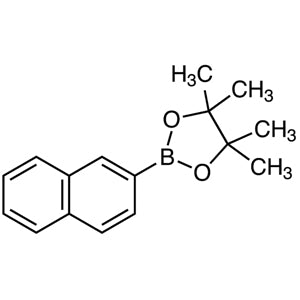
4,4,5,5-Tetramethyl-2-(2-naphthyl)-1,3,2-dioxaborolane TCI T3298
Regular price From Rp 823.200,00Regular price -
4,4,5,5-Tetramethyl-2-[3-(triphenylen-2-yl)phenyl]-1,3,2-dioxaborolane TCI T3261
Regular price From Rp 2.041.200,00Regular price
![1080632-76-3 2-([1,1':4',1''-Terphenyl]-4-yl)-4,4,5,5-tetramethyl-1,3,2-dioxaborolane - AMI Scientific](http://amiscientific.com/cdn/shop/files/TCI2510T3875.jpg?v=1769143785&width=533)
![922518-84-1 4,4,5,5-Tetramethyl-2-[10-(2-naphthyl)anthracen-9-yl]-1,3,2-dioxaborolane - AMI Scientific](http://amiscientific.com/cdn/shop/files/TCI2510T3674.jpg?v=1769143759&width=533)


![1149804-35-2 4,4,5,5-Tetramethyl-2-[10-(1-naphthyl)anthracen-9-yl]-1,3,2-dioxaborolane - AMI Scientific](http://amiscientific.com/cdn/shop/files/TCI2510T3306.jpg?v=1768206565&width=533)
![1149804-35-2 4,4,5,5-Tetramethyl-2-[10-(1-naphthyl)anthracen-9-yl]-1,3,2-dioxaborolane - AMI Scientific](http://amiscientific.com/cdn/shop/files/TCI2510T3306_761c4e0a-9900-459e-a40d-416dcd317ee9.jpg?v=1769058200&width=533)
![TCI T3261 1115639-92-3 4,4,5,5-Tetramethyl-2-[3-(triphenylen-2-yl)phenyl]-1,3,2-dioxaborolane — struktur kimia](http://amiscientific.com/cdn/shop/files/TCI2510T3261-struktur.jpg?v=1791525380&width=533)