Bis(2-bromophenyl)amine from TCI, also known as 2,2'-dibromodiphenylamine, is a secondary aromatic amine. Its structure consists of two phenyl rings, each carrying a bromine atom at the position ortho to the nitrogen atom. In organic synthesis laboratories, this compound is a highly useful building block for constructing cyclized heterocyclic frameworks. Because the two bromine atoms sit close to the NH group, a new ring bridging the two aromatic rings can be formed in one or more reaction steps.
The main advantage of this compound is that its functional groups are arranged precisely for double cyclization reactions. Both C–Br positions can react with a linking atom or group, for example through palladium- or copper-catalyzed coupling, or through lithiation followed by reaction with electrophiles such as boron, silicon, or phosphorus compounds. This route gives access to cyclized frameworks such as boron- or silicon-containing heteroacenes, as well as other nitrogen-based derivatives. The NH group can also be alkylated or arylated to adjust solubility and electronic properties.
In Indonesia, this compound is relevant to synthetic organic chemistry research groups at universities and research institutions. It suits groups working on new heterocyclic frameworks, on organic electronic materials built from heteroacene cores, and on methodology studies of metal-catalyzed coupling and lithiation. It also fits teaching laboratories and graduate research projects where a well-defined, doubly functionalized aromatic amine is needed as the starting point for multistep synthesis.
TCI brochures (PDF)
- Building Blocks for Organic Semiconductor 2026-03-24 · p. 31
Related TCI products
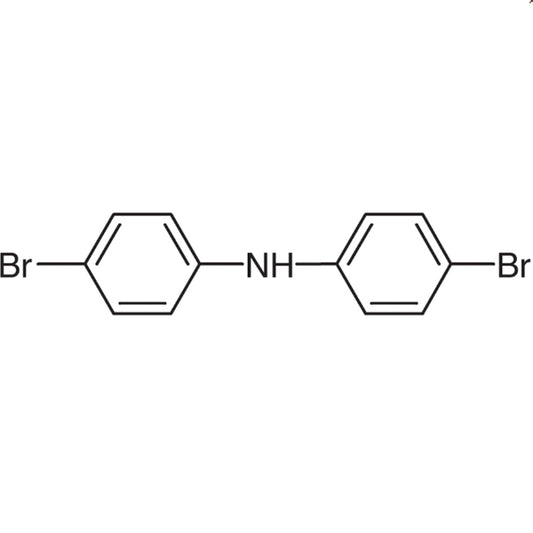
- TCI B2684 16292-17-4 Bis(4-bromophenyl)amine
- TCI D5801 1263001-82-6 9,9-Dimethyl-N-(naphthalen-2-yl)-9H-fluoren-2-amine
- TCI B5676 167218-39-5 N,N-Bis(4'-diphenylamino-4-biphenylyl)amine
- TCI T2898 33527-91-2 Tris[2-(dimethylamino)ethyl]amine
- TCI T1577 7528-78-1 Tris(2-cyanoethyl)amine
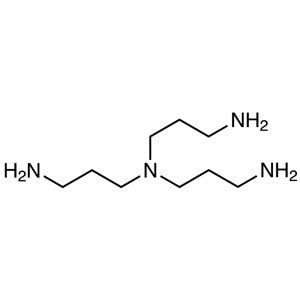
- TCI T1540 4963-47-7 Tris(3-aminopropyl)amine
- Synthesis of cyclized heterocyclic frameworks: the two ortho bromine atoms next to the NH group allow a new ring to be built that bridges both aromatic rings in one or more steps.
- Palladium- or copper-catalyzed coupling studies: both C–Br positions can react with linking atoms or groups, so the compound works well as a substrate for double coupling and ring-closing reactions.
- Preparation of boron- or silicon-containing heteroacenes: lithiation of both C–Br positions followed by reaction with boron or silicon electrophiles gives cyclized heteroacene cores.
- Phosphorus-bridged and other nitrogen-based derivatives: the same lithiation and electrophile approach can introduce phosphorus or other bridging units, extending the range of accessible nitrogen-containing frameworks.
- Tuning solubility and electronic properties: the NH group can be alkylated or arylated, so researchers can adjust how the final cyclized product dissolves and behaves electronically.
| Brand | TCI (product code B6972) |
|---|---|
| CAS number | 67242-17-5 |
| Molecular formula | — |
| Purity | — |
| Category | Chemistry > Building Blocks > Non-Heterocyclic Building Blocks |
| Pack sizes | please refer to the product page or contact AMI Scientific for available packaging |
| Physical form | refer to the manufacturer's certificate of analysis and safety data sheet |
| Storage | follow the manufacturer's label and safety data sheet recommendations |
Store Bis(2-bromophenyl)amine in its original, tightly closed container in a cool, dry, well-ventilated place, away from direct light, heat sources, and incompatible materials such as strong oxidizing agents. Glass containers with secure, chemically resistant caps are suitable for transfers. Handle the compound in a fume hood and wear standard personal protective equipment, including a lab coat, safety glasses, and chemical-resistant gloves. Avoid creating dust, breathing it in, or letting it touch your skin. Always read the manufacturer's safety data sheet before use, and dispose of residues as halogenated organic waste according to local regulations.
—
Produk Terkait
-
Bis(4-bromophenyl)amine TCI B2684
Regular price From Rp 637.350,00Regular priceRp 445.200,00Sale price From Rp 637.350,00 -
9,9-Dimethyl-N-(naphthalen-2-yl)-9H-fluoren-2-amine TCI D5801
Regular price From Rp 980.700,00Regular priceRp 685.650,00Sale price From Rp 980.700,00 -
N,N-Bis(4'-diphenylamino-4-biphenylyl)amine TCI B5676
Regular price From Rp 1.643.250,00Regular priceRp 1.164.450,00Sale price From Rp 1.643.250,00 -
Tris[2-(dimethylamino)ethyl]amine TCI T2898
Regular price From Rp 2.254.350,00Regular priceRp 1.576.050,00Sale price From Rp 2.254.350,00 -
Tris(2-cyanoethyl)amine TCI T1577
Regular price From Rp 2.914.800,00Regular priceRp 2.053.800,00Sale price From Rp 2.914.800,00 -
Tris(3-aminopropyl)amine TCI T1540
Regular price From Rp 6.599.250,00Regular priceRp 4.614.750,00Sale price From Rp 6.599.250,00 -
Tris[2-(2-methoxyethoxy)ethyl]amine TCI T1231
Regular price From Rp 1.351.350,00Regular priceRp 960.750,00Sale price From Rp 1.351.350,00 -
Bicyclo[1.1.1]pentan-1-amineHydrochloride TCI B5479
Regular price From Rp 3.790.500,00Regular priceRp 2.665.950,00Sale price From Rp 3.790.500,00