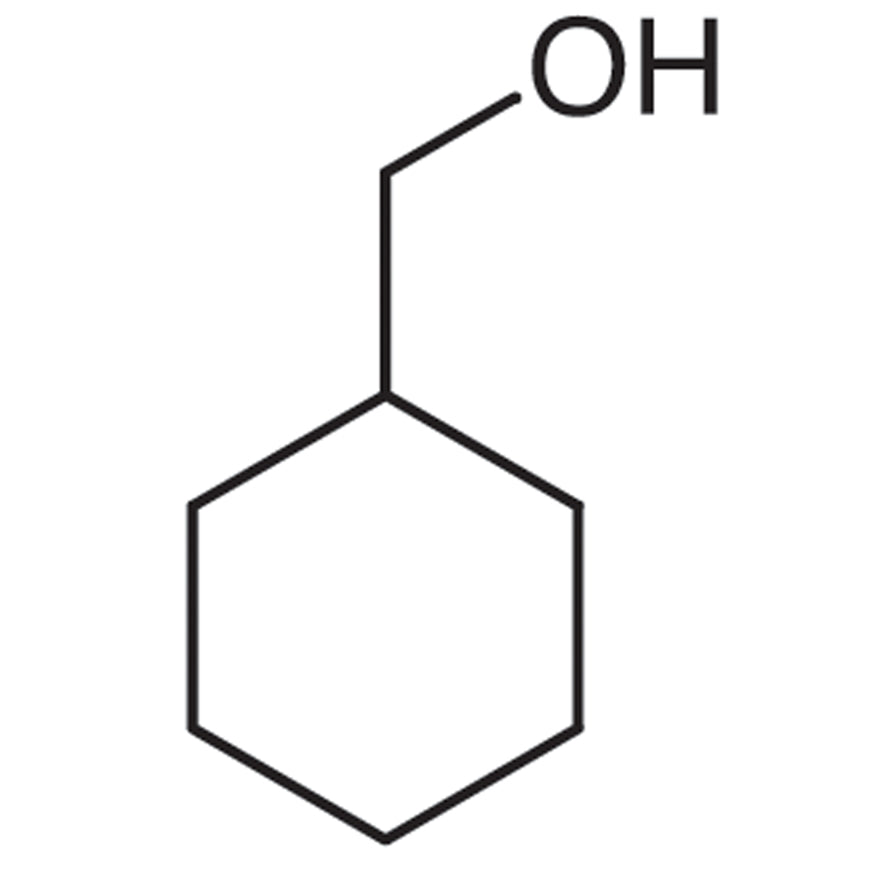
Cyclohexanemethanol from TCI is a primary alcohol consisting of a cyclohexane ring carrying a hydroxymethyl group (–CH2OH). It is classed as a non-heterocyclic building block and is a very versatile reagent in synthesis laboratories. It gives chemists a practical way to install the cyclohexylmethyl group, a saturated aliphatic fragment that often appears in medicinal chemistry, polymer chemistry, and fragrance research. Its simple structure and predictable reactivity make it common in both research projects and teaching practicals.
Chemists choose this material because its primary alcohol group is easy to modify. The hydroxyl group can be oxidized to an aldehyde or a carboxylic acid. It can also be esterified, converted to an ether, or turned into a halide or sulfonate leaving group for substitution reactions. The saturated cyclohexane ring adds lipophilicity and a three-dimensional shape. This helps researchers who want to replace a flat aromatic ring with an aliphatic counterpart to tune the solubility or other physicochemical properties of a target molecule. Because several pack sizes are offered, it is also easier to move from small-scale trials to larger batches.
In Indonesian laboratories, Cyclohexanemethanol suits organic synthesis research groups at universities and research institutes. It also fits medicinal chemistry teams preparing compound series and polymer or materials research groups that need a saturated alicyclic alcohol. Teaching laboratories can use it to demonstrate classic alcohol transformations. Because it comes from a well-known brand such as TCI, laboratories can work with consistent reagent quality across repeated experiments and project stages.
Related TCI products
- TCI M1412 34885-03-5 4-Methyl-1-cyclohexanemethanol (cis- and trans- mixture)
- TCI M1136 3143-02-0 3-Methyl-3-oxetanemethanol
- TCI H0420 770-71-8 1-Adamantanemethanol
- TCI E0546 3047-32-3 3-Ethyl-3-oxetanemethanol
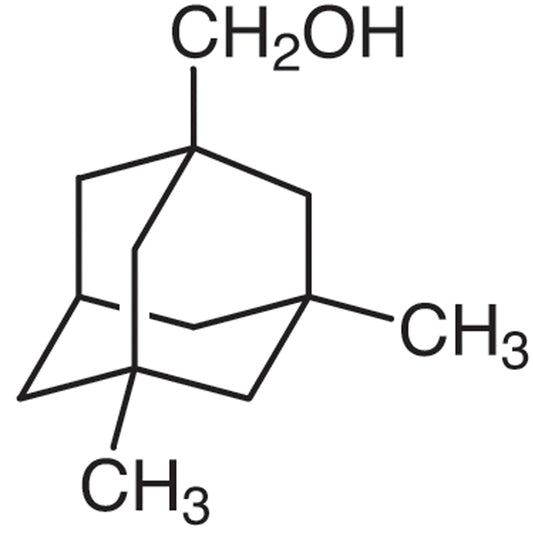
- TCI D3367 26919-42-6 3,5-Dimethyl-1-adamantanemethanol
- TCI C2658 3637-61-4 Cyclopentanemethanol
- Introducing the cyclohexylmethyl group: The primary alcohol gives a direct and convenient way to attach a saturated cyclohexylmethyl fragment to target molecules in multistep organic synthesis.
- Oxidation to aldehydes and carboxylic acids: Its primary hydroxyl group can be oxidized selectively, so it is a useful starting point for cyclohexane-based carbonyl compounds and acid derivatives.
- Preparing esters and ethers: The alcohol reacts readily in esterification and etherification, which makes it suitable for building derivatives used in polymer chemistry and fragrance research.
- Making leaving-group intermediates: Converting it to halides or sulfonates produces reactive intermediates for nucleophilic substitution, which extends its use as a flexible synthetic building block.
- Replacing aromatic rings in medicinal chemistry: Its saturated, three-dimensional ring lets researchers swap flat aromatic rings for an aliphatic counterpart to adjust the solubility and physicochemical properties of a molecule.
| Brand | TCI (product code C0595) |
|---|---|
| CAS number | 100-49-2 |
| Molecular formula | — |
| Purity | — |
| Category | Chemistry > Building Blocks > Non-Heterocyclic Building Blocks |
| Pack sizes | Several pack sizes available |
| Physical form | — |
| Storage | Follow the conditions on the TCI label and Safety Data Sheet |
- Chemical class: Primary alcohol with a cyclohexane ring and a hydroxymethyl (–CH2OH) group
Keep Cyclohexanemethanol in its original, tightly closed container in a cool, dry, well-ventilated area. Keep it away from heat, ignition sources, direct sunlight, and strong oxidizing agents. After opening, reseal the container promptly to limit exposure to moisture and air, and keep the original label visible. Handle the material in a fume hood or a well-ventilated area. Wear standard personal protective equipment, including safety glasses, chemical-resistant gloves, and a lab coat. Avoid contact with skin and eyes, and do not inhale vapors. Always check the TCI Safety Data Sheet for specific storage temperatures, hazard classifications, and disposal requirements, and follow your institution's chemical safety procedures.
—
Produk Terkait
-
4-Methyl-1-cyclohexanemethanol(cis-andtrans-mixture) TCI M1412
Regular price From Rp 2.227.050,00Regular priceRp 1.572.900,00Sale price From Rp 2.227.050,00 -
3-Methyl-3-oxetanemethanol TCI M1136
Regular price From Rp 928.200,00Regular priceRp 664.650,00Sale price From Rp 928.200,00 -
1-Adamantanemethanol TCI H0420
Regular price From Rp 662.550,00Regular priceRp 478.800,00Sale price From Rp 662.550,00 -
3-Ethyl-3-oxetanemethanol TCI E0546
Regular price From Rp 1.723.050,00Regular priceRp 1.220.100,00Sale price From Rp 1.723.050,00 -
3,5-Dimethyl-1-adamantanemethanol TCI D3367
Regular price From Rp 1.405.950,00Regular priceRp 998.550,00Sale price From Rp 1.405.950,00 -
Cyclopentanemethanol TCI C2658
Regular price From Rp 2.518.950,00Regular priceRp 1.776.600,00Sale price From Rp 2.518.950,00 -
Cyclobutanemethanol TCI C2061
Regular price From Rp 1.723.050,00Regular priceRp 1.220.100,00Sale price From Rp 1.723.050,00 -
Cyclopropanemethanol TCI C0982
Regular price From Rp 795.900,00Regular priceRp 572.250,00Sale price From Rp 795.900,00