3-Chlorobenzyl Alcohol from TCI is a benzylic alcohol with a chlorine atom at the meta position of the benzene ring. As a non-heterocyclic building block, it is a convenient source of the 3-chlorobenzyl group, a fragment found in many pharmaceutical, agrochemical, and fine chemical intermediate molecules. In synthesis laboratories, chemists usually convert it into an aldehyde, a benzyl halide, an ether, or an ester before building it into a target molecule. This makes it an important entry point for halogenated aromatic fragments in multistep synthetic routes.
Chemists choose this compound because it has two reactive sites that work well together. The benzylic hydroxyl group is fairly easy to oxidise or to turn into a leaving group, so substitution reactions at the benzylic position tend to proceed smoothly. The meta chlorine atom is stable under many reaction conditions. It can stay in the molecule as a structural feature that affects lipophilicity and electronic properties, or it can be used later in metal-catalysed coupling reactions. The meta substitution pattern is also useful in structure–activity relationship studies, where researchers compare the ortho, meta, and para isomers.
In Indonesia, 3-Chlorobenzyl Alcohol is used in university organic chemistry laboratories, pharmaceutical research and development units, and contract synthesis facilities that need reliable halogenated aromatic intermediates. Research groups working on medicinal chemistry, agrochemical development, or methodology studies often keep it on hand as a standard building block for preparing derivatives and analogue series. Because it comes from TCI, laboratories can expect consistent documentation and batch-to-batch quality, which supports reproducible results in academic theses, industrial process development, and publication-quality research work.
Related TCI products
- Oxidation to 3-chlorobenzaldehyde: the benzylic hydroxyl group oxidises readily, so this compound is a practical starting point for preparing the corresponding aldehyde for later condensation or reductive amination steps.
- Preparation of 3-chlorobenzyl halides: converting the hydroxyl group into a good leaving group produces reactive benzylic electrophiles used in alkylation reactions to install the 3-chlorobenzyl fragment.
- Ether and ester synthesis: the primary benzylic alcohol reacts cleanly in etherification and esterification, so it can be added to protecting-group schemes and to linker or side-chain construction in target molecules.
- Metal-catalysed cross-coupling: the meta chlorine stays intact through many earlier transformations and can then serve as a handle for palladium- or nickel-catalysed coupling to extend the aromatic framework.
- Structure–activity relationship studies: its meta substitution pattern lets medicinal and agrochemical researchers compare it directly with the ortho and para isomers to see how halogen position affects activity.
| Brand | TCI (product code C0650) |
|---|---|
| CAS number | 873-63-2 |
| Molecular formula | — |
| Purity | — |
| Category | Chemistry > Building Blocks > Non-Heterocyclic Building Blocks |
| Pack sizes | available in the pack sizes offered by TCI; contact AMI Scientific for current options |
| Physical form | see the TCI Certificate of Analysis and Safety Data Sheet for the batch supplied |
| Storage | keep the container tightly closed in a cool, dry, well-ventilated place, following the manufacturer's SDS |
Store 3-Chlorobenzyl Alcohol in its original tightly sealed container, in a cool, dry, well-ventilated area away from direct sunlight, heat sources, and strong oxidising agents. Use chemically compatible containers, such as amber glass or the manufacturer's original packaging, and label them clearly. Handle the material in a fume hood whenever possible and wear suitable personal protective equipment, including chemical-resistant gloves, safety glasses, and a laboratory coat. Do not inhale vapours or let the material touch your skin or eyes. Always read the current TCI Safety Data Sheet before use, and dispose of residues and contaminated materials according to institutional and local hazardous waste regulations.
—
Produk Terkait
-
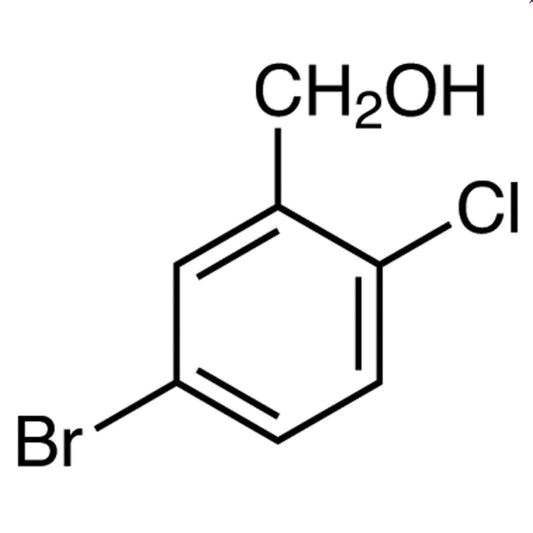
5-Bromo-2-chlorobenzylAlcohol TCI B3946
Regular price From Rp 743.400,00Regular priceRp 519.750,00Sale price From Rp 743.400,00 -
4-ChlorobenzylAlcohol TCI C0565
Regular price Rp 1.565.550,00Regular priceRp 1.094.100,00Sale price Rp 1.565.550,00 -
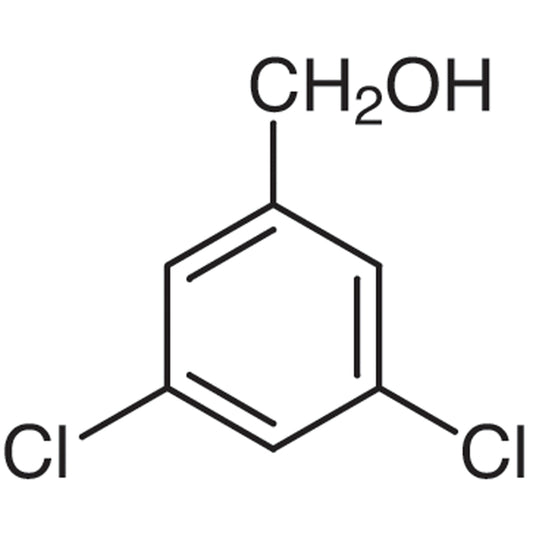
3,5-DichlorobenzylAlcohol TCI D3791
Regular price From Rp 689.850,00Regular priceRp 481.950,00Sale price From Rp 689.850,00 -
2,3-DichlorobenzylAlcohol TCI D2425
Regular price Rp 1.087.800,00Regular priceRp 760.200,00Sale price Rp 1.087.800,00 -
2,6-DichlorobenzylMethylEther TCI D2109
Regular price Rp 1.193.850,00Regular priceRp 834.750,00Sale price Rp 1.193.850,00 -
2,4-DichlorobenzylAlcohol TCI D1837
Regular price Rp 1.035.300,00Regular priceRp 723.450,00Sale price Rp 1.035.300,00 -
3,4-DichlorobenzylAlcohol TCI D1748
Regular price Rp 1.988.700,00Regular priceRp 1.390.200,00Sale price Rp 1.988.700,00 -
2,6-DichlorobenzylAlcohol TCI D1747
Regular price Rp 1.458.450,00Regular priceRp 1.019.550,00Sale price Rp 1.458.450,00