


TCI C0713 N-Benzyloxycarbonyl-L-proline is the amino acid proline with its secondary amino group protected by a benzyloxycarbonyl (Z) group. Proline holds a special position among the twenty protein-forming amino acids because its side chain closes back onto the nitrogen atom to form a pyrrolidine ring, producing a rigid secondary amine. In this protected form, the compound becomes an important building block in peptide synthesis, particularly when researchers wish to introduce a conformation-restricting element into a chain. The presence of proline often determines the folding pattern and biological activity of the resulting peptide.
The property that makes this material a frequent choice is the combination of the structural rigidity of the pyrrolidine ring with the reliability of the Z protecting group. The pyrrolidine ring restricts bond rotation, so peptides containing it tend to form particular turns or bends, a feature exploited in the design of peptidomimetics. The Z group itself resists a wide range of reaction conditions yet can be removed cleanly by catalytic hydrogenolysis, giving considerable freedom in constructing orthogonal protection strategies. The protected proline framework is therefore widely used across synthetic routes.
In Indonesian laboratories, this building block is typically found in university and institutional research groups working on peptide chemistry, chemical biology, and medicinal chemistry. It is used in solution-phase and solid-phase peptide assembly, in graduate and postgraduate research projects, and in laboratories preparing peptide fragments for structural or biological evaluation. Its role is that of a standard, well-characterised reagent within multi-step synthetic work rather than a routine analytical consumable.
TCI brochures (PDF)
- Amino Acids and Peptide Synthesis Reagents 2025-08-14 · p. 17
Related TCI products
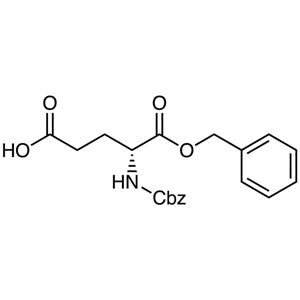
- TCI B4281 65706-99-2 1-Benzyl N-Benzyloxycarbonyl-D-glutamate
- TCI B3989 3705-42-8 1-Benzyl N-Benzyloxycarbonyl-L-glutamate
- TCI B3902 5680-86-4 5-Benzyl N-Benzyloxycarbonyl-L-glutamate
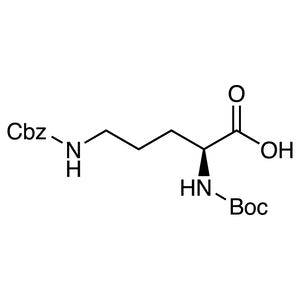
- TCI B2253 2480-93-5 Nalpha-(tert-Butoxycarbonyl)-Ndelta-benzyloxycarbonyl-L-ornithine
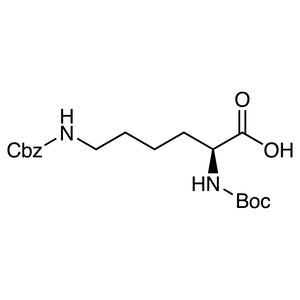
- TCI B1632 2389-45-9 Nalpha-(tert-Butoxycarbonyl)-Nepsilon-benzyloxycarbonyl-L-lysine
- TCI M2707 4668-42-2 1-Methyl N-Benzyloxycarbonyl-L-aspartate
- Peptide synthesis — serves as a protected proline residue that can be coupled into a growing chain without side reactions at the secondary amino group, then deprotected when required.
- Conformational restriction studies — the pyrrolidine ring limits backbone rotation, allowing researchers to deliberately introduce turns and bends when investigating how peptide shape governs function.
- Peptidomimetic design — provides the rigid proline scaffold used to build molecules that mimic natural peptide structures while offering modified conformational and structural behaviour.
- Orthogonal protection strategies — the Z group withstands many reaction conditions yet is cleaved cleanly by catalytic hydrogenolysis, letting chemists sequence deprotection steps in complex multi-step syntheses.
- Chemical biology research — supplies a defined proline building block for preparing peptide fragments whose folding and biological activity are then evaluated in downstream experimental studies.
| Brand | TCI |
|---|---|
| CAS number | 1148-11-4 |
| Molecular formula | — |
| Purity | — |
| Category | Chemistry > Chemical Biology > Peptide Chemistry |
| Pack sizes | — |
| Physical form | — |
| Storage | refer to the manufacturer's label and safety data sheet for the specified storage conditions |
- Chemical name: N-Benzyloxycarbonyl-L-proline
- Product code: C0713
Store the container tightly closed in a cool, dry location away from direct sunlight, moisture, and incompatible materials, following the storage conditions stated on the manufacturer's label and safety data sheet. Keep the material in its original supplier container, or in a clean, well-sealed, chemically compatible vessel that is clearly labelled with the substance name and CAS number. Handle in a well-ventilated area or fume hood using appropriate personal protective equipment, including gloves, safety glasses, and a laboratory coat. Avoid generating dust, and close the container promptly after weighing to limit moisture uptake. Dispose of residues and contaminated materials in accordance with applicable institutional and local chemical waste regulations.
—
Product Categories
Produk Terkait
-
1-BenzylN-Benzyloxycarbonyl-D-glutamate TCI B4281
Regular price Rp 2.411.850,00Regular price -
1-BenzylN-Benzyloxycarbonyl-L-glutamate TCI B3989
Regular price From Rp 1.510.950,00Regular price -
5-BenzylN-Benzyloxycarbonyl-L-glutamate TCI B3902
Regular price Rp 1.458.450,00Regular price -
Nalpha-(tert-Butoxycarbonyl)-Ndelta-benzyloxycarbonyl-L-ornithine TCI B2253
Regular price From Rp 875.700,00Regular price -
Nalpha-(tert-Butoxycarbonyl)-Nepsilon-benzyloxycarbonyl-L-lysine TCI B1632
Regular price From Rp 769.650,00Regular price -
1-MethylN-Benzyloxycarbonyl-L-aspartate TCI M2707
Regular price Rp 1.696.800,00Regular priceRp 1.202.250,00Sale price Rp 1.696.800,00 -
Nalpha-[(9H-Fluoren-9-ylmethoxy)carbonyl]-Nepsilon-benzyloxycarbonyl-L-lysine TCI C3147
Regular price Rp 1.483.650,00Regular priceRp 1.053.150,00Sale price Rp 1.483.650,00 -
N-Benzyloxycarbonyl-L-serineBenzylEster TCI C2873
Regular price Rp 1.934.100,00Regular priceRp 1.368.150,00Sale price Rp 1.934.100,00



![Nalpha-[(9H-Fluoren-9-ylmethoxy)carbonyl]-Nepsilon-benzyloxycarbonyl-L-lysine (CAS 86060-82-4) - TCI C3147 - AMI Scientific](http://amiscientific.com/cdn/shop/files/TCI2510C3147.jpg?v=1768204735&width=533)
