Nalpha-(tert-Butoxycarbonyl)-Ndelta-benzyloxycarbonyl-L-ornithine is a chemical compound widely used in peptide synthesis. This compound plays a critical role in the development of synthetic proteins, particularly within the field of chemical biology. It serves as a key building block for constructing complex peptide structures with specific functional properties. Its application is essential in biomedical and pharmacological research, where precise molecular design is required.
The compound's unique chemical structure, featuring two protective groups—Boc and Z—provides stability and control during chemical reactions. These protective groups prevent unwanted side reactions, ensuring the integrity of the peptide chain during synthesis. The compound's chemical properties make it ideal for peptide coupling and cleavage reactions, which are fundamental in laboratory workflows. Its stability under certain conditions also simplifies handling and storage, making it a reliable reagent for researchers.
In Indonesian laboratories, this compound is commonly used in drug development, biochemical analysis, and the synthesis of active compounds. It is a preferred choice for researchers due to its reliability and consistent performance. Many research institutions and universities rely on this compound for experiments requiring high precision and chemical purity. Its role in advancing scientific research makes it an essential component in the chemical biology laboratory.
TCI brochures (PDF)
- Amino Acids and Peptide Synthesis Reagents 2025-08-14 · p. 13
Related TCI products
- TCI B4184 109425-55-0 Ndelta-(tert-Butoxycarbonyl)-Nalpha-[(9H-fluoren-9-ylmethoxy)carbonyl]-L-ornithine
- TCI F0626 133174-15-9 Nalpha-[(9H-Fluoren-9-ylmethoxy)carbonyl]-L-citrulline
- TCI B3915 4587-33-1 Nalpha-(tert-Butoxycarbonyl)-L-asparagine 4-Nitrophenyl Ester
- TCI B3789 132388-68-2 Nalpha-tert-Butoxycarbonyl-Ngamma-trityl-L-asparagine
- TCI B3072 71989-26-9 Nepsilon-(tert-Butoxycarbonyl)-Nalpha-[(9H-fluoren-9-ylmethoxy)carbonyl]-L-lysine
- TCI B3071 92122-45-7 Nepsilon-(tert-Butoxycarbonyl)-Nalpha-[(9H-fluoren-9-ylmethoxy)carbonyl]-D-lysine
- Peptide Synthesis: This compound is ideal for constructing complex peptide sequences due to its protective groups, ensuring controlled chemical reactions and structural integrity.
- Drug Development: It supports the synthesis of bioactive molecules, aiding in the creation of new therapeutic agents with targeted biological functions.
- Biochemical Analysis: Its stability and reactivity make it suitable for analyzing molecular interactions and protein structures in biomedicine.
- Organic Chemistry Research: The compound is used in various synthetic pathways, contributing to the development of novel chemical compounds.
- Pharmacological Studies: It enables the design of peptides with specific pharmacological properties, facilitating research into drug mechanisms and efficacy.
| Brand | TCI |
|---|---|
| CAS number | 2480-93-5 |
| Molecular formula | — |
| Purity | — |
| Category | Chemistry > Chemical Biology > Peptide Chemistry |
| Pack sizes | Available in standard laboratory quantities |
| Physical form | Solid |
| Storage | Store in a cool, dry place away from light |
This compound should be stored in a cool, dry environment, away from direct light and moisture. It is recommended to use airtight containers to prevent exposure to humidity and contaminants. Due to its chemical stability, it does not require refrigeration but should be kept in a secure location to avoid accidental spills or contamination. Laboratory personnel should handle it with care, using appropriate personal protective equipment such as gloves and safety goggles. Regular inspection of storage conditions is advised to ensure the compound remains in optimal condition for use. Proper labeling and storage practices help maintain the integrity and safety of the compound in the laboratory setting.
—
Product Categories
- Chemical BiologyPeptide ChemistryAmino Acid Derivatives [Peptide Chemistry]
- Chemical BiologyPeptide ChemistryUnnatural Amino Acid Derivatives
- Pharmaceutical Development and Drug Discovery Research ReagentsPeptide ChemistryAmino Acid Derivatives [Peptide Chemistry]
- Pharmaceutical Development and Drug Discovery Research ReagentsPeptide ChemistryUnnatural Amino Acid Derivatives
Produk Terkait
-
Ndelta-(tert-Butoxycarbonyl)-Nalpha-[(9H-fluoren-9-ylmethoxy)carbonyl]-L-ornithine TCI B4184
Regular price Rp 1.934.100,00Regular priceRp 1.368.150,00Sale price Rp 1.934.100,00 -
Nalpha-[(9H-Fluoren-9-ylmethoxy)carbonyl]-L-citrulline TCI F0626
Regular price From Rp 1.033.200,00Regular priceRp 738.150,00Sale price From Rp 1.033.200,00 -
Nalpha-(tert-Butoxycarbonyl)-L-asparagine4-NitrophenylEster TCI B3915
Regular price Rp 1.351.350,00Regular priceRp 960.750,00Sale price Rp 1.351.350,00 -
Nalpha-tert-Butoxycarbonyl-Ngamma-trityl-L-asparagine TCI B3789
Regular price From Rp 1.643.250,00Regular priceRp 1.164.450,00Sale price From Rp 1.643.250,00 -
Nepsilon-(tert-Butoxycarbonyl)-Nalpha-[(9H-fluoren-9-ylmethoxy)carbonyl]-L-lysine TCI B3072
Regular price Rp 1.167.600,00Regular priceRp 831.600,00Sale price Rp 1.167.600,00 -
Nepsilon-(tert-Butoxycarbonyl)-Nalpha-[(9H-fluoren-9-ylmethoxy)carbonyl]-D-lysine TCI B3071
Regular price From Rp 1.272.600,00Regular priceRp 905.100,00Sale price From Rp 1.272.600,00 -
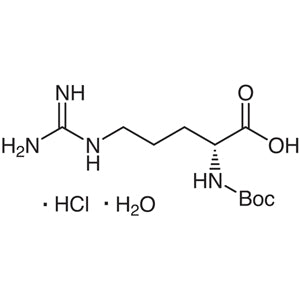
Nalpha-(tert-Butoxycarbonyl)-D-arginineHydrochlorideMonohydrate TCI B2204
Regular price From Rp 848.400,00Regular priceRp 609.000,00Sale price From Rp 848.400,00 -
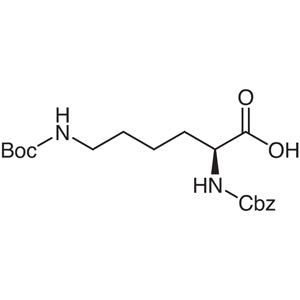
Nepsilon-(tert-Butoxycarbonyl)-Nalpha-carbobenzoxy-L-lysine TCI B1862
Regular price From Rp 2.623.950,00Regular priceRp 1.850.100,00Sale price From Rp 2.623.950,00