N-alpha-tert-Butyloxycarbonyl-N-gamma-trityl-L-asparagine is a chemical compound widely utilized in the field of chemical biology, particularly in peptide chemistry. This compound plays a crucial role in the synthesis of peptides, serving as a key building block for the creation of complex molecular structures. Its presence in laboratory settings is essential for researchers aiming to develop new pharmaceuticals and biologically active compounds. Due to its structural complexity and functional groups, it enables precise chemical reactions under controlled conditions, making it a vital component in advanced biochemical research.
The compound's stability under specific conditions and its ability to participate in targeted chemical reactions make it a preferred choice for laboratory applications. Its molecular structure allows for controlled modifications during synthesis, ensuring the accuracy and reproducibility of experimental results. The compound's chemical properties are well-suited for use in various synthetic processes, contributing to the development of new therapeutic agents and biochemical tools. These characteristics make it a reliable and versatile reagent in both academic and industrial research environments.
In Indonesian laboratories, this compound is commonly used in peptide synthesis, drug development, and molecular interaction studies. Its application is particularly relevant in biotechnology and pharmaceutical research, where the need for precise and high-quality chemical building blocks is critical. Researchers in Indonesia rely on this compound to advance their work in biochemistry and pharmacology, supporting innovation in the scientific community.
TCI brochures (PDF)
- Amino Acids and Peptide Synthesis Reagents 2025-08-14 · p. 14
Related TCI products
- TCI B4184 109425-55-0 Ndelta-(tert-Butoxycarbonyl)-Nalpha-[(9H-fluoren-9-ylmethoxy)carbonyl]-L-ornithine
- TCI B3915 4587-33-1 Nalpha-(tert-Butoxycarbonyl)-L-asparagine 4-Nitrophenyl Ester
- TCI B3072 71989-26-9 Nepsilon-(tert-Butoxycarbonyl)-Nalpha-[(9H-fluoren-9-ylmethoxy)carbonyl]-L-lysine
- TCI B3071 92122-45-7 Nepsilon-(tert-Butoxycarbonyl)-Nalpha-[(9H-fluoren-9-ylmethoxy)carbonyl]-D-lysine
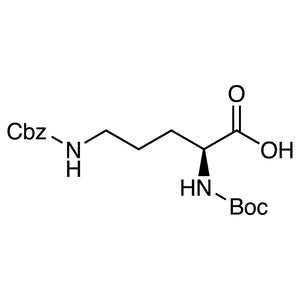
- TCI B2253 2480-93-5 Nalpha-(tert-Butoxycarbonyl)-Ndelta-benzyloxycarbonyl-L-ornithine
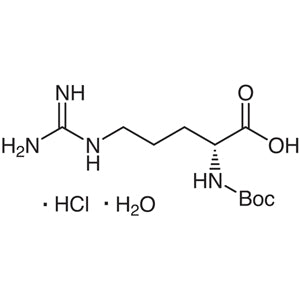
- TCI B2204 204070-00-8 Nalpha-(tert-Butoxycarbonyl)-D-arginine Hydrochloride Monohydrate
- Peptide Synthesis: This compound is ideal for synthesizing peptides due to its functional groups that allow for controlled coupling reactions.
- Drug Development: It supports the creation of new pharmaceutical compounds by providing a stable and reactive building block for complex molecules.
- Molecular Interaction Studies: Its structural complexity makes it suitable for studying molecular interactions in biochemical systems.
- Biochemical Research: The compound is used in experiments requiring precise chemical modifications and controlled reaction conditions.
- Analytical Chemistry: It serves as a reference material for analyzing chemical reactions and molecular structures in laboratory settings.
| Brand | TCI |
|---|---|
| CAS number | 132388-68-2 |
| Molecular formula | — |
| Purity | — |
| Category | Chemistry > Chemical Biology > Peptide Chemistry |
| Pack sizes | Available in standard laboratory quantities |
| Physical form | Solid |
| Storage | Store in a cool, dry place away from light |
This compound should be stored in a cool, dry environment, away from direct sunlight and sources of heat. It is recommended to keep it in a sealed container to prevent moisture absorption and contamination. Due to its chemical nature, it should be handled with appropriate laboratory safety measures, such as wearing gloves and a lab coat. It is advisable to store it in a well-ventilated area to minimize exposure to vapors. Proper labeling of containers is essential for safe handling and to prevent accidental use. Always ensure that storage conditions are consistent to maintain the compound's stability and effectiveness in laboratory applications.
—
Product Categories
Produk Terkait
-
Ndelta-(tert-Butoxycarbonyl)-Nalpha-[(9H-fluoren-9-ylmethoxy)carbonyl]-L-ornithine TCI B4184
Regular price Rp 1.934.100,00Regular priceRp 1.368.150,00Sale price Rp 1.934.100,00 -
Nalpha-(tert-Butoxycarbonyl)-L-asparagine4-NitrophenylEster TCI B3915
Regular price Rp 1.351.350,00Regular priceRp 960.750,00Sale price Rp 1.351.350,00 -
Nepsilon-(tert-Butoxycarbonyl)-Nalpha-[(9H-fluoren-9-ylmethoxy)carbonyl]-L-lysine TCI B3072
Regular price Rp 1.167.600,00Regular priceRp 831.600,00Sale price Rp 1.167.600,00 -
Nepsilon-(tert-Butoxycarbonyl)-Nalpha-[(9H-fluoren-9-ylmethoxy)carbonyl]-D-lysine TCI B3071
Regular price From Rp 1.272.600,00Regular priceRp 905.100,00Sale price From Rp 1.272.600,00 -
Nalpha-(tert-Butoxycarbonyl)-Ndelta-benzyloxycarbonyl-L-ornithine TCI B2253
Regular price From Rp 928.200,00Regular priceRp 664.650,00Sale price From Rp 928.200,00 -
Nalpha-(tert-Butoxycarbonyl)-D-arginineHydrochlorideMonohydrate TCI B2204
Regular price From Rp 848.400,00Regular priceRp 609.000,00Sale price From Rp 848.400,00 -
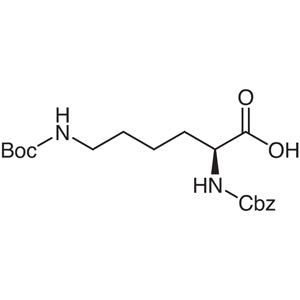
Nepsilon-(tert-Butoxycarbonyl)-Nalpha-carbobenzoxy-L-lysine TCI B1862
Regular price From Rp 2.623.950,00Regular priceRp 1.850.100,00Sale price From Rp 2.623.950,00 -
Nalpha-(tert-Butoxycarbonyl)-L-histidine TCI B1634
Regular price From Rp 1.008.000,00Regular priceRp 720.300,00Sale price From Rp 1.008.000,00