Nalpha-(tert-Butoxycarbonyl)-L-asparagine 4-Nitrophenyl Ester is a chemical compound widely used in chemical and biochemical experiments, particularly in peptide synthesis. This compound plays a crucial role in the formation of peptide bonds, which are essential in the synthesis of proteins and other biomolecules. It is commonly utilized in laboratories conducting research on peptide chemistry due to its ability to participate in specific chemical reactions. Its structural properties make it a valuable reagent in various synthetic processes, contributing to the development of new pharmaceutical compounds and biochemical studies.
The compound is known for its chemical stability under controlled conditions, although it is sensitive to moisture and air exposure. Its complex molecular structure requires precise heating and crystallization procedures to ensure effective chemical reactions. These characteristics make it a preferred choice for laboratories requiring high precision and reliability in synthetic processes. The compound’s stability and reactivity are key factors in its widespread use in both academic and industrial research settings.
In Indonesian laboratories, this compound is frequently used in biochemical and pharmacological research. It is an essential component in experiments related to peptide synthesis, drug development, and molecular interaction studies. Due to its reliability and effectiveness, it is a sought-after material among researchers in various institutions and universities across Indonesia.
TCI brochures (PDF)
- Amino Acids and Peptide Synthesis Reagents 2025-08-14 · p. 14
Related TCI products
- TCI B0853 2645-08-1 Nalpha-Benzoyl-L-arginine Ethyl Ester Hydrochloride
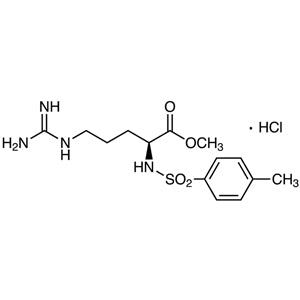
- TCI T0330 1784-03-8 Nalpha-Tosyl-L-arginine Methyl Ester Hydrochloride
- TCI B4184 109425-55-0 Ndelta-(tert-Butoxycarbonyl)-Nalpha-[(9H-fluoren-9-ylmethoxy)carbonyl]-L-ornithine
- TCI B3789 132388-68-2 Nalpha-tert-Butoxycarbonyl-Ngamma-trityl-L-asparagine
- TCI B3072 71989-26-9 Nepsilon-(tert-Butoxycarbonyl)-Nalpha-[(9H-fluoren-9-ylmethoxy)carbonyl]-L-lysine
- TCI B3071 92122-45-7 Nepsilon-(tert-Butoxycarbonyl)-Nalpha-[(9H-fluoren-9-ylmethoxy)carbonyl]-D-lysine
- Peptide Synthesis: This compound is ideal for peptide synthesis due to its ability to form stable peptide bonds under controlled conditions.
- Drug Development: It is used in the development of new pharmaceutical compounds by facilitating the synthesis of bioactive molecules.
- Biochemical Research: Its role in forming peptide bonds makes it essential for studies involving protein structure and function.
- Molecular Interaction Studies: The compound is used to investigate molecular interactions, aiding in the understanding of biological processes.
- Academic Research: It is widely used in university laboratories for teaching and research purposes in chemical biology and pharmacology.
| Brand | TCI |
|---|---|
| CAS number | 4587-33-1 |
| Molecular formula | — |
| Purity | — |
| Category | Chemistry > Chemical Biology > Peptide Chemistry |
| Pack sizes | Available in various quantities as per standard laboratory supply |
| Physical form | Solid |
| Storage | Store in a dry, cool place away from moisture and air exposure |
This compound should be stored in a dry, cool environment to prevent degradation due to moisture and air exposure. It is recommended to use airtight containers to maintain its chemical stability. Laboratory personnel should handle the compound with care, using appropriate personal protective equipment such as gloves and safety goggles. It should be stored away from incompatible substances to avoid any adverse reactions. Proper labeling of storage containers is essential for safe handling and easy identification. Regular monitoring of storage conditions ensures the compound remains effective for its intended applications.
—
Product Categories
Produk Terkait
-
Nalpha-Benzoyl-L-arginineEthylEsterHydrochloride TCI B0853
Regular price From Rp 1.590.750,00Regular priceRp 1.127.700,00Sale price From Rp 1.590.750,00 -
Nalpha-Tosyl-L-arginineMethylEsterHydrochloride TCI T0330
Regular price From Rp 530.250,00Regular priceRp 386.400,00Sale price From Rp 530.250,00 -
Ndelta-(tert-Butoxycarbonyl)-Nalpha-[(9H-fluoren-9-ylmethoxy)carbonyl]-L-ornithine TCI B4184
Regular price Rp 1.934.100,00Regular priceRp 1.368.150,00Sale price Rp 1.934.100,00 -
Nalpha-tert-Butoxycarbonyl-Ngamma-trityl-L-asparagine TCI B3789
Regular price From Rp 1.643.250,00Regular priceRp 1.164.450,00Sale price From Rp 1.643.250,00 -
Nepsilon-(tert-Butoxycarbonyl)-Nalpha-[(9H-fluoren-9-ylmethoxy)carbonyl]-L-lysine TCI B3072
Regular price Rp 1.167.600,00Regular priceRp 831.600,00Sale price Rp 1.167.600,00 -
Nepsilon-(tert-Butoxycarbonyl)-Nalpha-[(9H-fluoren-9-ylmethoxy)carbonyl]-D-lysine TCI B3071
Regular price From Rp 1.272.600,00Regular priceRp 905.100,00Sale price From Rp 1.272.600,00 -
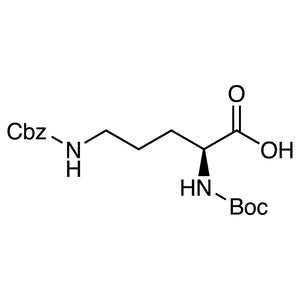
Nalpha-(tert-Butoxycarbonyl)-Ndelta-benzyloxycarbonyl-L-ornithine TCI B2253
Regular price From Rp 928.200,00Regular priceRp 664.650,00Sale price From Rp 928.200,00 -
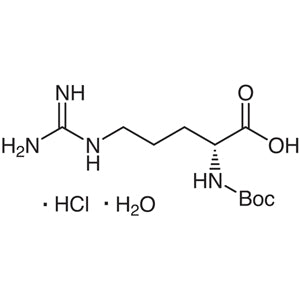
Nalpha-(tert-Butoxycarbonyl)-D-arginineHydrochlorideMonohydrate TCI B2204
Regular price From Rp 848.400,00Regular priceRp 609.000,00Sale price From Rp 848.400,00