Methyl 2-Oxocyclopentanecarboxylate from TCI is a cyclic β-keto ester. Its structure is a cyclopentanone ring with a methyl ester group on the carbon next to the ketone carbonyl. In organic synthesis it serves as a versatile building block for five-membered carbocyclic frameworks, which are common in natural products, pharmaceutical compounds and fragrance materials. Because the product is packed in millilitre units, laboratories can conveniently measure it by volume during routine synthetic work.
The property chemists use most is the acidity of the α-carbon proton between the two carbonyl groups. A relatively mild base easily deprotonates this position to give a stable enolate. The enolate can then be alkylated, acylated or used in Michael additions to form new carbon–carbon bonds in a controlled way. Afterwards, the ester group can be hydrolysed and decarboxylated when needed to give a substituted cyclopentanone. The compound is also a popular substrate for developing catalytic asymmetric reactions, which makes it a dependable reference material for methodology studies.
In Indonesia, this compound is useful for organic chemistry laboratories at universities and for synthesis research groups that build carbocyclic scaffolds. Undergraduate and postgraduate projects can use it to teach and study enolate chemistry, C–C bond formation and decarboxylation strategies. Research teams working on natural product synthesis, medicinal chemistry intermediates or new catalytic asymmetric methods can also use it as a well-defined starting material for multistep routes and reaction optimisation.
Related TCI products
- TCI B0268 611-10-9 Ethyl 2-Oxocyclopentanecarboxylate
- TCI P1487 77-55-4 1-Phenyl-1-cyclopentanecarboxylic Acid
- TCI O0416 98-78-2 3-Oxocyclopentanecarboxylic Acid
- TCI M2510 4630-80-2 Methyl Cyclopentanecarboxylate
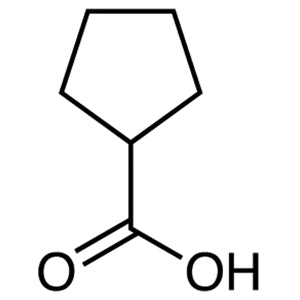
- TCI C0512 3400-45-1 Cyclopentanecarboxylic Acid
- TCI C3019 872-53-7 Cyclopentanecarboxaldehyde (stabilized with HQ)
- Enolate alkylation: the acidic α-proton between the ketone and ester carbonyls can be removed with a mild base, giving a stable enolate that reacts cleanly with alkylating agents.
- Acylation reactions: the stabilised enolate of this cyclic β-keto ester takes up acyl groups at the α-position, so chemists can introduce new carbonyl functionality onto the five-membered ring in a controlled way.
- Michael additions: as a soft carbon nucleophile, the enolate adds to α,β-unsaturated acceptors and forms new carbon–carbon bonds on the cyclopentanone framework without requiring harsh reaction conditions.
- Synthesis of substituted cyclopentanones: after functionalisation, the methyl ester can be hydrolysed and decarboxylated, so substituted cyclopentanones are obtained for natural product, pharmaceutical and fragrance research.
- Development of catalytic asymmetric reactions: this widely used model substrate lets research groups compare new chiral catalysts and enantioselective methods against established results from the synthetic chemistry literature.
| Brand | TCI (product code C0812) |
|---|---|
| CAS number | 10472-24-9 |
| Molecular formula | — |
| Purity | — |
| Category | Chemistry > Building Blocks > Non-Heterocyclic Building Blocks |
| Pack sizes | supplied in millilitre-based packs |
| Physical form | liquid, suitable for volumetric dispensing |
| Storage | follow the conditions stated on the TCI label and Safety Data Sheet |
Keep this compound in its original, tightly closed TCI container in a cool, dry, well-ventilated place, away from heat, ignition sources, strong bases and strong oxidising agents. Follow the storage conditions on the product label and Safety Data Sheet. When you transfer it, use clean, dry glassware or chemically compatible syringes and pipettes. Handle it in a fume hood and wear a lab coat, safety glasses and chemical-resistant gloves. Avoid contact with skin and eyes, and avoid breathing vapours. Reseal the container promptly after use to keep out moisture and prevent contamination. Dispose of residues and waste according to your institution's chemical waste procedures.
—
Produk Terkait
-
Ethyl2-Oxocyclopentanecarboxylate TCI B0268
Regular price Rp 1.405.950,00Regular priceRp 998.550,00Sale price Rp 1.405.950,00 -
1-Phenyl-1-cyclopentanecarboxylicAcid TCI P1487
Regular price From Rp 955.500,00Regular priceRp 683.550,00Sale price From Rp 955.500,00 -
3-OxocyclopentanecarboxylicAcid TCI O0416
Regular price Rp 3.895.500,00Regular priceRp 2.739.450,00Sale price Rp 3.895.500,00 -
MethylCyclopentanecarboxylate TCI M2510
Regular price Rp 2.571.450,00Regular priceRp 1.813.350,00Sale price Rp 2.571.450,00 -
CyclopentanecarboxylicAcid TCI C0512
Regular price From Rp 900.900,00Regular priceRp 645.750,00Sale price From Rp 900.900,00 -
Cyclopentanecarboxaldehyde(stabilizedwithHQ) TCI C3019
Regular price From Rp 1.220.100,00Regular priceRp 852.600,00Sale price From Rp 1.220.100,00 -
CyclopentanecarbonylChloride TCI C2391
Regular price From Rp 1.776.600,00Regular priceRp 1.257.900,00Sale price From Rp 1.776.600,00 -
Ethyl2-Oxocyclopentaneacetate TCI E0943
Regular price Rp 1.192.800,00Regular priceRp 849.450,00Sale price Rp 1.192.800,00