TCI C1231 1-(3-Cyanopropyl)pyrrolidine is a compound that combines two useful functional groups within a single simple molecule: a pyrrolidine ring acting as a cyclic tertiary amine, and a nitrile group at the end of a propyl chain. This combination makes it a valuable building block for assembling molecules with controlled spacing between functional centres. In organic synthesis laboratories, bifunctional compounds of this kind are used when researchers require a linking chain of a defined length that carries a basic centre at one end and a site for further transformation at the other.
The property that makes this compound a preferred choice is the versatility of its nitrile group. The nitrile can be reduced to a primary amine, thereby yielding an unsymmetrical diamine; it can be hydrolysed to a carboxylic acid or an amide; and it can be converted into tetrazoles and a range of other heterocycles. Meanwhile, the pyrrolidine ring provides reasonably strong basicity and a distinctive spatial shape compared with acyclic amines, a characteristic frequently exploited in ligand design and in the development of bioactive compounds.
In Indonesian laboratories, this material is typically used in university research groups, pharmaceutical development units, and contract synthesis facilities working on heterocyclic building blocks. Because it is supplied in volume-based packaging, the material is a liquid under ordinary storage conditions, so transfer by pipette or syringe is straightforward and dispensing small working portions from the original container is convenient for routine bench-scale reactions.
Related TCI products
- TCI B5973 51641-96-4 1,4-Bis(3-isocyanopropyl)piperazine
- TCI T4405 1239488-58-4 Tetrahydrofuran-2-yl Pyrrolidine-1-carbodithioate
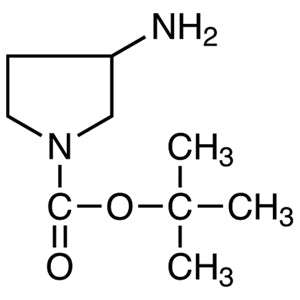
- TCI B3890 186550-13-0 3-Amino-1-(tert-butoxycarbonyl)pyrrolidine
- TCI B1560 115445-21-1 1-Benzyl-3-(ethylamino)pyrrolidine
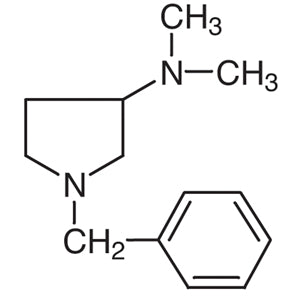
- TCI B1559 69478-77-9 1-Benzyl-3-(dimethylamino)pyrrolidine
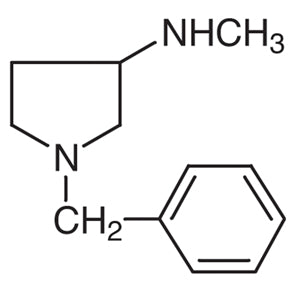
- TCI B1558 96568-35-3 1-Benzyl-3-(methylamino)pyrrolidine
- Unsymmetrical diamine synthesis: reduction of the terminal nitrile group generates a primary amine while retaining the pyrrolidine tertiary amine, giving two chemically distinct nitrogen centres in one chain.
- Heterocyclic building block assembly: the nitrile serves as a direct precursor to tetrazoles and other heterocyclic rings, allowing a basic pyrrolidine unit to be attached to newly formed ring systems.
- Ligand design work: the cyclic tertiary amine offers a defined spatial arrangement and basicity that differ from acyclic amines, which is useful when tuning coordination behaviour in ligand scaffolds.
- Carboxylic acid and amide preparation: controlled hydrolysis of the nitrile function delivers either the acid or the amide, providing a route to polar derivatives bearing a pendant pyrrolidine group.
- Linker construction in medicinal chemistry: the propyl chain provides a fixed distance between the basic centre and the transformable terminus, supporting systematic exploration of spacing effects in bioactive compound design.
| Brand | TCI |
|---|---|
| CAS number | 35543-25-0 |
| Molecular formula | — |
| Purity | — |
| Category | Chemistry > Building Blocks > Heterocyclic Building Blocks |
| Pack sizes | supplied in volume-based packaging |
| Physical form | liquid under ordinary storage conditions |
| Storage | keep in the original tightly closed container under the conditions stated on the product label |
Store the container tightly closed in a cool, well-ventilated area away from heat sources, direct sunlight, and incompatible materials, following the storage conditions indicated on the manufacturer's label. Because the material is a liquid, keep it in its original chemically compatible container and transfer working portions with a clean pipette or syringe rather than pouring, so that the bulk stock remains uncontaminated. Handle inside a fume hood, wear safety glasses, nitrile gloves, and a laboratory coat, and avoid inhalation of vapour or contact with skin and eyes. Label all secondary containers clearly, close the bottle immediately after dispensing, and consult the supplier's safety data sheet before first use and before disposal.
—
Produk Terkait
-
1,4-Bis(3-isocyanopropyl)piperazine TCI B5973
Regular price Rp 3.815.700,00Regular priceRp 2.683.800,00Sale price Rp 3.815.700,00 -
Tetrahydrofuran-2-ylPyrrolidine-1-carbodithioate TCI T4405
Regular price Rp 2.041.200,00Regular priceRp 1.442.700,00Sale price Rp 2.041.200,00 -
3-Amino-1-(tert-butoxycarbonyl)pyrrolidine TCI B3890
Regular price Rp 2.147.250,00Regular priceRp 1.517.250,00Sale price Rp 2.147.250,00 -
1-Benzyl-3-(ethylamino)pyrrolidine TCI B1560
Regular price Rp 2.068.500,00Regular priceRp 1.461.600,00Sale price Rp 2.068.500,00 -
1-Benzyl-3-(dimethylamino)pyrrolidine TCI B1559
Regular price Rp 1.829.100,00Regular priceRp 1.294.650,00Sale price Rp 1.829.100,00 -
1-Benzyl-3-(methylamino)pyrrolidine TCI B1558
Regular price Rp 1.643.250,00Regular priceRp 1.164.450,00Sale price Rp 1.643.250,00 -
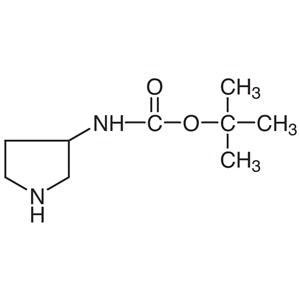
3-(tert-Butoxycarbonylamino)pyrrolidine TCI B1358
Regular price Rp 1.749.300,00Regular priceRp 1.239.000,00Sale price Rp 1.749.300,00 -
(R)-3-(Aminomethyl)-1-(tert-butoxycarbonyl)pyrrolidine TCI A3285
Regular price Rp 2.279.550,00Regular priceRp 1.609.650,00Sale price Rp 2.279.550,00