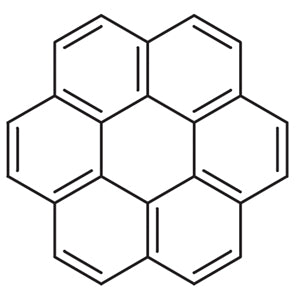
TCI C1961 Coronene (purified by sublimation) is a polycyclic aromatic hydrocarbon (PAH) made of six benzene rings arranged around one central ring. This arrangement gives a flat, disc-shaped and highly symmetrical molecule. Coronene is often called "superbenzene" and is seen as a small molecular model for graphene. In the laboratory, it is used in organic electronics, photophysics, surface science and astrochemistry research, and as a reference material in PAH studies. It is supplied as a non-heterocyclic building block for researchers who need a well-defined aromatic framework.
Researchers choose coronene for its extended, fully conjugated π-electron system, its flat and rigid shape, and its high symmetry. Together, these properties give it characteristic fluorescence and a strong tendency toward π-π stacking, which makes it useful for studying molecular packing and electronic behaviour. This product is purified by sublimation, a method that removes non-volatile impurities effectively. High purity matters in organic electronics and spectroscopy, where trace impurities can interfere with charge mobility and emission signals and make experimental results harder to interpret.
In Indonesia, coronene is useful for research groups in materials physics, physical chemistry, nanotechnology and environmental science at universities and research institutions. Materials and nanotechnology laboratories can use it as a model compound when studying graphene-like systems and thin organic films. Physical chemistry groups can use it in fluorescence and spectroscopic studies. Environmental science laboratories can use it as a reference compound in PAH-related analytical work, where a well-characterised aromatic standard helps keep comparisons between experiments consistent.
TCI brochures (PDF)
- Next-Generation Carbon Material with Infinite Potential: (6,6)Carbon Nanobelt 2025-01-27 · p. 2
- Chemical Compounds Purified by Sublimation 2025-05-07 · p. 2
- Molecular Conductors 2025-11-13 · p. 2
- Nanocarbon Materials 2026-09-30 · p. 4
Related TCI products
- TCI C0386 191-07-1 Coronene
- TCI T3267 217-59-4 Triphenylene (purified by sublimation)
- TCI T3263 92-94-4 p-Terphenyl (purified by sublimation)
- TCI P2207 213-46-7 Picene (purified by sublimation) (>99.9%)
- TCI P2072 129-00-0 Pyrene (purified by sublimation)
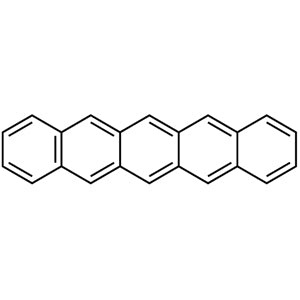
- TCI P0030 135-48-8 Pentacene (purified by sublimation)
- Organic electronics research: its extended conjugated π-system and strong π-π stacking make coronene a useful model for studying charge transport in organic semiconductor materials.
- Photophysics and fluorescence studies: its characteristic fluorescence and highly symmetrical structure make coronene a clear, well-defined subject for studying emission behaviour and excited-state properties.
- Surface science: its flat, rigid, disc-shaped geometry suits studies of molecular adsorption, self-assembly and ordered layer formation on solid surfaces.
- Astrochemistry research: as a representative polycyclic aromatic hydrocarbon, coronene is a useful laboratory model when investigating the spectroscopic properties of PAH molecules relevant to astrochemical studies.
- PAH reference studies: its well-defined structure and sublimation-purified quality make it a suitable reference material for comparison and analysis in polycyclic aromatic hydrocarbon research.
| Brand | TCI (product code C1961) |
|---|---|
| CAS number | 191-07-1 |
| Molecular formula | — |
| Purity | — |
| Category | Chemistry > Building Blocks > Non-Heterocyclic Building Blocks |
| Pack sizes | see the pack size options listed on this product page |
| Physical form | solid, purified by sublimation |
| Storage | keep tightly closed in a cool, dry place away from light; follow the storage instructions on the TCI label and SDS |
Store coronene in its original, tightly sealed container in a cool, dry and well-ventilated place, away from direct light, heat sources and strong oxidising agents. Use clean, dry glass or chemically compatible containers if the material has to be transferred, and label them clearly. Handle the material in a fume hood or a well-ventilated area, and do not breathe in dust. Wear suitable personal protective equipment, including gloves, safety glasses and a laboratory coat. Always read the TCI Safety Data Sheet before use, and dispose of waste according to local regulations and your institution's procedures.
—
Product Categories
Produk Terkait
-
Coronene TCI C0386
Regular price From Rp 3.340.050,00Regular priceRp 2.335.200,00Sale price From Rp 3.340.050,00 -
Triphenylene(purifiedbysublimation) TCI T3267
Regular price From Rp 3.367.350,00Regular priceRp 2.354.100,00Sale price From Rp 3.367.350,00 -
p-Terphenyl(purifiedbysublimation) TCI T3263
Regular price From Rp 1.510.950,00Regular priceRp 1.056.300,00Sale price From Rp 1.510.950,00 -
Picene(purifiedbysublimation)(>99.9%) TCI P2207
Regular price From Rp 4.347.000,00Regular priceRp 3.039.750,00Sale price From Rp 4.347.000,00 -
Pyrene(purifiedbysublimation) TCI P2072
Regular price Rp 1.220.100,00Regular priceRp 852.600,00Sale price Rp 1.220.100,00 -
Pentacene(purifiedbysublimation) TCI P0030
Regular price From Rp 1.087.800,00Regular priceRp 760.200,00Sale price From Rp 1.087.800,00 -
Naphthacene(purifiedbysublimation) TCI N0951
Regular price From Rp 2.439.150,00Regular priceRp 1.705.200,00Sale price From Rp 2.439.150,00 -
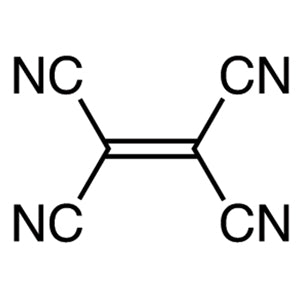
Tetracyanoethylene(purifiedbysublimation) TCI T3264
Regular price From Rp 1.934.100,00Regular priceRp 1.368.150,00Sale price From Rp 1.934.100,00