

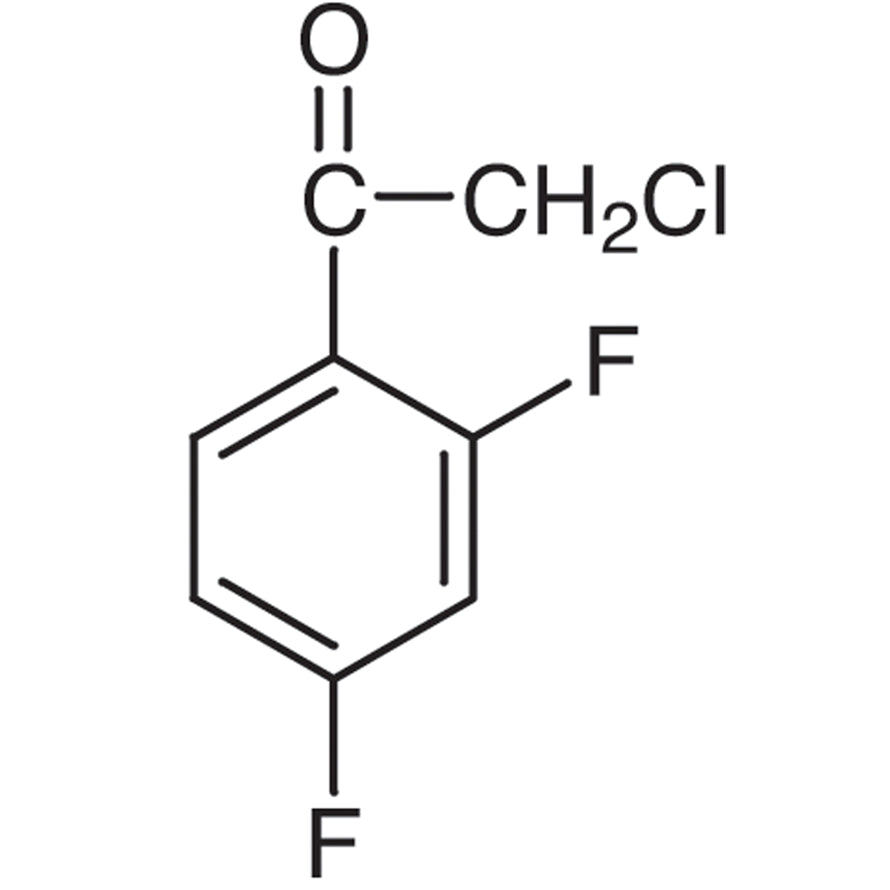
2-Chloro-2',4'-difluoroacetophenone is a versatile organic compound widely used in chemical research and synthesis. It serves as a key building block in the development of aromatic and heterocyclic compounds, offering chemists a reliable starting material for creating complex molecular structures. This compound is particularly valued for its reactivity and ability to participate in various functional group transformations, making it an essential tool in synthetic chemistry. Its unique molecular structure, featuring a chloro and difluoro substituent on the aromatic ring, provides a foundation for diverse chemical modifications.
The compound's reactivity is primarily due to its electrophilic nature and the presence of electron-deficient groups, which enhance its ability to undergo substitution and electrophilic reactions. These properties make it highly suitable for controlled synthetic pathways where stability and reactivity must be carefully balanced. Its ability to interact with a wide range of functional groups allows it to be used in a variety of chemical processes, from nucleophilic attacks to electrophilic substitutions. This versatility ensures its continued use in both academic and industrial research settings.
In Indonesian laboratories, 2-Chloro-2',4'-difluoroacetophenone is commonly employed in organic chemistry research, especially in the development of new compounds with pharmaceutical or industrial applications. Its role in synthesizing bioactive molecules and functional materials makes it a crucial component in the chemical research toolkit of Indonesian scientists. Its availability and reliability make it a preferred choice for researchers aiming to explore new chemical pathways and applications.
TCI brochures (PDF)
- Fluorination Reagents, Fluorinated Building Blocks 2026-03-18 · p. 29
Related TCI products
- Organic synthesis applications benefit from this compound's reactivity and versatility, enabling the creation of complex aromatic and heterocyclic structures.
- Pharmaceutical research utilizes it as a building block for developing new drug candidates with targeted biological activities.
- Material science applications leverage its chemical stability and reactivity for synthesizing functional polymers and coatings.
- Analytical chemistry uses it as a standard for calibration and as a reagent in various chromatographic and spectroscopic analyses.
- Industrial chemical processes incorporate it for the production of specialty chemicals and intermediates in manufacturing.
| Brand | TCI |
|---|---|
| CAS number | 51336-94-8 |
| Molecular formula | — |
| Purity | — |
| Category | Chemistry > Building Blocks > Fluorinated Building Blocks |
| Pack sizes | Available in various quantities as per standard laboratory supply practices |
| Physical form | Solid, typically in crystalline or powder form |
| Storage | Store in a cool, dry place away from light and moisture |
This compound should be stored in a cool, dry environment, away from direct light and moisture to maintain its chemical integrity. It is recommended to use airtight containers made of materials that are chemically inert, such as glass or high-density polyethylene, to prevent contamination and degradation. Due to its reactivity, it should be handled with appropriate personal protective equipment, including gloves and safety goggles, to ensure laboratory safety. It is important to keep it away from incompatible substances such as strong bases or reducing agents. Proper ventilation should be maintained when working with this compound to minimize exposure risks. Always follow standard laboratory safety protocols when handling and storing reactive chemicals.
—
Produk Terkait
-
2-Bromo-2',4'-difluoroacetophenone TCI B4020
Regular price Rp 2.386.650,00Regular price -
2',6'-Difluoroacetophenone TCI D3559
Regular price From Rp 1.510.950,00Regular price -
3',5'-Difluoroacetophenone TCI D3425
Regular price From Rp 1.087.800,00Regular price -
2',5'-Difluoroacetophenone TCI D2607
Regular price Rp 2.650.200,00Regular price -
3',4'-Difluoroacetophenone TCI D1906
Regular price From Rp 928.200,00Regular price -
2',4'-Difluoroacetophenone TCI D1885
Regular price Rp 875.700,00Regular price -
2-(1H-1,2,4-Triazol-1-yl)-2',4'-difluoroacetophenone TCI T2722
Regular price From Rp 1.724.100,00Regular price -
1-Chloro-4-(trifluoromethoxy)benzene TCI T2149
Regular price Rp 848.400,00Regular price


