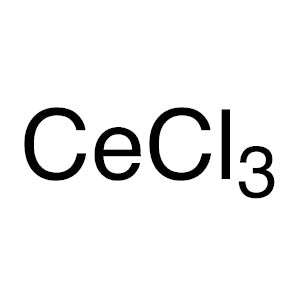
Cerium(III) Chloride Anhydrous (TCI C2058, CAS 7790-86-5) is a solid chemical compound widely used in laboratory settings for its catalytic and inorganic chemical properties. It plays a crucial role in various chemical reactions and catalytic processes, particularly those involving rare earth elements. As a key component in catalysis, it enables the acceleration of chemical reactions without being consumed in the process, making it highly efficient for industrial and research applications. This compound is essential in the field of inorganic chemistry and is often utilized in the development of new materials and chemical processes.
The compound is known for its chemical stability and high reactivity, which can be influenced by environmental conditions. It is hygroscopic, meaning it readily absorbs moisture from the air, which makes it suitable for reactions requiring a moist or humid environment. This property also necessitates careful handling and storage to prevent unwanted moisture absorption. Its versatility and chemical behavior make it a preferred choice for researchers and scientists working in both academic and industrial laboratories.
In Indonesian laboratories, Cerium(III) Chloride Anhydrous is extensively used in chemical research, especially in catalysis and inorganic chemistry. Its availability and effectiveness in various applications make it a popular choice among researchers. It is commonly used in educational institutions and research centers for experimental purposes, contributing to the advancement of chemical science in the region.
Advantages (TCI brochure)
- Promotes 1,2-reduction of α,β-unsaturated ketones with NaBH4 instead of 1,4-reduction
TCI brochures (PDF)
- Reducing Agents 2026-04-06 · p. 3
- Metallic Salts 2025-11-06 · p. 4
Related TCI products
- TCI C3980 7758-88-5 Cerium(III) Fluoride
- TCI C3857 12014-56-1 Cerium(IV) Hydroxide
- TCI C3516 1046099-39-1 Cerium(III) Bis(trifluoromethanesulfonyl)imide
- TCI C2974 206996-60-3 Cerium(III) Acetate Hydrate
- TCI T1918 76089-77-5 Cerium(III) Trifluoromethanesulfonate
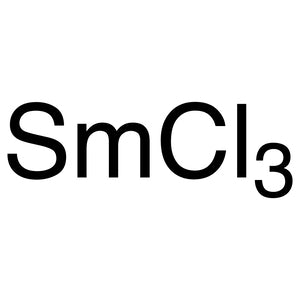
- TCI A3511 10361-82-7 Samarium(III) Chloride
- Catalytic Reactions: Cerium(III) Chloride Anhydrous is ideal for catalytic reactions due to its ability to accelerate chemical processes without being consumed, making it a preferred catalyst in synthetic chemistry.
- Inorganic Chemistry Experiments: The compound is frequently used in inorganic chemistry experiments, particularly those involving rare earth elements, where its chemical properties are essential for reaction mechanisms.
- Material Synthesis: It is used in the synthesis of various materials, including ceramics and nanomaterials, due to its ability to influence reaction pathways and product formation.
- Analytical Chemistry: Its reactivity and stability make it suitable for analytical applications, where precise chemical reactions are required for sample analysis and characterization.
- Environmental Studies: The compound is used in environmental research to study the behavior of rare earth elements in different chemical environments, aiding in pollution control and remediation efforts.
From the TCI brochure
- Luche reduction
| Brand | TCI |
|---|---|
| CAS number | 7790-86-5 |
| Molecular formula | — |
| Purity | — |
| Category | Chemistry > Catalysis and Inorganic Chemistry > Rare Earth Elements |
| Pack sizes | Available in various pack sizes to meet different laboratory needs |
| Physical form | Solid |
| Storage | Should be stored in a dry, airtight container to prevent moisture absorption |
Cerium(III) Chloride Anhydrous should be stored in a cool, dry place away from moisture and direct sunlight to maintain its chemical integrity. It is recommended to use airtight containers made of materials such as glass or polyethylene to prevent hygroscopic absorption. Due to its reactivity, it should be handled with care, using appropriate personal protective equipment like gloves and safety goggles. In laboratory settings, it is important to ensure proper ventilation when working with this compound to avoid inhalation of any airborne particles. Regular monitoring of storage conditions is essential to maintain the compound's effectiveness and safety in research applications.
—
Product Categories
- Catalysis and Inorganic ChemistryRare Earth Elements [Catalysis and Inorganic Chemistry]Cerium [Catalysis and Inorganic Chemistry]
- Catalysis and Inorganic ChemistryMetallic Salts [Catalysis and Inorganic Chemistry]Chloride Salts [Metallic Salts]
- Synthetic ReagentsReduction [Synthetic Reagents]Reduction Reagents (Other) [Synthetic Reagents]
Produk Terkait
-
Cerium(III)Fluoride TCI C3980
Regular price From Rp 2.650.200,00Regular priceRp 1.853.250,00Sale price From Rp 2.650.200,00 -
Cerium(IV)Hydroxide TCI C3857
Regular price From Rp 2.889.600,00Regular priceRp 2.020.200,00Sale price From Rp 2.889.600,00 -
Cerium(III)Bis(trifluoromethanesulfonyl)imide TCI C3516
Regular price From Rp 2.121.000,00Regular priceRp 1.482.600,00Sale price From Rp 2.121.000,00 -
Cerium(III)AcetateHydrate TCI C2974
Regular price From Rp 1.115.100,00Regular priceRp 779.100,00Sale price From Rp 1.115.100,00 -
Cerium(III)Trifluoromethanesulfonate TCI T1918
Regular price From Rp 3.155.250,00Regular priceRp 2.206.050,00Sale price From Rp 3.155.250,00 -
Samarium(III)Chloride TCI A3511
Regular price From Rp 1.988.700,00Regular priceRp 1.405.950,00Sale price From Rp 1.988.700,00 -
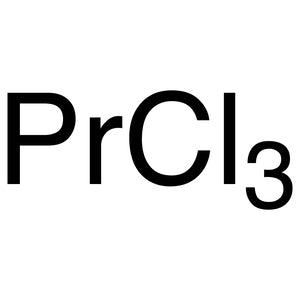
Praseodymium(III)Chloride TCI P2969
Regular price From Rp 1.670.550,00Regular priceRp 1.183.350,00Sale price From Rp 1.670.550,00 -
Neodymium(III)Chloride TCI N1226
Regular price From Rp 2.147.250,00Regular priceRp 1.517.250,00Sale price From Rp 2.147.250,00