

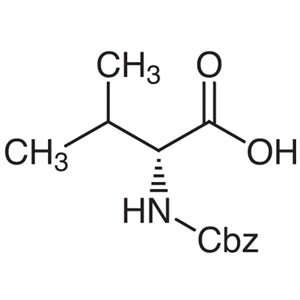
TCI C2139 N-Benzyloxycarbonyl-D-valine is a D-configured valine derivative in which the amino group has been protected by a benzyloxycarbonyl (Cbz) group. This peptide chemistry reagent is used to insert valine residues into a peptide chain in a controlled manner, so that the amino acid sequence that forms matches the researcher's design. Valine is known as a branched-chain amino acid with an isopropyl side chain that is hydrophobic and sterically bulky, so its presence frequently exerts a real influence on the conformation, rigidity, and folding behaviour of the peptides produced in the laboratory.
The main reason this reagent is so widely chosen is the balance it offers between stability and ease of deprotection. The Cbz group survives many coupling reaction conditions, yet it can be removed cleanly by hydrogenolysis without requiring strongly acidic conditions, making it safe for peptide chains that contain sensitive functional groups. The branched valine side chain provides useful steric hindrance for directing reaction selectivity, particularly in asymmetric synthesis and the design of chiral ligands. The D configuration makes it the appropriate choice for researchers working outside the natural L series.
In Indonesian laboratories, this reagent is typically handled in university and institutional research settings where peptide synthesis, chiral building block work, and organic methodology studies are carried out. It is generally used at bench scale by researchers who already work with protected amino acid derivatives and standard coupling procedures, and who require a defined stereochemistry for each residue introduced. Work is normally performed in a fume hood as part of routine multi-step synthetic sequences.
Related TCI products
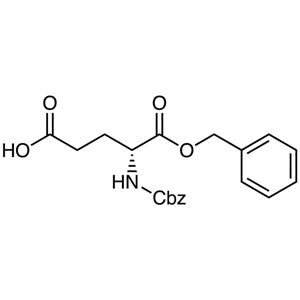
- TCI B4281 65706-99-2 1-Benzyl N-Benzyloxycarbonyl-D-glutamate
- TCI B3989 3705-42-8 1-Benzyl N-Benzyloxycarbonyl-L-glutamate
- TCI B3902 5680-86-4 5-Benzyl N-Benzyloxycarbonyl-L-glutamate
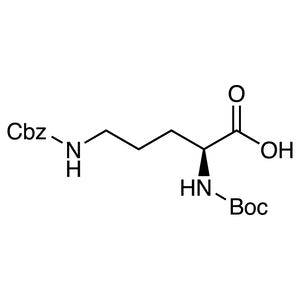
- TCI B2253 2480-93-5 Nalpha-(tert-Butoxycarbonyl)-Ndelta-benzyloxycarbonyl-L-ornithine
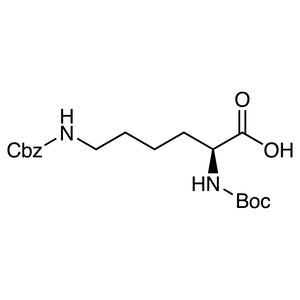
- TCI B1632 2389-45-9 Nalpha-(tert-Butoxycarbonyl)-Nepsilon-benzyloxycarbonyl-L-lysine
- TCI M2707 4668-42-2 1-Methyl N-Benzyloxycarbonyl-L-aspartate
- Solution-phase and solid-phase peptide synthesis: the protected amino group allows valine to be coupled at a defined position in the chain without unwanted self-condensation or uncontrolled sequence scrambling.
- Preparation of D-amino acid containing peptides: the D configuration lets researchers build sequences outside the natural L series, which is central to work on non-natural peptide architectures.
- Asymmetric synthesis studies: the bulky, branched isopropyl side chain provides steric hindrance that can be exploited to direct the selectivity of reactions towards a preferred stereochemical outcome.
- Chiral ligand design: the defined stereocentre combined with a protected amino function makes this compound a convenient starting point for constructing chiral scaffolds and auxiliaries.
- Conformational and folding investigations: incorporating a hydrophobic, sterically demanding valine residue lets researchers probe how side-chain bulk influences peptide rigidity, secondary structure, and folding behaviour.
| Brand | TCI |
|---|---|
| CAS number | 1685-33-2 |
| Molecular formula | — |
| Purity | — |
| Category | Chemistry > Chemical Biology > Peptide Chemistry |
| Pack sizes | available in standard TCI catalogue pack sizes; please confirm the required size when ordering |
| Physical form | — |
| Storage | store in a cool, dry place in a tightly closed original container, following the manufacturer's label instructions |
- Chemical name: N-Benzyloxycarbonyl-D-valine (catalogue reference C2139)
Store the container tightly closed in a cool, dry, well-ventilated area, away from direct sunlight, moisture, and incompatible chemicals, and follow the storage temperature stated on the manufacturer's label. Keep the material in its original supplier container, or in a clean, clearly labelled, chemically compatible container if it must be transferred. Handle the compound in a fume hood using standard personal protective equipment, including a laboratory coat, safety glasses, and suitable gloves. Avoid generating dust, avoid inhalation and skin contact, and close the container immediately after weighing to limit moisture uptake. Dispose of residues and contaminated materials according to institutional chemical waste procedures, and consult the manufacturer's safety data sheet before first use.
—
Product Categories
Produk Terkait
-
1-BenzylN-Benzyloxycarbonyl-D-glutamate TCI B4281
Regular price Rp 2.411.850,00Regular price -
1-BenzylN-Benzyloxycarbonyl-L-glutamate TCI B3989
Regular price From Rp 1.510.950,00Regular price -
5-BenzylN-Benzyloxycarbonyl-L-glutamate TCI B3902
Regular price Rp 1.458.450,00Regular price -
Nalpha-(tert-Butoxycarbonyl)-Ndelta-benzyloxycarbonyl-L-ornithine TCI B2253
Regular price From Rp 875.700,00Regular price -
Nalpha-(tert-Butoxycarbonyl)-Nepsilon-benzyloxycarbonyl-L-lysine TCI B1632
Regular price From Rp 769.650,00Regular price -
1-MethylN-Benzyloxycarbonyl-L-aspartate TCI M2707
Regular price Rp 1.644.300,00Regular price -
Nalpha-[(9H-Fluoren-9-ylmethoxy)carbonyl]-Nepsilon-benzyloxycarbonyl-L-lysine TCI C3147
Regular price From Rp 1.431.150,00Regular price -
N-Benzyloxycarbonyl-L-serineBenzylEster TCI C2873
Regular price From Rp 1.881.600,00Regular price



![Nalpha-[(9H-Fluoren-9-ylmethoxy)carbonyl]-Nepsilon-benzyloxycarbonyl-L-lysine (CAS 86060-82-4) - TCI C3147 - AMI Scientific](http://amiscientific.com/cdn/shop/files/TCI2510C3147.jpg?v=1768204735&width=533)
