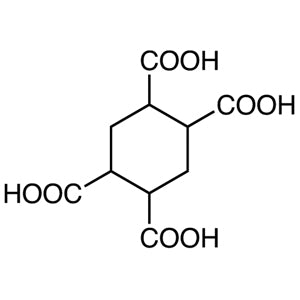
1,2,4,5-Cyclohexanetetracarboxylic acid is an organic compound built around a cyclohexane ring that carries four carboxylic acid groups at the 1,2,4,5 positions. In the laboratory, it serves as a versatile building block for the synthesis of a wide range of derivative compounds, including esters, imides, coordination ligands, and functional polymer monomers. The presence of four reactive carboxyl groups makes it an ideal starting material for condensation reactions and structural modification, and it is widely used in organic chemistry research, polymer chemistry, materials chemistry, and the development of intermediates for both industrial and academic applications. This product is supplied by TCI under catalog number C2198 and CAS number 15383-49-0, and is available in 5 g and 25 g pack sizes tailored to laboratory working scales.
Researchers select this compound primarily because of its relatively rigid and symmetric cyclohexane framework, which provides a stable molecular scaffold and facilitates control over the geometry of the final synthetic products. The four carboxylic acid groups distributed around the ring allow the molecule to act as a multi-functional linker or ligand, offering multiple points of attachment in coordination chemistry and enabling stepwise derivatization in organic synthesis. Its symmetry reduces the number of possible isomers and side reactions, giving cleaner reaction profiles and more predictable outcomes. These characteristics make it a dependable and preferred choice when constructing complex molecular architectures, cross-linked networks, or well-defined coordination compounds in advanced research settings.
In Indonesian laboratories, this building block is typically employed in academic and industrial research programs focused on organic synthesis, polymer development, and materials science. It is commonly used in the preparation of polyimide precursors, coordination ligands, and functional monomers for specialty polymers, particularly in university chemistry departments and research institutes. The availability of 5 g and 25 g packaging allows researchers to match the quantity to the scale of their work, whether for small exploratory reactions or longer synthetic campaigns. Its stable, symmetric structure is especially valued when reproducible results and consistent product quality are required in ongoing research projects.
TCI brochures (PDF)
- Organic Linker Molecules for Metal Organic Frameworks (MOFs) 2026-05-11 · p. 4
Related TCI products
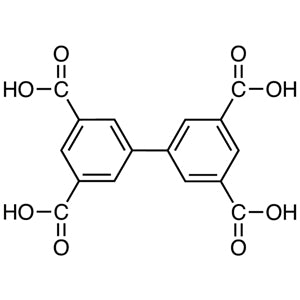
- TCI B3792 4371-28-2 Biphenyl-3,3',5,5'-tetracarboxylic Acid
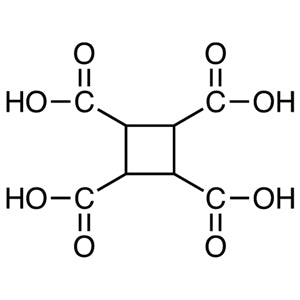
- TCI C2502 53159-92-5 1,2,3,4-Cyclobutanetetracarboxylic Acid
- TCI C0856 3724-52-5 1,2,3,4-Cyclopentanetetracarboxylic Acid
- TCI B0684 4534-68-3 meso-Butane-1,2,3,4-tetracarboxylic Acid
- TCI B6179 22803-05-0 [1,1'-Biphenyl]-3,3',4,4'-tetracarboxylic Acid
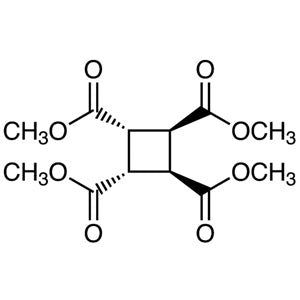
- TCI T2769 1032-95-7 Tetramethyl cis,trans,cis-1,2,3,4-Cyclobutanetetracarboxylate
- Ester synthesis: The four carboxylic acid groups can be converted into ester derivatives in a stepwise manner, making this compound a practical scaffold for building functional esters used in fine chemical and materials research.
- Imide and polyimide precursors: Its symmetric tetra-acid structure reacts readily with amines to form imide linkages, supporting the preparation of thermally stable polymer intermediates in polymer chemistry laboratories.
- Coordination chemistry ligands: The multiple carboxylate binding sites allow the molecule to coordinate metal ions in well-defined geometries, making it a suitable ligand for designing coordination complexes and framework materials.
- Functional polymer monomers: The rigid cyclohexane core can be incorporated into polymer backbones as a cross-linking or branching unit, enabling controlled network architectures in functional polymer synthesis.
- Intermediate development: Organic and medicinal chemistry teams use this compound as a versatile intermediate for condensation and ring-modification steps, enabling access to more complex non-heterocyclic target molecules.
| Brand | TCI |
|---|---|
| CAS number | 15383-49-0 |
| Molecular formula | — |
| Purity | — |
| Category | Chemistry > Building Blocks > Non-Heterocyclic Building Blocks |
| Pack sizes | 5 g and 25 g |
| Physical form | — |
| Storage | keep the container tightly closed and store in a cool, dry place protected from moisture |
- Catalog number: C2198
Store the product in a cool, dry place, protected from moisture and direct sunlight, inside a tightly sealed original container. Use containers made of glass or compatible laboratory plastics that resist acidic compounds, and avoid metal containers that may react with carboxylic acids. Keep the container closed when not in use and reseal it promptly after each weighing to minimize exposure to humid air. Wear appropriate personal protective equipment, such as laboratory gloves, safety goggles, and a laboratory coat, when handling the material. Work in a well-ventilated area or fume hood to avoid inhaling any dust from the powder. Keep the material away from strong bases, oxidizing agents, and open flames, and follow standard laboratory waste-disposal procedures when discarding unused material.
*Note: This description is based solely on the facts provided in the Indonesian reference; no additional technical data was added.*
—
Product Categories
- Organic-Inorganic Hybrid MaterialsMetal Organic Frameworks (MOF) and Their Raw MaterialsOrganic Linker Molecules [Metal Organic Frameworks (MOFs) Precursors]
- Polymer/Macromolecule ReagentsMetal Organic Frameworks (MOF) and Their Raw MaterialsOrganic Linker Molecules [Metal Organic Frameworks (MOFs) Precursors]
Produk Terkait
-
Biphenyl-3,3',5,5'-tetracarboxylicAcid TCI B3792
Regular price Rp 3.949.050,00Regular priceRp 2.761.500,00Sale price Rp 3.949.050,00 -
1,2,3,4-CyclobutanetetracarboxylicAcid TCI C2502
Regular price Rp 2.174.550,00Regular priceRp 1.520.400,00Sale price Rp 2.174.550,00 -
1,2,3,4-CyclopentanetetracarboxylicAcid TCI C0856
Regular price Rp 1.167.600,00Regular priceRp 815.850,00Sale price Rp 1.167.600,00 -
meso-Butane-1,2,3,4-tetracarboxylicAcid TCI B0684
Regular price From Rp 769.650,00Regular priceRp 553.350,00Sale price From Rp 769.650,00 -
[1,1'-Biphenyl]-3,3',4,4'-tetracarboxylicAcid TCI B6179
Regular price Rp 4.479.300,00Regular priceRp 3.132.150,00Sale price Rp 4.479.300,00 -
Tetramethylcis,trans,cis-1,2,3,4-Cyclobutanetetracarboxylate TCI T2769
Regular price Rp 4.479.300,00Regular priceRp 3.132.150,00Sale price Rp 4.479.300,00 -
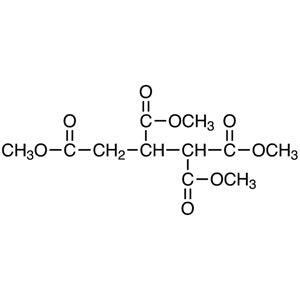
Tetramethyl1,1,2,3-Propanetetracarboxylate TCI T2594
Regular price Rp 3.843.000,00Regular priceRp 2.702.700,00Sale price Rp 3.843.000,00 -
1,2,3,4-CyclobutanetetracarboxylicDianhydride(purifiedbysublimation) TCI C2842
Regular price From Rp 1.908.900,00Regular priceRp 1.334.550,00Sale price From Rp 1.908.900,00




![TCI B6179 22803-05-0 [1,1'-Biphenyl]-3,3',4,4'-tetracarboxylic Acid](http://amiscientific.com/cdn/shop/files/TCI2510B6179_e3c368a5-5b9a-4d34-aabd-b29e1b37e176.jpg?v=1792631269&width=533)
![[1,1'-Biphenyl]-3,3',4,4'-tetracarboxylic Acid (CAS 22803-05-0) - TCI B6179 - AMI Scientific](http://amiscientific.com/cdn/shop/files/TCI2510B6179.jpg?v=1767093266&width=533)