TCI C2376 3-Chloro-6-methoxypyridazine is a heterocyclic building block from the pyridazine family, a six-membered aromatic ring containing two adjacent nitrogen atoms. The compound carries two substituents positioned opposite one another on the ring: a chlorine atom and a methoxy group. The presence of two neighbouring nitrogen atoms renders the ring electron-deficient, making it highly susceptible to nucleophilic attack at the carbon bearing the chlorine. For this reason the material is frequently selected as a practical starting point for constructing nitrogen-containing molecules in organic synthesis and medicinal chemistry laboratories.
The most notable characteristic of this material is its directed and predictable reactivity. The chlorine atom acts as a leaving group ready to be displaced by amines, alcohols, thiols, and other nucleophiles through nucleophilic aromatic substitution, often without the need for a metal catalyst. The methoxy group, meanwhile, confers stability on the ring while also serving as a masked protecting group that can be unmasked to the corresponding pyridazinone when required. That same chlorine can also be exploited in cross-coupling reactions to form carbon-carbon bonds, giving synthetic chemists two complementary routes from a single scaffold.
In Indonesian laboratories, this building block is typically used in university and institutional research settings where nitrogen-heterocyclic scaffolds are assembled step by step. It suits synthetic organic chemistry groups, medicinal chemistry programmes exploring new molecular frameworks, and method-development work in which a reliable, well-behaved starting material shortens the route to a target. Because its reactivity is predictable, it is also convenient for teaching advanced synthesis practicals and for small-scale exploratory reactions.
Related TCI products
- TCI C2073 72830-09-2 2-(Chloromethyl)-3,4-dimethoxypyridine Hydrochloride
- TCI I0742 766-55-2 Imidazo[1,2-b]pyridazine
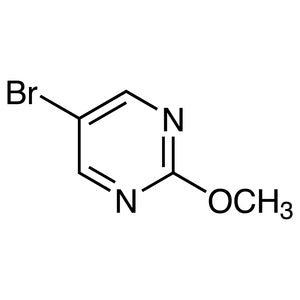
- TCI B3521 14001-66-2 5-Bromo-2-methoxypyrimidine
- TCI B1920 56686-16-9 5-Bromo-2,4-dimethoxypyrimidine
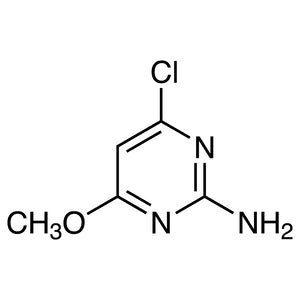
- TCI A1520 5734-64-5 2-Amino-4-chloro-6-methoxypyrimidine
- TCI P1907 50681-25-9 Pyridazine-4-carboxylic Acid
- Nucleophilic aromatic substitution studies — the electron-deficient pyridazine ring and activated chlorine allow clean displacement by amines, alcohols, or thiols, frequently without any metal catalyst.
- Medicinal chemistry scaffold construction — provides a compact nitrogen-rich core that can be elaborated at two distinct positions, supporting systematic exploration of structure-activity relationships in discovery work.
- Cross-coupling chemistry — the chlorine substituent serves as a handle for forming carbon-carbon bonds, enabling aryl and alkyl fragments to be joined onto the pyridazine ring.
- Pyridazinone synthesis — the methoxy group functions as a masked protecting group that can be converted to the corresponding pyridazinone when the synthetic route calls for that motif.
- General heterocyclic building block work — its predictable, directed reactivity makes it a dependable starting material for assembling nitrogen-containing molecules in multi-step organic synthesis.
| Brand | TCI |
|---|---|
| CAS number | 1722-10-7 |
| Molecular formula | — |
| Purity | — |
| Category | Chemistry > Building Blocks > Heterocyclic Building Blocks |
| Pack sizes | available in the standard research-scale pack sizes offered by TCI for this catalogue item |
| Physical form | — |
| Storage | store in a cool, dry place in a tightly closed container |
- Product code: C2376
Store the container tightly closed in a cool, dry, well-ventilated area, away from direct sunlight, heat sources, and incompatible materials. Keep the compound in its original supplier packaging or in a chemically compatible sealed container, and reseal promptly after each use to limit exposure to atmospheric moisture. Handle in a fume hood using standard personal protective equipment, including safety glasses, gloves, and a laboratory coat. Avoid inhalation of dust and contact with skin and eyes. Label all secondary containers clearly and follow institutional procedures for chemical waste disposal.
—
Produk Terkait
-
2-(Chloromethyl)-3,4-dimethoxypyridineHydrochloride TCI C2073
Regular price From Rp 1.035.300,00Regular price -
Imidazo[1,2-b]pyridazine TCI I0742
Regular price From Rp 689.850,00Regular price -
5-Bromo-2-methoxypyrimidine TCI B3521
Regular price From Rp 637.350,00Regular price -
5-Bromo-2,4-dimethoxypyrimidine TCI B1920
Regular price From Rp 505.050,00Regular price -
2-Amino-4-chloro-6-methoxypyrimidine TCI A1520
Regular price From Rp 477.750,00Regular price -
Pyridazine-4-carboxylicAcid TCI P1907
Regular price Rp 3.180.450,00Regular price -
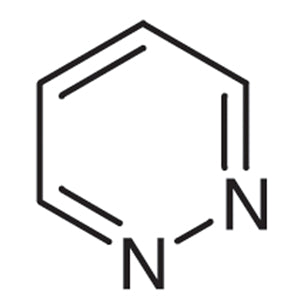
Pyridazine TCI P0616
Regular price From Rp 1.510.950,00Regular price -
5-Iodo-2,4-dimethoxypyrimidine TCI I0531
Regular price From Rp 2.359.350,00Regular price

![766-55-2 Imidazo[1,2-b]pyridazine - AMI Scientific](http://amiscientific.com/cdn/shop/files/TCI2510I0742.jpg?v=1769180941&width=533)