Pyridazine is a heterocyclic compound characterized by a six-membered aromatic ring containing two nitrogen atoms. It plays a crucial role in organic chemistry laboratories, serving as a foundational building block for the synthesis of complex organic molecules. Due to its unique structure, pyridazine is widely used in the development of compounds with biological activity, including pharmaceuticals and agrochemicals. Its versatility makes it an essential reagent in various synthetic pathways, supporting research in chemistry, pharmacology, and materials science.
Pyridazine is known for its chemical stability and reactivity, particularly at the nitrogen atoms within its ring structure. These properties enable it to participate in a wide range of chemical reactions, such as nucleophilic, electrophilic, and substitution reactions. Its reactivity and structural simplicity make it a preferred choice for chemists seeking to construct more complex heterocyclic compounds. Additionally, pyridazine exhibits stable boiling and melting points, which facilitate its handling and storage in laboratory settings.
In Indonesian laboratories, pyridazine is commonly used in chemical and pharmaceutical research. It is a key component in projects aimed at drug development and the synthesis of bioactive compounds. Its availability and chemical properties make it a popular choice among researchers working on innovative chemical processes and material development.
Related TCI products
- TCI I0742 766-55-2 Imidazo[1,2-b]pyridazine
- TCI P1907 50681-25-9 Pyridazine-4-carboxylic Acid
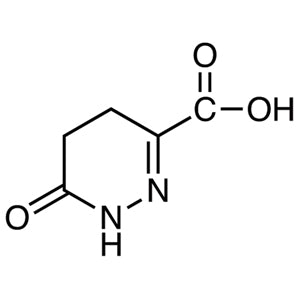
- TCI T2955 27372-38-9 1,4,5,6-Tetrahydro-6-oxopyridazine-3-carboxylic Acid
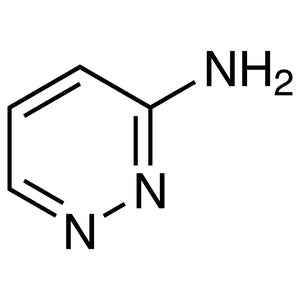
- TCI A2048 5469-70-5 3-Aminopyridazine
- TCI M0872 1632-76-4 3-Methylpyridazine
- TCI H1387 306934-80-5 6-Hydroxypyridazine-3-carboxylic Acid Monohydrate
- Organic synthesis projects benefit from pyridazine's role as a versatile heterocyclic building block, enabling the creation of complex molecular structures with biological activity.
- Pharmaceutical research utilizes pyridazine to develop compounds with therapeutic potential, leveraging its structural features for drug molecule design.
- Materials science applications take advantage of pyridazine's chemical stability and reactivity in the synthesis of advanced functional materials.
- Analytical chemistry experiments use pyridazine as a standard reference compound for qualitative and quantitative analysis in heterocyclic compound studies.
- Biochemistry research incorporates pyridazine in the study of nitrogen-containing compounds and their interactions with biological systems.
| Brand | TCI |
|---|---|
| CAS number | 289-80-5 |
| Molecular formula | — |
| Purity | — |
| Category | Chemistry > Building Blocks > Heterocyclic Building Blocks |
| Pack sizes | Available in various quantities as per supplier specifications |
| Physical form | Solid |
| Storage | Store in a cool, dry place away from direct sunlight and incompatible materials |
Pyridazine should be stored in a cool, dry environment to maintain its chemical stability and prevent degradation. It is recommended to use airtight containers to minimize exposure to moisture and air, which could affect its reactivity. Due to its chemical nature, it should be kept away from strong oxidizing agents and incompatible substances to avoid potential reactions. Proper labeling of storage containers is essential for safety and identification. In laboratory settings, pyridazine should be handled with appropriate personal protective equipment to ensure safe usage and storage. Regular inspection of storage conditions ensures the compound remains in optimal condition for research applications.
—
Produk Terkait
-
Imidazo[1,2-b]pyridazine TCI I0742
Regular price From Rp 689.850,00Regular price -
Pyridazine-4-carboxylicAcid TCI P1907
Regular price Rp 3.180.450,00Regular price -
1,4,5,6-Tetrahydro-6-oxopyridazine-3-carboxylicAcid TCI T2955
Regular price From Rp 743.400,00Regular price -
3-Aminopyridazine TCI A2048
Regular price From Rp 1.510.950,00Regular price -
3-Methylpyridazine TCI M0872
Regular price From Rp 5.565.000,00Regular price -
6-Hydroxypyridazine-3-carboxylicAcidMonohydrate TCI H1387
Regular price From Rp 743.400,00Regular price -
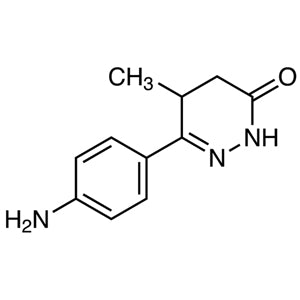
6-(4-Aminophenyl)-4,5-dihydro-5-methyl-3(2H)-pyridazinone TCI A2919
Regular price Rp 1.670.550,00Regular price -
6-Phenyl-3(2H)-pyridazinone TCI P2060
Regular price Rp 1.035.300,00Regular price
![766-55-2 Imidazo[1,2-b]pyridazine - AMI Scientific](http://amiscientific.com/cdn/shop/files/TCI2510I0742.jpg?v=1769180941&width=533)