3-Methylpyridazine is a six-membered aromatic heterocyclic compound containing two adjacent nitrogen atoms in the ring, together with a single methyl group at the 3-position. Pyridazine is one of the most distinctive of the diazine isomers, because the side-by-side arrangement of its nitrogen atoms produces a large dipole moment and a reactivity pattern that differs markedly from pyridine, pyrimidine, and pyrazine. In laboratory practice, this compound is widely used as a building block in medicinal chemistry synthesis and in the development of functional materials. This TCI product, catalogue code M0872, is supplied as a liquid in a choice of 5 mL and 25 mL pack sizes.
The characteristic that gives this material its value is the highly polar pyridazine core, which acts as a capable hydrogen-bond acceptor through both of its nitrogen atoms. This property makes the ring an attractive motif for drug molecule design, since it can improve solubility and reshape the interaction profile of a candidate with its biological target. From a synthetic standpoint, the electron-poor ring supports nucleophilic substitution at specific positions, while the methyl group provides a benzylic site that can be deprotonated, oxidised, or functionalised further. The liquid form simplifies measuring and transfer during routine bench work.
In Indonesian laboratories, 3-Methylpyridazine is typically encountered in university research groups, pharmaceutical discovery units, and materials development programmes where heterocyclic scaffolds are assembled and elaborated. The small 5 mL and 25 mL pack formats suit exploratory and small-scale synthetic work, allowing a team to trial a route without committing to a large volume. As a TCI catalogue item, it fits naturally into laboratories that already rely on defined, reproducibly sourced reagents for multi-step synthetic sequences.
Related TCI products
- Medicinal chemistry building block synthesis: the pyridazine ring is a recognised scaffold in drug design, and its two adjacent nitrogen atoms offer hydrogen-bond acceptor points that shape binding interactions with biological targets.
- Nucleophilic substitution chemistry: the electron-poor character of the pyridazine ring activates specific ring positions toward nucleophilic attack, making this compound a practical starting point for building substituted heterocyclic products.
- Benzylic functionalisation studies: the methyl group at the 3-position provides a benzylic site that can be deprotonated, oxidised, or elaborated further, opening a second handle for extending the molecular framework.
- Functional materials development: the large dipole moment arising from the adjacent nitrogen arrangement makes the pyridazine core of interest when designing polar organic materials with tailored electronic behaviour.
- Solubility and property modulation work: incorporating this highly polar heterocyclic motif into a larger structure is a recognised strategy for improving solubility and adjusting how a molecule interacts with its environment.
| Brand | TCI, catalogue code M0872 |
|---|---|
| CAS number | 1632-76-4 |
| Molecular formula | — |
| Purity | — |
| Category | Chemistry > Building Blocks > Heterocyclic Building Blocks |
| Pack sizes | 5 mL and 25 mL |
| Physical form | liquid |
| Storage | store according to the conditions stated on the manufacturer's label and safety data sheet |
Store 3-Methylpyridazine in its original tightly closed container, kept in a cool, dry, and well-ventilated area away from heat sources, direct sunlight, and incompatible chemicals. Chemically resistant containers with secure closures are appropriate, and the manufacturer's original packaging should be retained wherever possible so that label information stays with the material. Handle the liquid inside a functioning fume hood, wearing safety goggles, gloves, and a laboratory coat, and avoid inhaling vapour or allowing contact with skin and eyes. Transfer only the volume required for the work at hand, reseal the container promptly after use to limit evaporation and moisture ingress, and consult the manufacturer's safety data sheet before first use for detailed handling, incompatibility, and disposal guidance.
—
Produk Terkait
-
Imidazo[1,2-b]pyridazine TCI I0742
Regular price From Rp 689.850,00Regular price -
Pyridazine-4-carboxylicAcid TCI P1907
Regular price Rp 3.180.450,00Regular price -
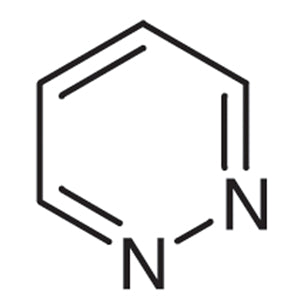
Pyridazine TCI P0616
Regular price From Rp 1.510.950,00Regular price -
3,6-Dichloro-4-methylpyridazine TCI D4206
Regular price From Rp 557.550,00Regular price -
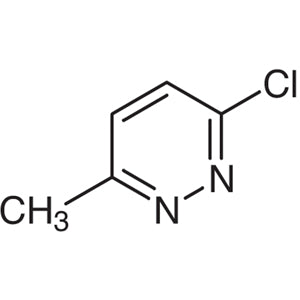
3-Chloro-6-methylpyridazine TCI C2274
Regular price From Rp 2.254.350,00Regular price -
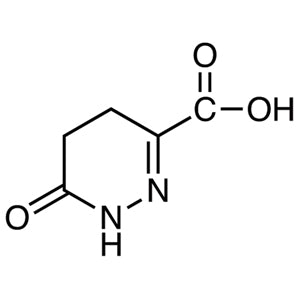
1,4,5,6-Tetrahydro-6-oxopyridazine-3-carboxylicAcid TCI T2955
Regular price From Rp 743.400,00Regular price -
6-Hydroxy-3,4-dimethylpyridin-2(1H)-one TCI D6024
Regular price From Rp 3.419.850,00Regular price -
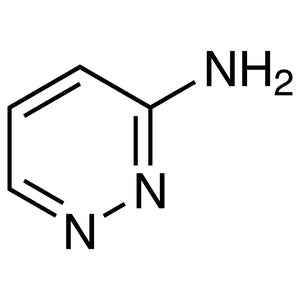
3-Aminopyridazine TCI A2048
Regular price From Rp 1.510.950,00Regular price
![766-55-2 Imidazo[1,2-b]pyridazine - AMI Scientific](http://amiscientific.com/cdn/shop/files/TCI2510I0742.jpg?v=1769180941&width=533)