Carprofen is a chemical compound widely utilized in life sciences, particularly in biochemical research. As an enzyme inhibitor, it plays a crucial role in modulating enzyme activity, making it an essential tool for studying biochemical reaction mechanisms. Its ability to selectively inhibit specific enzymes allows researchers to investigate enzyme function and metabolic pathways with precision. Carprofen is commonly used in both academic and industrial laboratories for its reliability and consistency in experimental outcomes. Its chemical stability ensures that it remains effective under various laboratory conditions, contributing to the reproducibility of experiments.
One of the key attributes that make Carprofen a preferred choice is its chemical stability and solubility. It maintains its structural integrity and reactivity across a range of experimental conditions, ensuring consistent performance. The compound’s well-defined molecular structure allows for predictable behavior in chemical reactions, which is vital for accurate scientific results. Additionally, its availability in multiple packaging options—1 gram and 5 gram—provides flexibility for researchers to choose the appropriate quantity based on their experimental needs. This versatility enhances its usability in both small-scale and large-scale laboratory applications.
In Indonesian laboratories, Carprofen is frequently employed in pharmacological, biochemical, and enzymatic mechanism studies. It is a staple in research institutions and universities, where it supports investigations into drug development, enzyme inhibition, and metabolic processes. Its reliability and consistent performance make it an indispensable component in the toolkit of biochemists and researchers working in the life sciences sector.
TCI brochures (PDF)
- Lipid Mediator Research Reagents 2026-04-10 · p. 1
- Carbazoles 2025-06-27 · p. 2
- Immune System, Inflammation, Allergy Research Reagents 2025-05-26 · p. 3
- Pharmaceutical Ingredients for Research and Experimental Use 2026-03-09 · p. 32
- Carprofen is used in pharmacological research to study the inhibitory effects on specific enzymes, aiding in drug development and mechanism of action analysis.
- It is applied in biochemical studies to investigate enzyme activity and metabolic pathways, providing insights into cellular processes.
- The compound is utilized in enzyme inhibition experiments to determine the efficacy of inhibitors in modulating enzyme function.
- Carprofen supports research in inflammation and pain mechanisms, contributing to the development of therapeutic agents.
- It is employed in analytical chemistry for its predictable reactivity and stability, ensuring accurate experimental results.
| Brand | TCI |
|---|---|
| CAS number | 53716-49-7 |
| Molecular formula | — |
| Purity | — |
| Category | Life Science > Biochemicals and Reagents > Enzymes, Enzyme Inhibitors, Enzyme Substrates |
| Pack sizes | 1 gram, 5 gram |
| Physical form | Solid (powder) |
| Storage | Store in a cool, dry place away from direct sunlight |
Carprofen should be stored in a cool, dry environment, away from direct sunlight and moisture to maintain its chemical stability. It is recommended to use airtight containers to prevent exposure to air and contaminants. Due to its chemical nature, it should be handled with care, using appropriate personal protective equipment such as gloves and safety goggles. Avoid contact with skin and eyes, and ensure proper ventilation in the workspace. The compound is non-hazardous under normal conditions but should be treated with the standard laboratory safety precautions to ensure safe handling and storage.
—
Product Categories
- Biochemicals and ReagentsEnzymes, Enzyme Inhibitors, Enzyme SubstratesEnzymes [by Application]
- Biochemicals and ReagentsEnzymes, Enzyme Inhibitors, Enzyme SubstratesEnzyme Inhibitors [Biochemicals and Reagents]
- Biochemicals and ReagentsPharmaceutical Research Reagents (for Experimental Use)Anti-inflammatory Ingredients (for Research and Experimental Use)
- Cell BiologyImmune System, Inflammation, Allergy ResearchCyclooxygenase (COX) Inhibitors
- Pharmaceutical Development and Drug Discovery ResearchPharmaceutical Research Reagents (for Experimental Use)Anti-inflammatory Ingredients (for Research and Experimental Use)
Produk Terkait
-
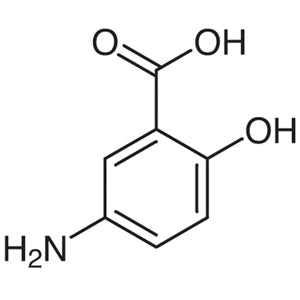
5-AminosalicylicAcid TCI A0317
Regular price Rp 1.008.000,00Regular priceRp 720.300,00Sale price Rp 1.008.000,00 -
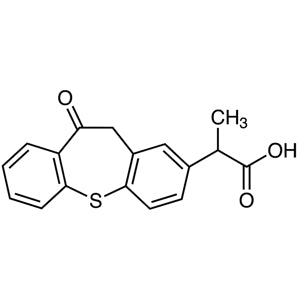
Zaltoprofen TCI Z0021
Regular price Rp 1.378.650,00Regular priceRp 979.650,00Sale price Rp 1.378.650,00 -
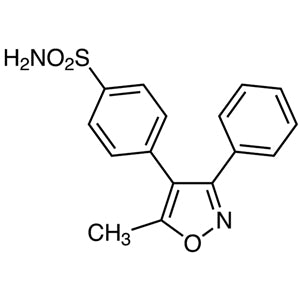
Valdecoxib TCI V0133
Regular price Rp 2.914.800,00Regular priceRp 2.053.800,00Sale price Rp 2.914.800,00 -
Suprofen TCI U0138
Regular price Rp 4.559.100,00Regular priceRp 3.203.550,00Sale price Rp 4.559.100,00 -
Tolmetin TCI T4087
Regular price Rp 1.192.800,00Regular priceRp 849.450,00Sale price Rp 1.192.800,00 -
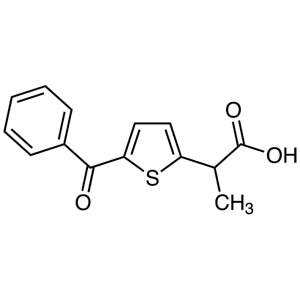
TiaprofenicAcid TCI T3175
Regular price Rp 3.922.800,00Regular priceRp 2.758.350,00Sale price Rp 3.922.800,00 -
Tenoxicam TCI T2750
Regular price Rp 2.491.650,00Regular priceRp 1.757.700,00Sale price Rp 2.491.650,00 -
Bufexamac TCI B4179
Regular price Rp 1.483.650,00Regular priceRp 1.053.150,00Sale price Rp 1.483.650,00