4-Chloro-3-(trifluoromethyl)benzoic Acid is a versatile chemical compound widely used in laboratory settings as a building block for the synthesis of complex organic molecules. This compound features a benzene ring substituted with both a chloro group and a trifluoromethyl group, along with a carboxylic acid functional group. Its structural complexity makes it an essential component in the development of pharmaceuticals, industrial chemicals, and other specialized compounds. Due to its chemical stability and controlled reactivity, it is a key reagent in various synthetic pathways.
The unique properties of this compound, such as its high polarity and the presence of fluorine atoms, contribute to its effectiveness in chemical reactions. Fluorine atoms enhance molecular stability and alter the reactivity profile, making it suitable for substitution and electrophilic reactions. These characteristics allow it to be a preferred choice for chemists seeking reliable and predictable results in their experiments. The combination of functional groups also enables it to participate in a wide range of chemical transformations, enhancing its utility in synthetic chemistry.
In Indonesian laboratories, this compound is commonly used in scientific research, pharmaceutical development, and chemical testing. Its reliability and adaptability make it a staple in both academic and industrial research environments. Researchers rely on its consistent performance to achieve precise and reproducible outcomes in their experiments. Its application spans across multiple disciplines, reinforcing its importance in modern chemical research.
Related TCI products
- Pharmaceutical research and development as a key intermediate in the synthesis of drug molecules due to its structural versatility and reactivity.
- Organic synthesis applications where complex functional groups are required, offering a stable platform for further chemical modifications.
- Industrial chemical production for the creation of specialty chemicals and materials with tailored properties.
- Analytical chemistry for use in standardization and calibration of chemical reagents and solutions.
- Academic research in chemical sciences for teaching and experimental studies on synthetic methodologies and molecular reactivity.
| Brand | TCI |
|---|---|
| CAS number | 1737-36-6 |
| Molecular formula | — |
| Purity | — |
| Category | Chemistry > Building Blocks > Non-Heterocyclic Building Blocks |
| Pack sizes | Available in various quantities as per standard laboratory supply |
| Physical form | Solid, crystalline appearance |
| Storage | Store in a cool, dry place away from moisture and direct sunlight |
This compound should be stored in a cool, dry environment to maintain its chemical integrity and prevent degradation. It is recommended to use airtight containers to protect it from moisture and humidity, which can affect its stability. Due to its chemical nature, it should be kept away from incompatible substances such as strong bases or reactive metals. Proper labeling of storage containers is essential for safety and traceability. In laboratory settings, it is important to follow standard safety protocols, including the use of personal protective equipment when handling or transferring the compound. Regular monitoring of storage conditions ensures optimal preservation and safe usage of the material.
—
Produk Terkait
-
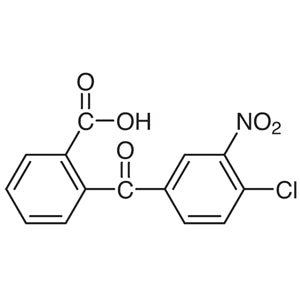
2-(4-Chloro-3-nitrobenzoyl)benzoicAcid TCI C1013
Regular price From Rp 477.750,00Regular price -
3,4,5-Tris(dodecyloxy)benzoicAcid TCI T3606
Regular price Rp 3.738.000,00Regular price -
4-(4-Methylphenoxy)benzoicAcid TCI T3391
Regular price From Rp 2.889.600,00Regular price -
2-(p-Tolyl)benzoicAcid TCI T2377
Regular price From Rp 769.650,00Regular price -
3,4,5-Tris(benzyloxy)benzoicAcid TCI T1869
Regular price From Rp 3.260.250,00Regular price -
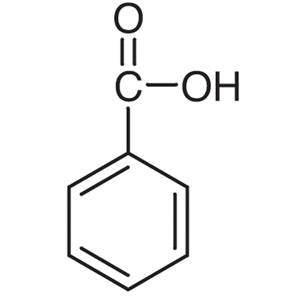
BenzoicAcid TCI B2635
Regular price From Rp 505.050,00Regular price -
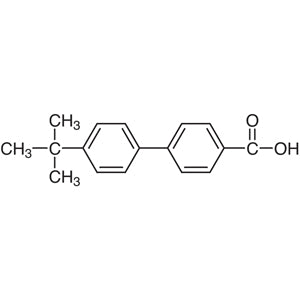
4-(4-tert-Butylphenyl)benzoicAcid TCI B1986
Regular price From Rp 2.677.500,00Regular price -
4-(2-Bromoethyl)benzoicAcid TCI B1944
Regular price From Rp 5.724.600,00Regular price