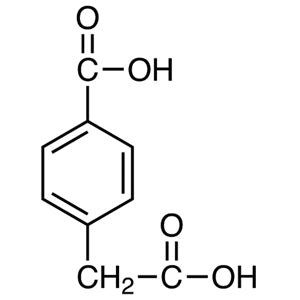
4-(4-tert-Butylphenyl)benzoic Acid is a chemical compound widely used as a building block in the synthesis of complex organic molecules. Its role in laboratory settings is crucial for the development of new compounds, particularly in pharmaceutical and industrial applications. This compound serves as a key intermediate in various chemical reactions, where its benzoic acid structure contributes to the formation of more intricate molecular frameworks. Due to its versatility, it is a fundamental component in many synthetic pathways that require controlled reactivity and structural integrity.
The compound's stability and ability to react with a variety of functional groups make it a preferred choice for chemists. The presence of the tert-butyl group on the phenyl ring enhances its solubility and stability, which are essential for successful chemical transformations. These properties ensure consistent performance in laboratory experiments, making it a reliable material for both research and development. Its predictable behavior under different reaction conditions allows for precise control over the synthesis process, which is vital for achieving desired outcomes.
In Indonesian laboratories, this compound is extensively used in organic chemistry research, especially in the fields of pharmacy and material science. It is a go-to reagent for institutions conducting experiments that require complex molecular structures and high precision. Its availability and reliability make it a staple in academic and industrial research settings, supporting the advancement of scientific knowledge and innovation.
Related TCI products
- TCI P1037 88038-94-2 4-(4-Propylphenyl)benzoic Acid
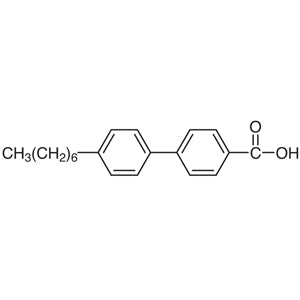
- TCI H0709 58573-94-7 4-(4-Heptylphenyl)benzoic Acid
- TCI B4307 32857-63-9 4-tert-Butylphenylacetic Acid
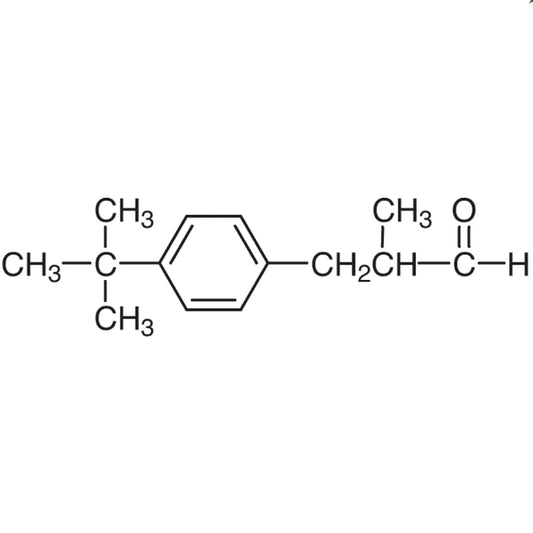
- TCI B1145 80-54-6 3-(4-tert-Butylphenyl)isobutyraldehyde
- TCI B0962 3056-64-2 4-tert-Butylphenyl Acetate
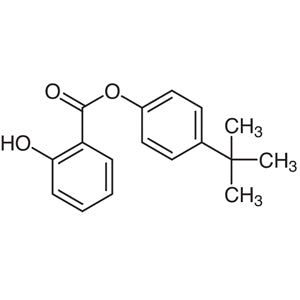
- TCI S0274 87-18-3 4-tert-Butylphenyl Salicylate
- Pharmaceutical synthesis for the development of new drug compounds due to its structural versatility and reactivity.
- Organic chemistry research where complex molecular frameworks are required for experimental accuracy and reproducibility.
- Material science applications for the creation of advanced polymers and functional materials through controlled chemical reactions.
- Industrial chemical processes that rely on stable and predictable building blocks for large-scale production.
- Academic research in universities and research institutions for teaching and experimental purposes in organic chemistry.
| Brand | TCI |
|---|---|
| CAS number | 5748-42-5 |
| Molecular formula | — |
| Purity | — |
| Category | Chemistry > Building Blocks > Non-Heterocyclic Building Blocks |
| Pack sizes | Available in various quantities as per standard laboratory supply formats |
| Physical form | Solid, typically in crystalline or powder form |
| Storage | Store in a cool, dry place away from direct sunlight and moisture |
This compound should be stored in a cool, dry environment to maintain its stability and prevent degradation. It is recommended to keep it in a sealed container to avoid exposure to moisture and air, which could affect its chemical integrity. Suitable storage containers include glass or high-density polyethylene (HDPE) bottles with airtight lids. Laboratory personnel should handle the material with care, using appropriate personal protective equipment such as gloves and safety goggles. It is important to ensure that the compound is stored away from incompatible substances, such as strong bases or oxidizing agents, to prevent unwanted reactions. Proper labeling and storage conditions help maintain the compound's effectiveness and safety in laboratory settings.
—
Produk Terkait
-
4-(4-Propylphenyl)benzoicAcid TCI P1037
Regular price Rp 2.464.350,00Regular priceRp 1.738.800,00Sale price Rp 2.464.350,00 -
4-(4-Heptylphenyl)benzoicAcid TCI H0709
Regular price Rp 2.199.750,00Regular priceRp 1.554.000,00Sale price Rp 2.199.750,00 -
4-tert-ButylphenylaceticAcid TCI B4307
Regular price From Rp 1.961.400,00Regular priceRp 1.387.050,00Sale price From Rp 1.961.400,00 -
3-(4-tert-Butylphenyl)isobutyraldehyde TCI B1145
Regular price From Rp 795.900,00Regular priceRp 556.500,00Sale price From Rp 795.900,00 -
4-tert-ButylphenylAcetate TCI B0962
Regular price Rp 2.359.350,00Regular priceRp 1.649.550,00Sale price Rp 2.359.350,00 -
4-tert-ButylphenylSalicylate TCI S0274
Regular price From Rp 505.050,00Regular priceRp 352.800,00Sale price From Rp 505.050,00 -
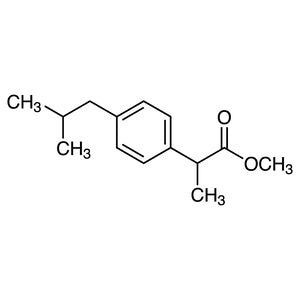
Methyl2-(4-Isobutylphenyl)propanoate TCI I1194
Regular price From Rp 1.618.050,00Regular priceRp 1.146.600,00Sale price From Rp 1.618.050,00 -
4-(Carboxymethyl)benzoicAcid TCI C3530
Regular price From Rp 1.273.650,00Regular priceRp 890.400,00Sale price From Rp 1.273.650,00