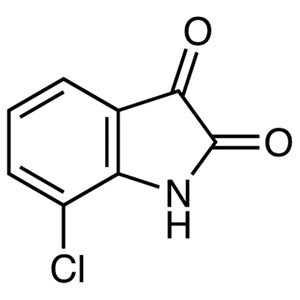
7-Chloroisatin is a chemical compound widely used in organic reactions for the synthesis of heterocyclic compounds. It serves as a fundamental building block in laboratory settings, enabling the creation of complex molecular structures. The compound features an indole ring with a chlorine substituent at the 7-position, which contributes to its reactivity and versatility in synthetic pathways. Its role in the laboratory is critical for researchers aiming to develop new pharmaceuticals, agrochemicals, and materials. Due to its structural simplicity and functional group versatility, 7-Chloroisatin is a key reagent in the field of heterocyclic chemistry.
The compound's stability and reactivity make it a preferred choice for various synthetic applications. Its ability to participate in multiple reaction types, such as Diels-Alder, electrophilic substitution, and condensation reactions, enhances its utility in organic synthesis. The presence of the chlorine atom introduces additional reactivity, allowing for selective modifications and functional group transformations. These properties make it a valuable tool for chemists working on complex molecule synthesis and modification. Its predictable behavior under different reaction conditions further supports its use in both academic and industrial research settings.
In Indonesian laboratories, 7-Chloroisatin is commonly used in organic chemistry research, particularly in the synthesis of heterocyclic compounds. It is an essential component of research programs focused on the development of new chemical entities. Its availability and reliability make it a go-to reagent for scientists and researchers in the region, supporting both basic and applied research in chemistry.
- Organic Synthesis: 7-Chloroisatin is ideal for creating complex heterocyclic structures due to its reactive indole core and chlorine substituent.
- Pharmaceutical Research: The compound is used to develop new drugs by enabling the synthesis of bioactive heterocyclic compounds.
- Agrochemical Development: It supports the creation of novel pesticides and herbicides through its participation in synthetic pathways.
- Material Science: 7-Chloroisatin contributes to the synthesis of advanced materials with unique chemical properties.
- Academic Teaching: It is a valuable tool for demonstrating heterocyclic chemistry concepts in undergraduate and graduate courses.
| Brand | TCI |
|---|---|
| CAS number | 7477-63-6 |
| Molecular formula | — |
| Purity | — |
| Category | Chemistry > Building Blocks > Heterocyclic Building Blocks |
| Pack sizes | Available in various quantities as per standard laboratory supply |
| Physical form | Solid |
| Storage | Store in a cool, dry place away from light and moisture |
7-Chloroisatin should be stored in a cool, dry environment, away from direct light and moisture to maintain its chemical stability. It is recommended to use airtight containers made of glass or high-density polyethylene to prevent contamination and degradation. Due to its reactivity, it should be handled with care, using appropriate personal protective equipment such as gloves and safety goggles. Proper ventilation is essential when working with the compound to avoid inhalation of vapors. It is important to keep the compound away from incompatible substances like strong oxidizers or acids. Regular inspection of storage conditions ensures the compound remains in optimal condition for laboratory use.
—
Produk Terkait
-
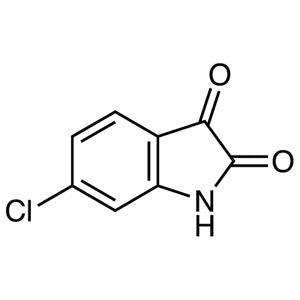
6-Chloroisatin TCI C1871
Regular price From Rp 1.829.100,00Regular price -
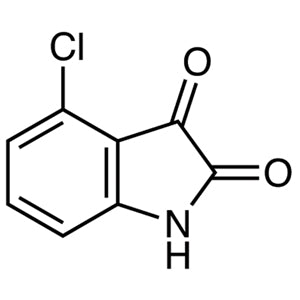
4-Chloroisatin TCI C1870
Regular price From Rp 875.700,00Regular price -
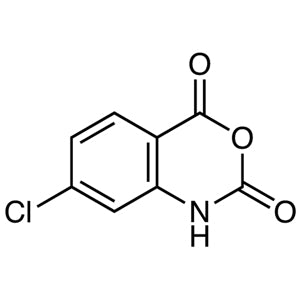
4-ChloroisatoicAnhydride TCI C2790
Regular price From Rp 769.650,00Regular price -
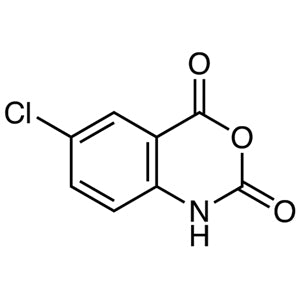
5-ChloroisatoicAnhydride TCI C2743
Regular price From Rp 1.856.400,00Regular price -
1,3-Dichloroisoquinoline TCI D4285
Regular price Rp 1.908.900,00Regular price -
1-Chloroisoquinoline TCI C2097
Regular price From Rp 3.180.450,00Regular price