TCI D4285, CAS 7742-73-6, is 1,3-Dichloroisoquinoline, a bicyclic heterocyclic compound consisting of an isoquinoline core bearing chlorine atoms at the 1- and 3-positions. Isoquinoline is a nitrogen-containing aromatic framework encountered widely in natural product chemistry and in the design of biologically active molecules, which is why halogenated derivatives of this type are highly sought after as building blocks. In the laboratory, this material serves as a synthetic intermediate rather than an end product, providing chemists with a defined starting scaffold for constructing more elaborate heterocyclic targets.
The presence of two chlorine atoms on the pyridine ring of the isoquinoline system makes this compound a diversification platform: a starting material that allows two different substituents to be installed sequentially. The property that drives its selection is the differing reactivity between the 1-position and the 3-position. The isoquinoline ring is electron-poor, so both chlorinated positions are activated toward nucleophilic aromatic substitution, yet the 1-position adjacent to the ring nitrogen is generally the more reactive. This reactivity gradient offers valuable selectivity: researchers can first replace one chlorine with an amine, an alkoxide, or a thiolate, then functionalize the remaining position through palladium-catalyzed cross-coupling. The fused aromatic framework also contributes rigidity to the resulting structures.
In Indonesian laboratories, this building block is typically used in university research groups, pharmaceutical chemistry laboratories, and institutional research centers engaged in the synthesis of nitrogen heterocycles. It is generally handled at small scale on the bench during exploratory route development, where a single container supports many individual reactions. Because it functions as a common starting point for several different analogues, it is often kept as part of a maintained building-block collection alongside other halogenated heterocycles for medicinal chemistry and methodology work.
Related TCI products
- Sequential nucleophilic aromatic substitution: the electron-poor isoquinoline ring activates both chlorines, while the more reactive 1-position permits controlled, stepwise displacement with amines, alkoxides, or thiolates.
- Palladium-catalyzed cross-coupling chemistry: after one chlorine is substituted, the remaining carbon–chlorine bond serves as a defined handle for installing a second, different substituent under catalysis.
- Medicinal chemistry analogue libraries: the two independently addressable positions let researchers assemble series of related isoquinoline derivatives from a single common starting material efficiently.
- Nitrogen heterocycle scaffold construction: the isoquinoline core is a recurring motif in natural product chemistry and in active molecule design, making this halogenated derivative broadly applicable.
- Conformationally rigid target synthesis: the fused bicyclic aromatic framework imparts rigidity to derived structures, which is useful when a well-defined spatial arrangement of substituents is required.
| Brand | TCI |
|---|---|
| CAS number | 7742-73-6 |
| Molecular formula | — |
| Purity | — |
| Category | Chemistry > Building Blocks > Heterocyclic Building Blocks |
| Pack sizes | available in standard research-scale packaging as listed by the manufacturer |
| Physical form | — |
| Storage | store according to the manufacturer's label and accompanying safety data sheet |
- Chemical name: 1,3-Dichloroisoquinoline
- Product code: D4285
Store the container tightly closed in a cool, dry, well-ventilated place, away from direct sunlight, heat sources, and incompatible materials, following the storage conditions stated on the manufacturer's label and safety data sheet. Keep the material in its original supplier container, or in a clean, chemically compatible and clearly labelled vessel if transferred. Handle inside a functioning fume hood using appropriate personal protective equipment, including safety glasses, chemical-resistant gloves, and a laboratory coat, and avoid inhalation of dust and contact with skin and eyes. Close the container promptly after weighing to limit exposure to atmospheric moisture, and record dispensing in the laboratory chemical inventory. Dispose of residues and contaminated consumables through the institution's approved chemical waste stream, and consult the safety data sheet before first use.
—
Produk Terkait
-
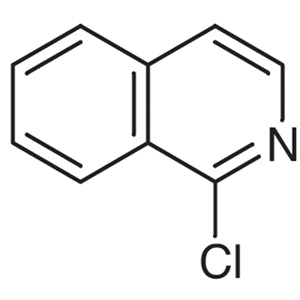
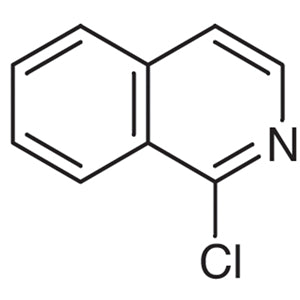
1-Chloroisoquinoline TCI C2097
Regular price From Rp 3.180.450,00Regular price -
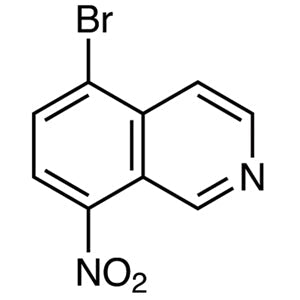
5-Bromo-8-nitroisoquinoline TCI B4163
Regular price Rp 637.350,00Regular price -
1-Iodoisoquinoline TCI I0750
Regular price From Rp 4.584.300,00Regular price -
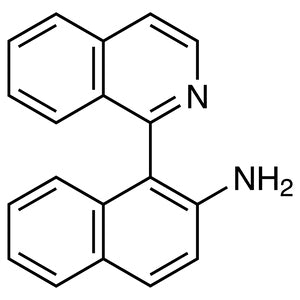
1-(2-Amino-1-naphthyl)isoquinoline TCI A2221
Regular price Rp 7.446.600,00Regular price -
Isoquinoline-3-carboxylicAcid TCI I1246
Regular price From Rp 2.809.800,00Regular price -
Isoquinoline-5-carboxaldehyde TCI I0942
Regular price From Rp 3.790.500,00Regular price -
Isoquinoline-1-carboxylicAcid TCI I0671
Regular price From Rp 1.590.750,00Regular price -
IsoquinolineN-Oxide TCI I0540
Regular price Rp 2.650.200,00Regular price