5-Bromo-8-nitroisoquinoline is a chemical compound classified under heterocyclic building blocks, playing a crucial role in organic synthesis within laboratory settings. Its complex structure and high reactivity make it a valuable component for constructing more intricate molecular frameworks. This compound is widely used in research to develop compounds with specific biological activities, contributing to advancements in pharmaceutical and chemical sciences. As a fundamental building block, it enables chemists to explore various synthetic pathways and functional group transformations.
The presence of bromo and nitro groups significantly enhances the reactivity of 5-Bromo-8-nitroisoquinoline. These functional groups allow the compound to participate in a range of chemical reactions, including substitution, reduction, and nucleophilic attacks. This versatility makes it a preferred choice for synthesizing diverse organic molecules with tailored properties. Its ability to undergo multiple reaction types provides researchers with a flexible tool for designing new compounds with specific applications.
In Indonesian laboratories, 5-Bromo-8-nitroisoquinoline is commonly utilized in chemical and pharmaceutical research. Scientists and researchers rely on this compound to investigate its potential in drug development and structural modifications. Its stability under controlled laboratory conditions ensures safe handling and storage, making it a reliable material for ongoing research projects. Its role in both academic and applied research underscores its importance in the field of organic chemistry.
- Organic synthesis applications benefit from this compound's reactivity and versatility, enabling the creation of complex molecules with specific functional groups.
- Pharmaceutical research utilizes it to develop compounds with targeted biological activities, supporting drug discovery initiatives.
- Heterocyclic chemistry studies rely on its structure to explore new synthetic methodologies and reaction mechanisms.
- Analytical chemistry experiments use it as a reference standard for identifying and quantifying similar compounds in mixtures.
- Medicinal chemistry projects incorporate it to modify existing drug structures, aiming to enhance therapeutic effects and reduce side effects.
| Brand | TCI |
|---|---|
| CAS number | 63927-23-1 |
| Molecular formula | — |
| Purity | — |
| Category | Chemistry > Building Blocks > Heterocyclic Building Blocks |
| Pack sizes | Available in standard laboratory quantities |
| Physical form | Solid powder |
| Storage | Store in a cool, dry place away from light and moisture |
5-Bromo-8-nitroisoquinoline should be stored in a cool, dry environment, away from direct light and moisture to maintain its stability. It is recommended to use airtight containers to prevent exposure to air and humidity, which could affect its chemical integrity. Due to its reactivity, it should be handled with care, using appropriate personal protective equipment such as gloves and safety goggles. It is important to ensure proper ventilation in the workspace to minimize inhalation risks. Storage conditions should be consistent to avoid any degradation of the compound, ensuring its effectiveness in laboratory applications. Always follow standard laboratory safety protocols when working with this compound.
—
Produk Terkait
-
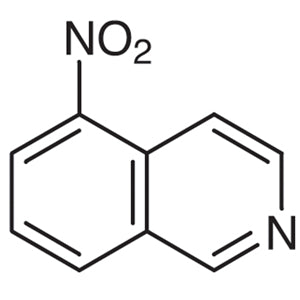
5-Nitroisoquinoline TCI N0640
Regular price From Rp 769.650,00Regular priceRp 553.350,00Sale price From Rp 769.650,00 -
1,3-Dichloroisoquinoline TCI D4285
Regular price Rp 1.961.400,00Regular priceRp 1.387.050,00Sale price Rp 1.961.400,00 -
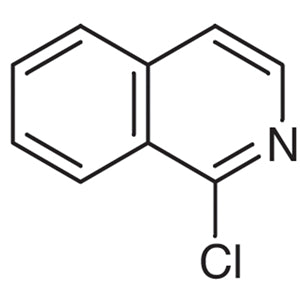
1-Chloroisoquinoline TCI C2097
Regular price From Rp 3.232.950,00Regular priceRp 2.276.400,00Sale price From Rp 3.232.950,00 -
1-Iodoisoquinoline TCI I0750
Regular price From Rp 4.636.800,00Regular priceRp 3.258.150,00Sale price From Rp 4.636.800,00 -
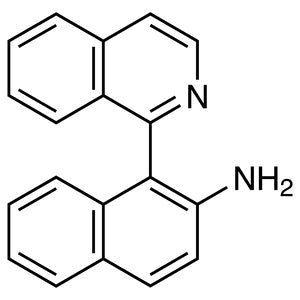
1-(2-Amino-1-naphthyl)isoquinoline TCI A2221
Regular price Rp 7.499.100,00Regular priceRp 5.259.450,00Sale price Rp 7.499.100,00 -
Isoquinoline-3-carboxylicAcid TCI I1246
Regular price From Rp 2.862.300,00Regular priceRp 2.017.050,00Sale price From Rp 2.862.300,00 -
Isoquinoline-5-carboxaldehyde TCI I0942
Regular price From Rp 3.843.000,00Regular priceRp 2.702.700,00Sale price From Rp 3.843.000,00 -
Isoquinoline-1-carboxylicAcid TCI I0671
Regular price From Rp 1.643.250,00Regular priceRp 1.164.450,00Sale price From Rp 1.643.250,00