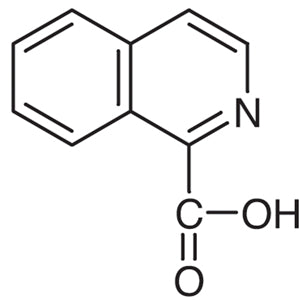
TCI I0671 Isoquinoline-1-carboxylic Acid is an aromatic heterocyclic compound built on an isoquinoline framework carrying a carboxylic acid group at position one, directly adjacent to the ring nitrogen atom. It is a high-value heterocyclic building block in organic synthesis. In the laboratory, this material serves as a starting material for the preparation of isoquinoline derivatives, as a ligand offering two coordination points, and as an intermediate in research on bioactive compounds that contain the isoquinoline alkaloid skeleton.
The property that makes this compound a preferred choice is the placement of the carboxyl group next to the pyridinic nitrogen, allowing both groups to act together to form a stable five-membered chelate with metal ions. This chelating ability is precisely what has made it a popular ligand in coordination chemistry and catalysis. The extended bicyclic aromatic system gives the molecule structural rigidity along with attractive electronic properties, including the ability to absorb light in the ultraviolet region. The carboxylic acid group is also readily converted into amides, esters, or other derivatives, so a single material can lead to many synthetic products.
In Indonesian laboratories, this compound is used in academic and industrial research settings where heterocyclic building blocks are required. It supports synthetic chemistry groups preparing isoquinoline derivatives, coordination chemistry work involving metal complexes, and medicinal chemistry studies directed at alkaloid-type structures. Its versatility as a single starting point for multiple derivative routes makes it a practical addition to a research stock of heterocyclic intermediates.
Related TCI products
- TCI I1246 6624-49-3 Isoquinoline-3-carboxylic Acid
- TCI I0509 203626-75-9 Isoquinoline-3-carboxylic Acid Monohydrate
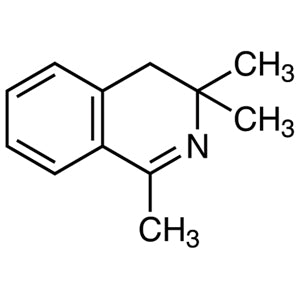
- TCI T3060 79023-51-1 1,3,3-Trimethyl-3,4-dihydroisoquinoline
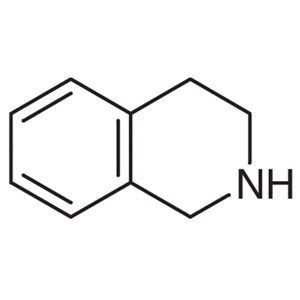
- TCI T1676 91-21-4 1,2,3,4-Tetrahydroisoquinoline
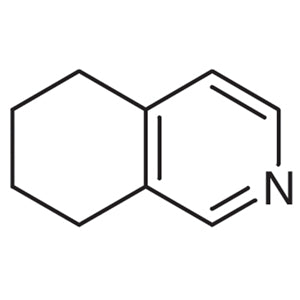
- TCI T1230 36556-06-6 5,6,7,8-Tetrahydroisoquinoline
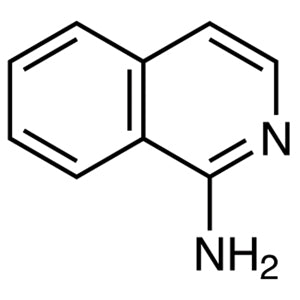
- TCI A2817 1532-84-9 1-Aminoisoquinoline
- Synthesis of isoquinoline derivatives — the compound provides a ready-made isoquinoline core so researchers can focus effort on functionalising the carboxyl position rather than constructing the ring system.
- Ligand preparation in coordination chemistry — the adjacent nitrogen and carboxyl groups bind metal ions through two coordination points, forming stable five-membered chelate rings suitable for complex synthesis.
- Catalysis research — metal complexes formed through its chelating action are of interest to groups investigating catalytic systems based on rigid aromatic nitrogen-donor ligands.
- Medicinal chemistry intermediates — it acts as an intermediate in research on bioactive compounds containing the isoquinoline alkaloid skeleton, a framework of recurring interest in drug discovery studies.
- Amide and ester derivative synthesis — the carboxylic acid group is readily converted into amides, esters, or other derivatives, allowing one material to serve many different synthetic targets.
| Brand | TCI |
|---|---|
| CAS number | 486-73-7 |
| Molecular formula | — |
| Purity | — |
| Category | Chemistry > Building Blocks > Heterocyclic Building Blocks |
| Pack sizes | available in standard TCI research pack sizes; please confirm the size required when ordering |
| Physical form | — |
| Storage | store in a tightly closed container in a cool, dry, well-ventilated place |
- Product code: I0671
Store this material in a tightly closed original container in a cool, dry, and well-ventilated area, away from direct sunlight, moisture, and sources of heat or ignition. Glass or other chemically compatible containers with secure closures are appropriate, and containers should be clearly labelled and kept upright. Handle the solid in a fume hood or a well-ventilated workspace to limit dust formation and inhalation, and wear standard laboratory personal protective equipment including safety glasses, gloves, and a laboratory coat. Avoid contact with skin and eyes, and wash hands thoroughly after handling. Keep the material separated from strong oxidising agents and strong bases, and consult the manufacturer's safety data sheet before first use.
—
Produk Terkait
-
Isoquinoline-3-carboxylicAcid TCI I1246
Regular price From Rp 2.809.800,00Regular price -
Isoquinoline-3-carboxylicAcidMonohydrate TCI I0509
Regular price From Rp 2.068.500,00Regular price -
1,3,3-Trimethyl-3,4-dihydroisoquinoline TCI T3060
Regular price Rp 2.650.200,00Regular price -
1,2,3,4-Tetrahydroisoquinoline TCI T1676
Regular price From Rp 1.298.850,00Regular price -
5,6,7,8-Tetrahydroisoquinoline TCI T1230
Regular price Rp 2.942.100,00Regular price -
1-Aminoisoquinoline TCI A2817
Regular price From Rp 1.829.100,00Regular price -
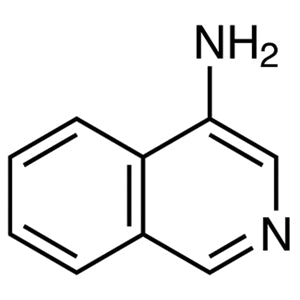
4-Aminoisoquinoline TCI A2595
Regular price From Rp 1.431.150,00Regular price -
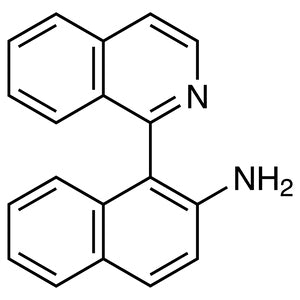
1-(2-Amino-1-naphthyl)isoquinoline TCI A2221
Regular price Rp 7.446.600,00Regular price