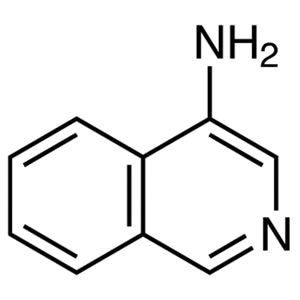
4-Aminoisoquinoline is a chemical compound classified under the heterocyclic category, featuring a basic isoquinoline structure with an amino group substituted at the 4th position. This compound plays a crucial role in laboratory settings, particularly in the synthesis of complex molecules within organic and pharmaceutical research. As a building block, it serves as a foundational element for the development of compounds with specific biological activities. Its versatility makes it an essential tool for chemists aiming to explore new synthetic pathways and functional group modifications.
The compound's chemical stability and reactivity make it a preferred choice in various chemical reactions. It exhibits solubility in organic solvents such as ethyl acetate and ethanol, which enhances its applicability in diverse experimental conditions. Its ability to participate in substitution, reduction, and aromatic reactions further expands its utility in synthetic chemistry. These properties ensure that it remains a reliable and effective reagent in both academic and industrial research environments.
In Indonesian laboratories, 4-Aminoisoquinoline is commonly used in organic chemistry research, especially by higher education institutions and research organizations. Its role in the development of bioactive compounds supports advancements in drug discovery and chemical innovation. Its consistent performance and predictable behavior make it a trusted material for researchers working on complex molecular structures and pharmaceutical applications.
Related TCI products
- Organic synthesis projects benefit from 4-Aminoisoquinoline due to its structural versatility and reactivity in forming complex molecules.
- Pharmaceutical research utilizes this compound to develop new drugs with targeted biological activities and therapeutic potential.
- Heterocyclic compound studies rely on 4-Aminoisoquinoline for its role in understanding ring structures and functional group modifications.
- Bioactive compound development leverages its chemical properties to create molecules with specific pharmacological effects.
- Academic research in chemistry uses 4-Aminoisoquinoline to explore synthetic pathways and molecular transformations.
| Brand | TCI |
|---|---|
| CAS number | 23687-25-4 |
| Molecular formula | — |
| Purity | — |
| Category | Chemistry > Building Blocks > Heterocyclic Building Blocks |
| Pack sizes | Available in standard laboratory quantities |
| Physical form | Solid |
| Storage | Keep in a cool, dry place away from light |
4-Aminoisoquinoline should be stored in a cool, dry place, away from direct sunlight and sources of heat. It is recommended to use airtight containers to prevent moisture absorption and maintain its chemical integrity. Due to its reactivity, it should be handled in a well-ventilated area, preferably under a fume hood, to minimize exposure. Avoid contact with strong oxidizing agents or reactive materials to ensure safety. Proper labeling and storage conditions are essential to maintain its effectiveness and ensure safe handling in laboratory environments. Always follow standard chemical safety protocols when working with this compound.
—
Produk Terkait
-
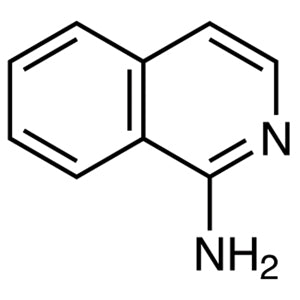
1-Aminoisoquinoline TCI A2817
Regular price From Rp 1.829.100,00Regular price -
5-Aminoisoquinoline TCI A1465
Regular price From Rp 769.650,00Regular price -
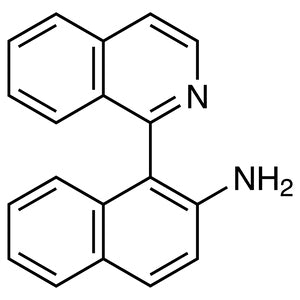
1-(2-Amino-1-naphthyl)isoquinoline TCI A2221
Regular price Rp 7.446.600,00Regular price -
Isoquinoline-3-carboxylicAcid TCI I1246
Regular price Rp 2.862.300,00Regular priceRp 2.017.050,00Sale price Rp 2.862.300,00 -
Isoquinoline-5-carboxaldehyde TCI I0942
Regular price Rp 3.843.000,00Regular priceRp 2.702.700,00Sale price Rp 3.843.000,00 -
Isoquinoline-1-carboxylicAcid TCI I0671
Regular price Rp 1.643.250,00Regular priceRp 1.164.450,00Sale price Rp 1.643.250,00 -
IsoquinolineN-Oxide TCI I0540
Regular price Rp 2.702.700,00Regular priceRp 1.905.750,00Sale price Rp 2.702.700,00 -
Isoquinoline-3-carboxylicAcidMonohydrate TCI I0509
Regular price Rp 2.121.000,00Regular priceRp 1.498.350,00Sale price Rp 2.121.000,00