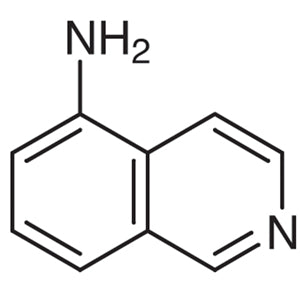
5-Aminoisoquinoline is a chemical compound classified under heterocyclic building blocks, featuring a core isoquinoline structure with an amino group substituted at the 5th position. This compound plays a vital role in laboratory settings where complex chemical syntheses are required, particularly in organic and pharmaceutical research. As a fundamental building block, it serves as a versatile starting material for the development of new compounds with specific biological activities. Its importance lies in its ability to participate in various synthetic pathways, enabling the creation of pharmaceuticals, agrochemicals, and other specialized chemical products.
The chemical properties of 5-Aminoisoquinoline, including its reactivity and structural flexibility, make it a preferred choice for researchers. It exhibits stability under certain conditions and can undergo a range of chemical reactions such as substitution, reduction, and aromatic reactions. These characteristics allow it to be a key component in the synthesis of bioactive molecules. Its ability to be modified through various chemical transformations further enhances its utility in laboratory applications, making it a valuable resource for synthetic chemists and researchers.
In Indonesian laboratories, 5-Aminoisoquinoline is commonly used in research focused on drug development and chemical synthesis. It is a critical reagent in academic and industrial settings where the creation of new compounds with specific functions is required. Its presence in laboratory inventories reflects its importance in advancing chemical and pharmaceutical research in the region.
Related TCI products
- Organic synthesis: 5-Aminoisoquinoline is widely used in the synthesis of complex organic molecules due to its structural versatility and reactivity.
- Pharmaceutical research: It serves as a key intermediate in the development of new drugs, particularly in the field of medicinal chemistry.
- Heterocyclic compound preparation: Its core isoquinoline structure makes it ideal for the synthesis of various heterocyclic compounds.
- Bioactive molecule development: Researchers use it to create compounds with specific biological activities, such as anti-inflammatory or antimicrobial agents.
- Industrial chemical production: It is a valuable reagent in the production of specialty chemicals and agrochemicals.
| Brand | TCI |
|---|---|
| CAS number | 1125-60-6 |
| Molecular formula | — |
| Purity | — |
| Category | Chemistry > Building Blocks > Heterocyclic Building Blocks |
| Pack sizes | Available in various quantities as per standard laboratory supply |
| Physical form | Solid |
| Storage | Store in a cool, dry place away from light and moisture |
5-Aminoisoquinoline should be stored in a cool, dry environment, away from direct light and moisture to maintain its chemical stability. It is recommended to use airtight containers to prevent exposure to air and humidity. Proper ventilation is essential when handling this compound to minimize inhalation risks. Laboratory personnel should wear appropriate personal protective equipment, including gloves and safety goggles, to ensure safe handling. The compound should be kept in a secure location, away from incompatible materials such as strong oxidizing agents. Regular monitoring of storage conditions is advised to ensure the compound remains in optimal condition for use in research applications.
—
Produk Terkait
-
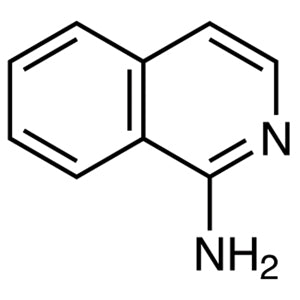
1-Aminoisoquinoline TCI A2817
Regular price From Rp 1.829.100,00Regular price -
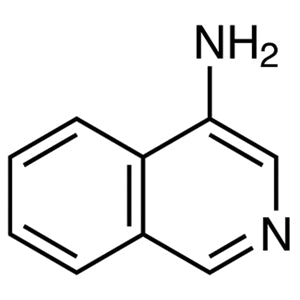
4-Aminoisoquinoline TCI A2595
Regular price From Rp 1.431.150,00Regular price -
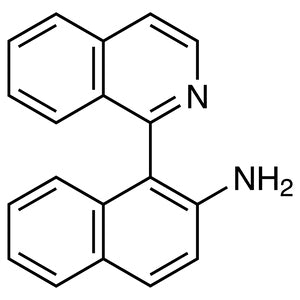
1-(2-Amino-1-naphthyl)isoquinoline TCI A2221
Regular price Rp 7.446.600,00Regular price -
Isoquinoline-3-carboxylicAcid TCI I1246
Regular price Rp 2.862.300,00Regular priceRp 2.017.050,00Sale price Rp 2.862.300,00 -
Isoquinoline-5-carboxaldehyde TCI I0942
Regular price Rp 3.843.000,00Regular priceRp 2.702.700,00Sale price Rp 3.843.000,00 -
Isoquinoline-1-carboxylicAcid TCI I0671
Regular price Rp 1.643.250,00Regular priceRp 1.164.450,00Sale price Rp 1.643.250,00 -
IsoquinolineN-Oxide TCI I0540
Regular price Rp 2.702.700,00Regular priceRp 1.905.750,00Sale price Rp 2.702.700,00 -
Isoquinoline-3-carboxylicAcidMonohydrate TCI I0509
Regular price Rp 2.121.000,00Regular priceRp 1.498.350,00Sale price Rp 2.121.000,00