1-Aminoisoquinoline is a chemical compound widely used in organic reactions and the synthesis of complex molecules within laboratory settings. As a heterocyclic compound, it contains a ring structure with nitrogen atoms, making it a valuable building block in chemical research. This compound plays a crucial role in the development of pharmaceuticals and industrial chemicals due to its structural versatility and reactivity. Its ability to participate in various chemical transformations makes it an essential tool for chemists working in both academic and industrial environments.
The compound is known for its stable chemical structure and favorable reactivity, which allows it to undergo substitution, coupling, and modification reactions efficiently. These properties make it a preferred choice for researchers aiming to create new molecules with specific functional groups. Its compatibility with a wide range of functional groups enables the synthesis of diverse compounds, enhancing its utility in synthetic chemistry. The compound's reliability and performance in various reaction conditions further solidify its position as a go-to material for chemical synthesis.
In Indonesian laboratories, 1-Aminoisoquinoline is frequently used in scientific research conducted by universities and research institutions. It is commonly involved in projects related to the synthesis of bioactive compounds, pharmaceutical chemistry, and molecular structure studies. Its availability in the local market ensures that researchers can access this essential compound for their experiments and innovations.
Related TCI products
- Bioactive Compound Synthesis: 1-Aminoisoquinoline is ideal for creating compounds with biological activity due to its structural versatility and reactivity.
- Pharmaceutical Chemistry Research: Its ability to participate in complex reactions makes it a key component in drug development and chemical synthesis.
- Molecular Structure Studies: The compound's heterocyclic nature allows it to be used in investigations of molecular frameworks and chemical bonding.
- Organic Reaction Development: Its stability and reactivity make it suitable for testing and optimizing new reaction pathways in synthetic chemistry.
- Industrial Chemical Production: It is used in the synthesis of various industrial chemicals due to its compatibility with a wide range of functional groups.
| Brand | TCI |
|---|---|
| CAS number | 1532-84-9 |
| Molecular formula | — |
| Purity | — |
| Category | Chemistry > Building Blocks > Heterocyclic Building Blocks |
| Pack sizes | Available in standard laboratory quantities |
| Physical form | Solid |
| Storage | Store in a cool, dry place away from light and moisture |
1-Aminoisoquinoline should be stored in a cool, dry environment, away from direct light and moisture to maintain its chemical stability. It is recommended to use airtight containers to prevent exposure to air and potential degradation. Due to its reactivity, it should be handled in a well-ventilated area to minimize inhalation risks. Proper personal protective equipment, such as gloves and safety goggles, should be worn when handling the compound. Avoid contact with skin and eyes, and ensure spill containment procedures are in place. Regular monitoring of storage conditions is essential to ensure the compound remains in optimal condition for use in laboratory applications.
—
Produk Terkait
-
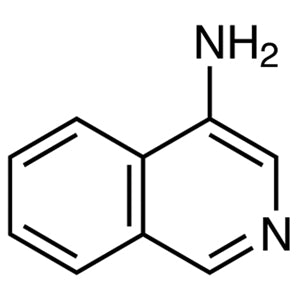
4-Aminoisoquinoline TCI A2595
Regular price From Rp 1.483.650,00Regular priceRp 1.053.150,00Sale price From Rp 1.483.650,00 -
5-Aminoisoquinoline TCI A1465
Regular price From Rp 822.150,00Regular priceRp 590.100,00Sale price From Rp 822.150,00 -
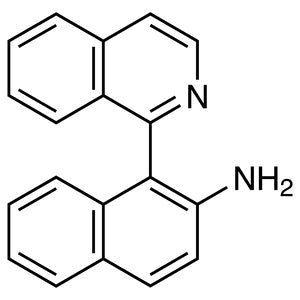
1-(2-Amino-1-naphthyl)isoquinoline TCI A2221
Regular price Rp 7.499.100,00Regular priceRp 5.259.450,00Sale price Rp 7.499.100,00 -
Isoquinoline-3-carboxylicAcid TCI I1246
Regular price From Rp 2.862.300,00Regular priceRp 2.017.050,00Sale price From Rp 2.862.300,00 -
Isoquinoline-5-carboxaldehyde TCI I0942
Regular price From Rp 3.843.000,00Regular priceRp 2.702.700,00Sale price From Rp 3.843.000,00 -
Isoquinoline-1-carboxylicAcid TCI I0671
Regular price From Rp 1.643.250,00Regular priceRp 1.164.450,00Sale price From Rp 1.643.250,00 -
IsoquinolineN-Oxide TCI I0540
Regular price Rp 2.702.700,00Regular priceRp 1.905.750,00Sale price Rp 2.702.700,00 -
Isoquinoline-3-carboxylicAcidMonohydrate TCI I0509
Regular price From Rp 2.121.000,00Regular priceRp 1.498.350,00Sale price From Rp 2.121.000,00