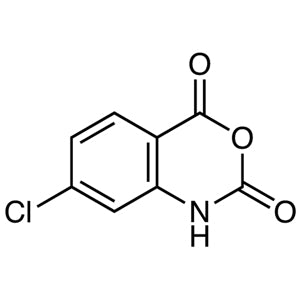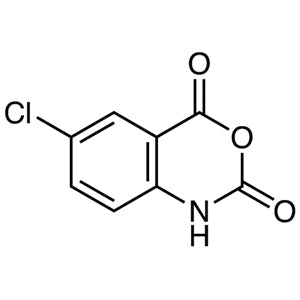
5-Chloroisatoic Anhydride (5-Cl-IAA) is a chemical compound widely used in laboratory settings for the synthesis of heterocyclic compounds. As a building block in organic chemistry, it plays a crucial role in creating complex molecular structures through various chemical reactions. This anhydride is particularly valuable in the development of pharmaceuticals, polymers, and specialty chemicals due to its reactivity and versatility. Its ability to participate in substitution reactions and form stable bonds makes it an essential tool for chemists working on advanced synthetic pathways.
The compound's high reactivity stems from its anhydride functionality and the presence of a chlorine atom, which enhances its ability to engage in nucleophilic attacks. This reactivity, combined with its stability under controlled conditions, makes it a preferred choice for synthetic chemists. The compound's sensitivity to moisture and air necessitates careful handling, but its chemical properties allow for precise control over reaction outcomes. Its role in building complex molecular frameworks ensures its continued use in both academic and industrial research environments.
In Indonesian laboratories, 5-Chloroisatoic Anhydride is commonly used in organic chemistry research, especially in higher education institutions and research organizations. It is a key reagent in the development of new chemical compounds and materials. Local researchers rely on this compound for its reliability and effectiveness in synthetic processes, contributing to advancements in pharmaceutical and materials science. Its application in these settings highlights its importance in the chemical research landscape of Indonesia.
- Organic synthesis of heterocyclic compounds due to its reactivity and ability to form stable bonds.
- Pharmaceutical research for the development of new drugs and chemical intermediates.
- Polymer chemistry applications in creating specialty materials with specific functional groups.
- Academic research in universities and research institutes for teaching and experimental purposes.
- Industrial chemical production for the synthesis of complex chemical structures and derivatives.
| Brand | TCI |
|---|---|
| CAS number | 4743-17-3 |
| Molecular formula | — |
| Purity | — |
| Category | Chemistry > Building Blocks > Heterocyclic Building Blocks |
| Pack sizes | Available in various quantities as per supplier specifications |
| Physical form | Solid anhydride |
| Storage | Should be stored in a dry, cool, and well-ventilated area away from moisture and air |
5-Chloroisatoic Anhydride should be stored in a dry, cool, and well-ventilated area to prevent moisture exposure, which can lead to hydrolysis. It is recommended to use airtight containers made of inert materials such as glass or polyethylene to minimize contact with air and moisture. Due to its reactivity, it should be handled in a fume hood to avoid exposure to vapors. Proper personal protective equipment, including gloves and safety goggles, should be worn during handling. The compound is sensitive to both humidity and air, so storage conditions must be strictly controlled to maintain its chemical integrity and ensure safe use in laboratory settings.
—
Produk Terkait
-
4-ChloroisatoicAnhydride TCI C2790
Regular price From Rp 769.650,00Regular price -
7-Chloroisatin TCI C2840
Regular price From Rp 584.850,00Regular price -
6-Chloroisatin TCI C1871
Regular price From Rp 1.829.100,00Regular price -
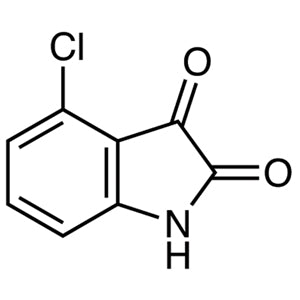
4-Chloroisatin TCI C1870
Regular price From Rp 875.700,00Regular price -
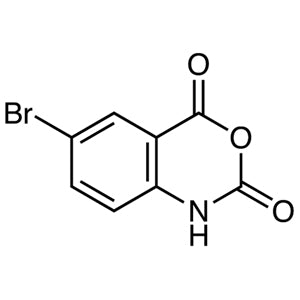
5-BromoisatoicAnhydride TCI B3659
Regular price Rp 3.127.950,00Regular price -
Tetraiodo-2-sulfobenzoicAnhydride TCI T0131
Regular price From Rp 2.809.800,00Regular price -
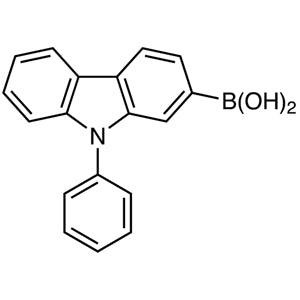
9-Phenylcarbazole-2-boronicAcid(containsvaryingamountsofAnhydride) TCI P2169
Regular price From Rp 477.750,00Regular price -
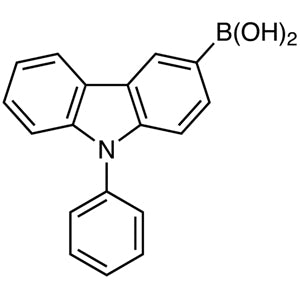
9-Phenylcarbazole-3-boronicAcid(containsvaryingamountsofAnhydride) TCI P2001
Regular price From Rp 1.670.550,00Regular price