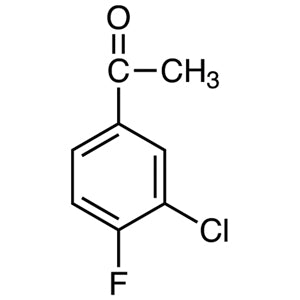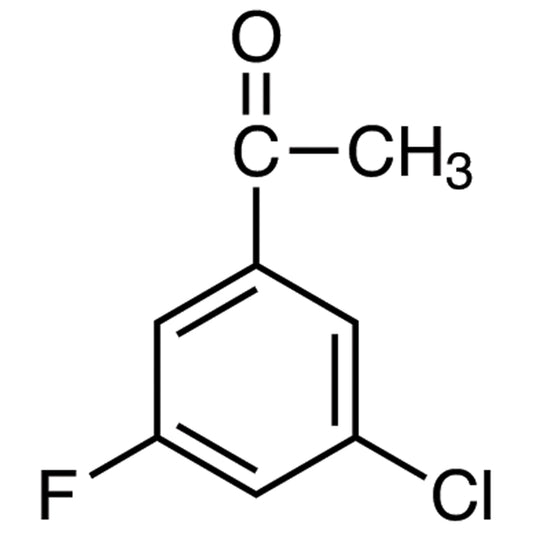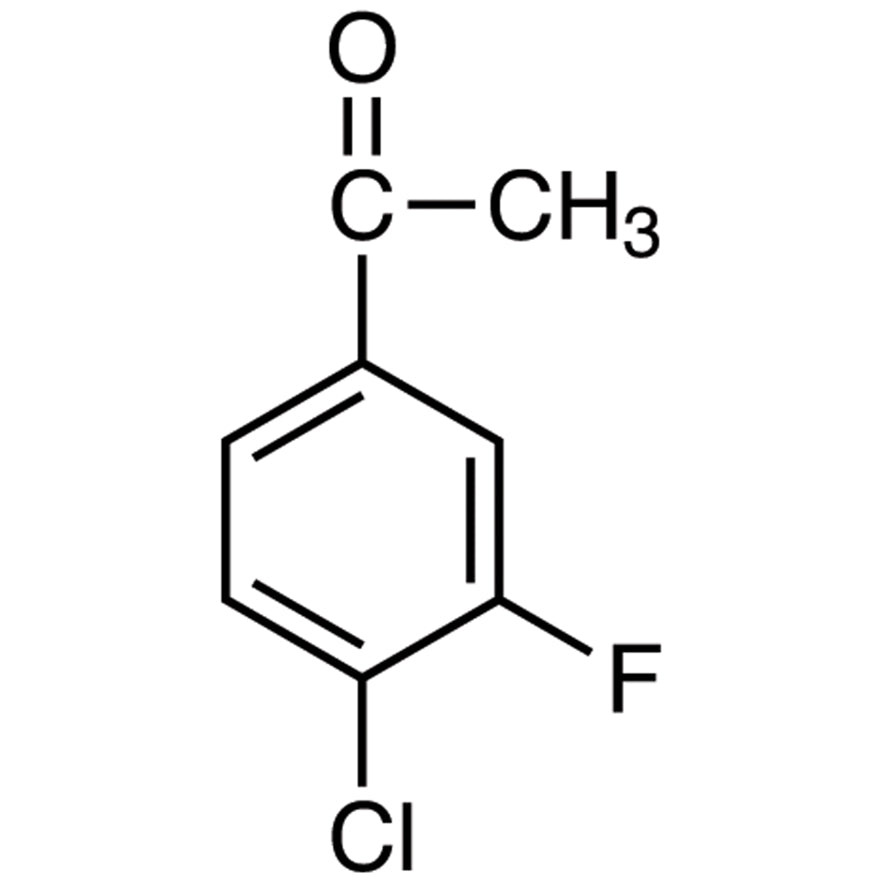
4'-Chloro-3'-fluoroacetophenone is a chemical compound widely used as a building block in the synthesis of complex organic compounds. It plays a crucial role in various laboratory applications, particularly in the development of functionalized aromatic and heterocyclic structures. This compound is commonly utilized in substitution reactions, electrophilic reactions, and functional group transformations, making it an essential tool for synthetic chemists. Its versatility and reactivity allow it to participate in a wide range of chemical processes, contributing to the creation of new molecular entities with specific structural features.
The compound's reactivity and ability to form bonds with various functional groups make it a preferred choice in organic synthesis. Its stability under controlled conditions ensures that it remains effective throughout the synthesis process, reducing the risk of unwanted side reactions. The presence of both chloro and fluoro substituents adds to its chemical versatility, enabling it to be used in the development of pharmaceuticals, industrial chemicals, and advanced materials. These properties make it a reliable and efficient reagent for laboratory use.
In Indonesian laboratories, 4'-chloro-3'-fluoroacetophenone is extensively used in chemical research, particularly in academic and research institutions. It is a key component in the development of new drugs, functionalized compounds, and materials with specific chemical properties. Its application spans across multiple fields, including pharmaceutical research, material science, and industrial chemistry, making it an important reagent in the Indonesian scientific community.
Related TCI products
- TCI C3346 2923-66-2 3'-Chloro-4'-fluoroacetophenone
- TCI C3297 2965-16-4 2'-Chloro-5'-fluoroacetophenone
- TCI C3288 842140-52-7 3'-Chloro-5'-fluoroacetophenone
- TCI C2643 700-35-6 2'-Chloro-4'-fluoroacetophenone
- TCI C1977 456-04-2 2-Chloro-4'-fluoroacetophenone
- TCI B5237 198477-89-3 5'-Bromo-2'-fluoroacetophenone
- Synthesis of aromatic compounds with chloro and fluoro substitutions due to its reactivity and functional group compatibility.
- Development of pharmaceuticals requiring functional group modifications for enhanced biological activity.
- Functional group transformations in organic synthesis to create complex molecular structures.
- Research in material science for the creation of advanced chemical materials with specific properties.
- Industrial chemical applications where precise functional group manipulation is required for product development.
| Brand | TCI |
|---|---|
| CAS number | 151945-84-5 |
| Molecular formula | — |
| Purity | — |
| Category | Chemistry > Building Blocks > Fluorinated Building Blocks |
| Pack sizes | As per supplier packaging |
| Physical form | Liquid |
| Storage | Store in a cool, dry place away from light and incompatible materials. |
4'-Chloro-3'-fluoroacetophenone should be stored in a cool, dry environment, away from direct sunlight and sources of heat. It is recommended to use sealed containers made of materials that are chemically inert to prevent contamination and degradation. The compound should be kept in a well-ventilated area to minimize exposure to vapors. Laboratory personnel should wear appropriate personal protective equipment, including gloves and safety goggles, when handling this material. It is important to avoid contact with skin and eyes, and to ensure that spillage is promptly cleaned up using suitable absorbent materials. Proper storage and handling procedures help maintain the compound's stability and ensure safe laboratory operations.
—
Produk Terkait
-
3'-Chloro-4'-fluoroacetophenone TCI C3346
Regular price From Rp 610.050,00Regular price -
2'-Chloro-5'-fluoroacetophenone TCI C3297
Regular price From Rp 928.200,00Regular price -
3'-Chloro-5'-fluoroacetophenone TCI C3288
Regular price From Rp 1.538.250,00Regular price -
2'-Chloro-4'-fluoroacetophenone TCI C2643
Regular price From Rp 743.400,00Regular price -
2-Chloro-4'-fluoroacetophenone TCI C1977
Regular price From Rp 477.750,00Regular price -
5'-Bromo-2'-fluoroacetophenone TCI B5237
Regular price From Rp 980.700,00Regular price -
4'-Bromo-2'-fluoroacetophenone TCI B5236
Regular price From Rp 1.140.300,00Regular price -
2-Bromo-4'-fluoroacetophenone TCI B2382
Regular price From Rp 1.378.650,00Regular price