

TCI C3509 5-Chlorobenzoxazole (CAS 17200-29-2) is an aromatic heterocyclic compound. Its structure is a benzene ring fused to an oxazole ring, with a single chlorine atom at the 5-position. The benzoxazole scaffold appears widely in bioactive compounds, fluorescent dyes and optical materials. For that reason, its derivatives are used regularly as building blocks in medicinal chemistry and organic synthesis laboratories. This chlorinated variant adds another point on the scaffold where chemists can make modifications.
Two features make 5-Chlorobenzoxazole attractive to researchers. First, the unsubstituted C-2 position on the oxazole ring can be functionalized, for example through direct C–H arylation or lithiation. Chemists can therefore attach new groups without building the heterocyclic ring from scratch. Second, the chlorine atom on the benzene ring works as a handle for transition-metal-catalyzed cross-coupling reactions. It can also be kept in place to tune the electronic properties and lipophilicity of the final molecule. Because both positions can be modified, researchers can prepare libraries of analogue compounds in an orderly, systematic way.
In Indonesia, this material suits organic chemistry and pharmaceutical laboratories at universities, drug research centres, and industrial research and development teams. Research groups exploring new heterocyclic scaffolds can use it as a starting point for multi-step synthesis. Teams running structure–activity studies can use it to vary substituents around a well-known core. It also suits academic projects that teach modern functionalization strategies such as C–H activation and cross-coupling.
- Medicinal chemistry scaffold synthesis: the benzoxazole core is common in bioactive compounds, so this chlorinated derivative is a practical starting point for building candidate molecules.
- C-2 functionalization studies: the unsubstituted C-2 position can undergo direct C–H arylation or lithiation, so new groups can be attached without building the ring from scratch.
- Transition-metal-catalyzed cross-coupling: the chlorine atom on the benzene ring acts as a reactive handle for metal-catalyzed coupling reactions that extend the molecular framework.
- Analogue library preparation: two separate modification sites, at C-2 and at the chlorine position, let researchers vary substituents systematically across a series of related compounds.
- Fluorescent dye and optical material research: benzoxazole frameworks occur in fluorescent dyes and optical materials, making this compound a useful building block for exploratory materials chemistry.
| Brand | TCI (product code C3509) |
|---|---|
| CAS number | 17200-29-2 |
| Molecular formula | — |
| Purity | refer to the TCI certificate of analysis and product label |
| Category | Chemistry > Building Blocks > Heterocyclic Building Blocks |
| Pack sizes | as listed for this product on the AMI Scientific page |
| Physical form | — |
| Storage | follow the conditions stated on the TCI label and Safety Data Sheet |
Keep 5-Chlorobenzoxazole in its original tightly closed container. Store it in a cool, dry, well-ventilated area away from heat sources, direct sunlight and incompatible materials such as strong oxidizing agents. Always follow the specific storage conditions printed on the TCI label and Safety Data Sheet. Handle the compound in a fume hood or another well-ventilated workspace, and wear standard protective equipment, including a lab coat, chemical-resistant gloves and safety glasses. Avoid contact with skin and eyes, and avoid breathing dust or vapour. Reseal the container promptly after use, label any portions you transfer, and dispose of residues and contaminated materials according to institutional and local regulations for chemical waste.
—
Produk Terkait
-
2-Chlorobenzoxazole TCI C1387
Regular price From Rp 1.375.000,00Regular priceRp 951.000,00Sale price From Rp 1.375.000,00 -
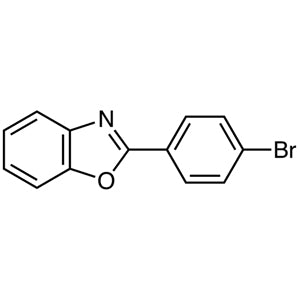
2-(4-Bromophenyl)benzoxazole TCI B5017
Regular price From Rp 700.000,00Regular priceRp 492.000,00Sale price From Rp 700.000,00 -
5-Bromobenzoxazole TCI B5515
Regular price From Rp 1.711.000,00Regular priceRp 3.845.000,00-56% Sale price From Rp 1.711.000,00Sale -
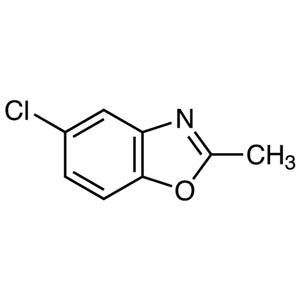
5-Chloro-2-methylbenzoxazole TCI C1276
Regular price Rp 856.000,00Regular priceRp 598.000,00Sale price Rp 856.000,00 -
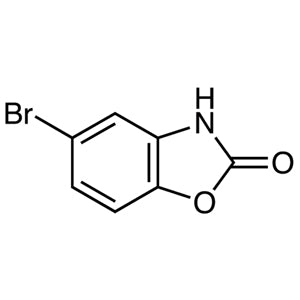
5-Bromo-2-benzoxazolinone TCI B4438
Regular price From Rp 1.193.000,00Regular priceRp 827.000,00Sale price From Rp 1.193.000,00 -
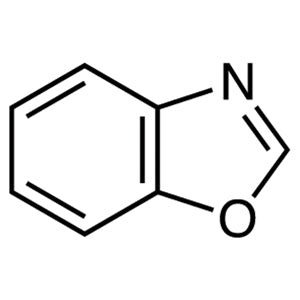
Benzoxazole TCI B0095
Regular price Rp 1.841.000,00Regular priceRp 1.268.000,00Sale price Rp 1.841.000,00 -
2-(2-Pyridyl)benzoxazole TCI P2098
Regular price Rp 1.452.000,00Regular priceRp 1.003.000,00Sale price Rp 1.452.000,00 -
6-Methyl-1,3-benzoxazole-2(3H)-thione TCI M3063
Regular price From Rp 1.867.000,00Regular priceRp 1.286.000,00Sale price From Rp 1.867.000,00