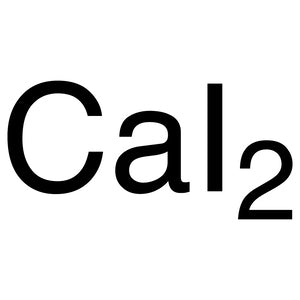
Calcium iodide (CaI₂) is a chemical compound widely utilized in laboratory settings for its versatile applications in chemical experiments and research. As a solid form of the compound, it exhibits solubility in water, making it an essential reagent for various chemical reactions. Its role extends beyond basic experimentation, as it is frequently employed in analytical chemistry, synthesis processes, and redox reactions. Due to its stability and reactivity, calcium iodide is a reliable choice for scientific applications, supporting both educational and research environments.
The properties of calcium iodide that make it a preferred choice include its ability to form aqueous solutions, which are crucial for many chemical processes. It also functions as an ionic conductor, enabling its use in electrolysis and reaction equilibration. These characteristics make it suitable for a variety of experimental setups. Additionally, its neutral chemical nature and low reactivity prevent unwanted side reactions, ensuring safe and effective use in laboratory conditions.
In Indonesian laboratories, calcium iodide is commonly used in both educational and research contexts. It is a staple in higher education institutions and research laboratories, where it supports chemical analysis, synthesis, and teaching demonstrations. Its availability and reliability have made it a standard component in the chemical supply chain, facilitating both routine and advanced experiments across various scientific disciplines.
TCI brochures (PDF)
- Metallic Salts 2025-11-06 · p. 5
Related TCI products
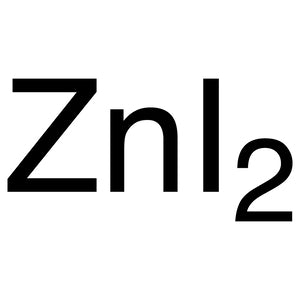
- TCI Z0055-25G 10139-47-6 Zinc(II) Iodide
- TCI T3449 10294-70-9 Tin(II) Iodide [for Perovskite precursor]
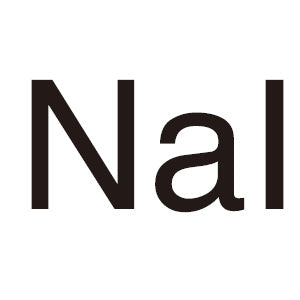
- TCI S0564 7681-82-5 Sodium Iodide
- TCI P1721 7681-11-0 Potassium Iodide
- TCI L0279 10101-63-0 Lead(II) Iodide (9999%, trace metals basis) [for Perovskite precursor]
- TCI L0212 10377-51-2 Lithium Iodide (999%, trace metals basis) (Low water content)
- Chemical synthesis processes benefit from calcium iodide due to its solubility and reactivity, enabling the formation of complex compounds.
- Redox reactions often utilize calcium iodide as an ionic conductor, facilitating electron transfer and reaction efficiency.
- Analytical chemistry relies on calcium iodide for its role in qualitative and quantitative analysis, aiding in ion detection and solution preparation.
- Electrolysis experiments use calcium iodide as a source of ions, supporting the conduction of electric current through aqueous solutions.
- Teaching demonstrations in chemistry courses incorporate calcium iodide to illustrate concepts such as solubility, ionic conductivity, and chemical reactivity.
| Brand | TCI |
|---|---|
| CAS number | 10102-68-8 |
| Molecular formula | — |
| Purity | — |
| Category | Chemistry > Catalysis and Inorganic Chemistry > Main-group Elements |
| Pack sizes | — |
| Physical form | Solid |
| Storage | Store in a cool, dry place away from moisture and direct sunlight |
Calcium iodide should be stored in a cool, dry environment to maintain its chemical integrity. It is best kept in airtight containers to prevent moisture absorption, which could affect its solubility and reactivity. Due to its ionic nature, it is advisable to store it away from strong acids or bases to avoid unintended chemical interactions. In laboratory settings, it should be handled with standard safety precautions, including the use of gloves and safety goggles to protect against potential skin or eye contact. Regular monitoring of storage conditions ensures the compound remains stable and suitable for use in experiments. Proper labeling and organization of storage areas are also essential to maintain a safe and efficient laboratory environment.
—
Produk Terkait
-
Zinc(II)Iodide TCI Z0055-25G
Regular price Rp 795.900,00Regular price -
Tin(II)Iodide[forPerovskiteprecursor] TCI T3449
Regular price From Rp 1.724.100,00Regular price -
SodiumIodide TCI S0564
Regular price Rp 955.500,00Regular price -
PotassiumIodide TCI P1721
Regular price From Rp 372.750,00Regular price -
Lead(II)Iodide(9999%,tracemetalsbasis)[forPerovskiteprecursor] TCI L0279
Regular price Rp 530.250,00Regular price -
LithiumIodide(999%,tracemetalsbasis)(Lowwatercontent) TCI L0212
Regular price From Rp 1.565.550,00Regular price -
Cadmium(II)Iodide TCI C3844
Regular price From Rp 1.829.100,00Regular price -
CesiumIodide TCI C2205
Regular price From Rp 795.900,00Regular price
![10294-70-9 Tin(II) Iodide [for Perovskite precursor] - AMI Scientific](http://amiscientific.com/cdn/shop/files/TCI2510T3449.jpg?v=1767144112&width=533)

![10101-63-0 Lead(II) Iodide (99.99%, trace metals basis) [for Perovskite precursor] - AMI Scientific](http://amiscientific.com/cdn/shop/files/TCI2510L0279.jpg?v=1767121658&width=533)