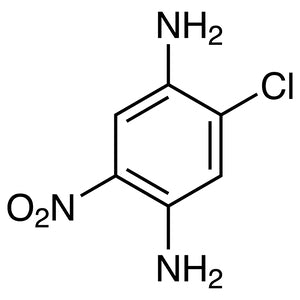
4-Nitro-1,2-phenylenediamine is a chemical compound widely used in laboratory settings for the synthesis of complex molecules. As a building block in organic chemistry, it plays a crucial role in various synthetic pathways, enabling the creation of a wide range of functional compounds. This compound is commonly employed in research and development processes, particularly in the formulation of dyes, pharmaceuticals, and industrial chemicals. Its versatility makes it an essential reagent for chemists working on both fundamental and applied research projects.
The compound is known for its aromatic structure and high reactivity, which allows it to participate in multiple types of chemical reactions, including substitution and coupling reactions. Its predictable chemical behavior ensures reliable results in laboratory experiments, making it a preferred choice for synthetic chemists. The stability of its molecular framework also contributes to its effectiveness in various reaction conditions, enhancing its utility in both academic and industrial research environments.
In Indonesian laboratories, 4-Nitro-1,2-phenylenediamine is extensively used in both pure and applied chemical research. It is a common reagent in academic institutions and research centers, supporting the development of new chemical materials and pharmaceutical compounds. Its availability and consistent quality make it a reliable choice for researchers aiming to achieve accurate and reproducible results in their experiments.
Related TCI products
- TCI M2523 41939-61-1 N1-Methyl-4-nitro-1,2-phenylenediamine
- TCI D0105 5307-14-2 2-Nitro-1,4-phenylenediamine
- TCI D0104 5131-58-8 4-Nitro-1,3-phenylenediamine
- TCI C1501 26196-45-2 2-Chloro-5-nitro-1,4-phenylenediamine
- TCI T3770 485831-34-3 N,N,N',N'-Tetrakis[4-(diisobutylamino)phenyl]-1,4-phenylenediamine
- TCI T3239 368-53-6 5-Trifluoromethyl-1,3-phenylenediamine
- Synthetic Organic Chemistry: This compound is ideal for creating complex molecules due to its reactivity and aromatic structure, supporting a wide range of synthetic reactions.
- Pharmaceutical Development: It is used in the synthesis of various drug compounds, contributing to the development of new therapeutic agents.
- Dye and Pigment Production: Its ability to participate in coupling reactions makes it valuable in the creation of synthetic dyes and colorants.
- Industrial Chemistry Research: It is frequently used in the formulation of industrial chemicals, aiding in the development of new materials and processes.
- Educational Research: Its predictable behavior and wide applicability make it a key reagent in teaching and research settings for advanced chemistry studies.
| Brand | TCI |
|---|---|
| CAS number | 99-56-9 |
| Molecular formula | — |
| Purity | — |
| Category | Chemistry > Building Blocks > Non-Heterocyclic Building Blocks |
| Pack sizes | Available in various quantities as per standard laboratory supply |
| Physical form | Solid |
| Storage | Store in a cool, dry place away from light and incompatible materials |
This compound should be stored in a cool, dry environment, away from direct sunlight and sources of heat. It is recommended to use airtight containers to prevent moisture absorption and contamination. Due to its reactivity, it should be handled with care, using appropriate personal protective equipment such as gloves and safety goggles. It is important to store it separately from strong oxidizing agents and incompatible substances to avoid unintended chemical reactions. Proper labeling and storage conditions ensure the compound remains stable and safe for use in laboratory settings.
—
Produk Terkait
-
N1-Methyl-4-nitro-1,2-phenylenediamine TCI M2523
Regular price From Rp 822.150,00Regular priceRp 590.100,00Sale price From Rp 822.150,00 -
2-Nitro-1,4-phenylenediamine TCI D0105
Regular price From Rp 743.400,00Regular priceRp 519.750,00Sale price From Rp 743.400,00 -
4-Nitro-1,3-phenylenediamine TCI D0104
Regular price Rp 2.518.950,00Regular priceRp 1.760.850,00Sale price Rp 2.518.950,00 -
2-Chloro-5-nitro-1,4-phenylenediamine TCI C1501
Regular price Rp 3.153.150,00Regular priceRp 2.220.750,00Sale price Rp 3.153.150,00 -
N,N,N',N'-Tetrakis[4-(diisobutylamino)phenyl]-1,4-phenylenediamine TCI T3770
Regular price From Rp 2.147.250,00Regular priceRp 1.517.250,00Sale price From Rp 2.147.250,00 -
5-Trifluoromethyl-1,3-phenylenediamine TCI T3239
Regular price Rp 1.326.150,00Regular priceRp 942.900,00Sale price Rp 1.326.150,00 -
2,3,5,6-Tetramethyl-1,4-phenylenediamine TCI T1457
Regular price From Rp 1.934.100,00Regular priceRp 1.368.150,00Sale price From Rp 1.934.100,00 -
2,4,6-Trimethyl-1,3-phenylenediamine TCI T1275
Regular price From Rp 3.658.200,00Regular priceRp 2.573.550,00Sale price From Rp 3.658.200,00