

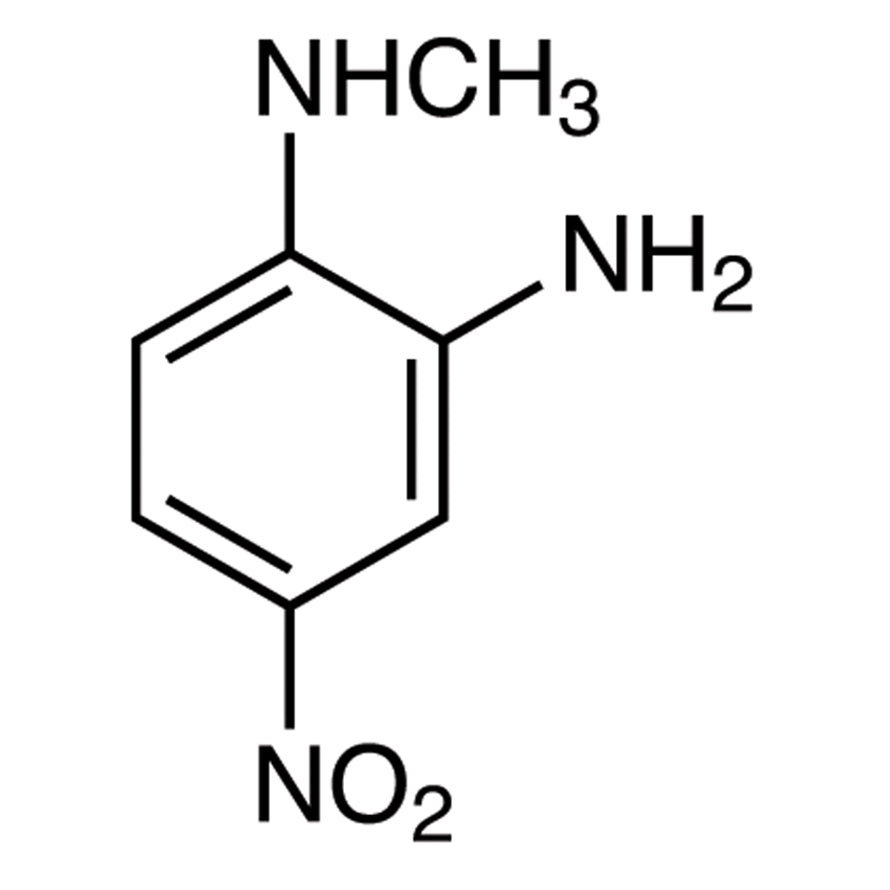
N1-Methyl-4-nitro-1,2-phenylenediamine is a chemical compound widely used as a building block in various laboratory applications. It plays a crucial role in organic chemistry by serving as a foundational material for the synthesis of complex compounds. Its versatility makes it an essential component in research settings where the development of new materials and chemical structures is required. This compound is particularly valuable for its ability to participate in multiple reaction types, including substitution, reduction, and oxidation, which are fundamental to many synthetic processes.
The compound's aromatic structure contributes to its high reactivity, making it a preferred choice for chemical reactions that require stability and predictability. Its ability to form bonds with various functional groups enhances its applicability in diverse chemical environments. This reactivity, combined with its chemical stability, ensures that it remains a reliable and effective reagent in both academic and industrial research. Its consistent performance in laboratory settings makes it a trusted material for scientists and researchers working on complex chemical syntheses.
In Indonesian laboratories, N1-Methyl-4-nitro-1,2-phenylenediamine is commonly used in organic chemistry research, material development, and studies on aromatic reactivity. It is frequently utilized by researchers and students in educational and research institutions to support experiments that require a stable and reliable starting material. Its presence in laboratory workflows underscores its importance in advancing chemical knowledge and innovation in Indonesia.
Related TCI products
- TCI D0105 5307-14-2 2-Nitro-1,4-phenylenediamine
- TCI D0104 5131-58-8 4-Nitro-1,3-phenylenediamine
- TCI D0103 99-56-9 4-Nitro-1,2-phenylenediamine
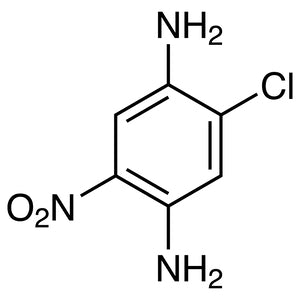
- TCI C1501 26196-45-2 2-Chloro-5-nitro-1,4-phenylenediamine
- TCI T3770 485831-34-3 N,N,N',N'-Tetrakis[4-(diisobutylamino)phenyl]-1,4-phenylenediamine
- TCI T3239 368-53-6 5-Trifluoromethyl-1,3-phenylenediamine
- Synthesis of aromatic compounds for organic chemistry research due to its reactivity and structural versatility
- Development of new materials in industrial and academic settings because of its ability to form stable chemical bonds
- Study of aromatic reactivity in chemical research to understand reaction mechanisms and pathways
- Preparation of intermediates for pharmaceutical and chemical synthesis due to its functional group compatibility
- Support for analytical chemistry experiments requiring a reliable and consistent starting material
| Brand | TCI |
|---|---|
| CAS number | 41939-61-1 |
| Molecular formula | — |
| Purity | — |
| Category | Chemistry > Building Blocks > Non-Heterocyclic Building Blocks |
| Pack sizes | Available in standard laboratory quantities |
| Physical form | Solid powder |
| Storage | Store in a cool, dry place away from light and incompatible materials |
This compound should be stored in a cool, dry environment, away from direct sunlight and sources of heat. It is recommended to keep it in a tightly sealed container to prevent moisture absorption and contamination. Due to its chemical nature, it should be stored separately from strong oxidizing agents and reactive substances to avoid potential hazards. In laboratory settings, it is important to handle it with appropriate personal protective equipment, such as gloves and safety goggles, to ensure safe handling. Proper ventilation should be maintained when working with this material to minimize exposure risks. Regular inspection of storage conditions is advised to maintain the integrity and safety of the compound.
—
Produk Terkait
-
2-Nitro-1,4-phenylenediamine TCI D0105
Regular price From Rp 743.400,00Regular price -
4-Nitro-1,3-phenylenediamine TCI D0104
Regular price Rp 2.518.950,00Regular price -
4-Nitro-1,2-phenylenediamine TCI D0103
Regular price From Rp 1.035.300,00Regular price -
2-Chloro-5-nitro-1,4-phenylenediamine TCI C1501
Regular price Rp 3.100.650,00Regular price -
N,N,N',N'-Tetrakis[4-(diisobutylamino)phenyl]-1,4-phenylenediamine TCI T3770
Regular price From Rp 2.094.750,00Regular price -
5-Trifluoromethyl-1,3-phenylenediamine TCI T3239
Regular price Rp 1.273.650,00Regular price -
2,3,5,6-Tetramethyl-1,4-phenylenediamine TCI T1457
Regular price From Rp 1.881.600,00Regular price -
2,4,6-Trimethyl-1,3-phenylenediamine TCI T1275
Regular price From Rp 3.605.700,00Regular price


![485831-34-3 N,N,N',N'-Tetrakis[4-(diisobutylamino)phenyl]-1,4-phenylenediamine - AMI Scientific](http://amiscientific.com/cdn/shop/files/TCI2510T3770.jpg?v=1767144326&width=533)


