1,6-Dibromohexane is a chemical compound widely used as a building block in various chemical reactions. It serves as a fundamental reagent in organic synthesis, providing a versatile platform for the development of more complex molecular structures. This compound is particularly valuable in laboratory settings where the construction of larger molecules is required, especially in substitution and addition reactions. Its role in the laboratory extends beyond basic synthesis, making it an essential tool for researchers working on advanced chemical processes.
The compound's unique properties, including the presence of two bromine atoms at the terminal positions of the hexane chain, contribute to its high reactivity. This reactivity allows it to participate effectively in nucleophilic and electrophilic reactions, making it a preferred choice for chemists seeking materials with strong chemical activity. Its ability to engage in a wide range of reactions enhances its utility in both academic and industrial research environments.
In Indonesian laboratories, 1,6-Dibromohexane is commonly used in educational and research programs focused on organic chemistry. It plays a crucial role in laboratory experiments and synthesis projects, particularly in the field of molecular structure development. Its relevance in both teaching and research makes it an important component of the chemical supply chain in Indonesia.
Related TCI products
- TCI D2298 24774-58-1 2,5-Dibromohexane (mixture of diastereoisomers)
- TCI B1289 3377-87-5 3-Bromohexane (contains 2-Bromohexane) (stabilized with Copper chip)
- TCI B1235 3377-86-4 2-Bromohexane (contains 3-Bromohexane) (stabilized with Copper chip)
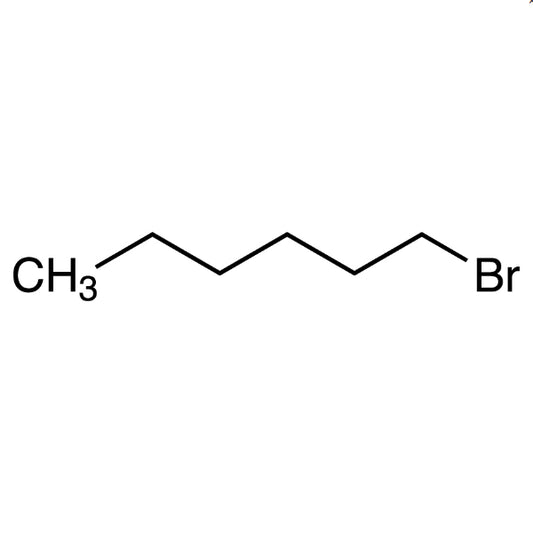
- TCI B0600 111-25-1 1-Bromohexane
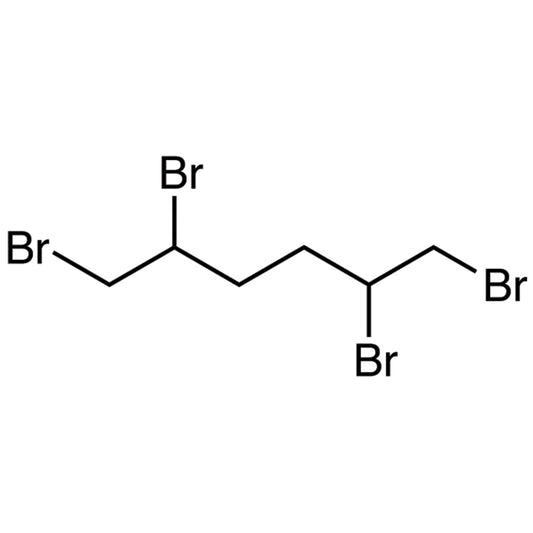
- TCI T2983 58443-86-0 1,2,5,6-Tetrabromohexane (mixture of diastereoisomers)
- TCI B0599 112-82-3 1-Bromohexadecane
- Organic synthesis applications benefit from 1,6-Dibromohexane due to its reactivity and structural versatility, enabling the creation of complex organic molecules.
- It is ideal for substitution reactions where bromine atoms can be replaced with other functional groups, offering flexibility in synthetic pathways.
- In addition reactions, 1,6-Dibromohexane serves as a valuable reagent for extending molecular chains, supporting the development of longer-chain compounds.
- Its use in heterocyclic compound synthesis allows for the formation of ring structures, which are essential in pharmaceutical and industrial chemistry.
- Indonesian research institutions utilize this compound in practical training and research projects to enhance students' understanding of chemical reactivity and synthesis techniques.
| Brand | TCI |
|---|---|
| CAS number | 629-03-8 |
| Molecular formula | — |
| Purity | — |
| Category | Chemistry > Building Blocks > Non-Heterocyclic Building Blocks |
| Pack sizes | Available in various sizes as per standard laboratory requirements |
| Physical form | Liquid |
| Storage | Store in a cool, dry place away from light and incompatible materials |
1,6-Dibromohexane should be stored in a cool, dry location, away from direct sunlight and sources of heat. It is recommended to use airtight containers made of materials compatible with its chemical properties, such as glass or high-density polyethylene. Due to its reactivity, it should be kept away from strong oxidizers, acids, and other reactive substances. In laboratory settings, proper ventilation is essential to minimize exposure. Always handle with care, using appropriate personal protective equipment such as gloves and safety goggles. Ensure that storage areas are well-ventilated and follow all standard safety protocols for handling hazardous chemicals.
—
Produk Terkait
-
2,5-Dibromohexane(mixtureofdiastereoisomers) TCI D2298
Regular price From Rp 2.466.450,00Regular priceRp 1.724.100,00Sale price From Rp 2.466.450,00 -
3-Bromohexane(contains2-Bromohexane)(stabilizedwithCopperchip) TCI B1289
Regular price Rp 7.023.450,00Regular priceRp 4.910.850,00Sale price Rp 7.023.450,00 -
2-Bromohexane(contains3-Bromohexane)(stabilizedwithCopperchip) TCI B1235
Regular price Rp 3.763.200,00Regular priceRp 2.631.300,00Sale price Rp 3.763.200,00 -
1-Bromohexane TCI B0600
Regular price From Rp 477.750,00Regular priceRp 333.900,00Sale price From Rp 477.750,00 -
1,2,5,6-Tetrabromohexane(mixtureofdiastereoisomers) TCI T2983
Regular price From Rp 3.367.350,00Regular priceRp 2.354.100,00Sale price From Rp 3.367.350,00 -
1-Bromohexadecane TCI B0599
Regular price From Rp 505.050,00Regular priceRp 352.800,00Sale price From Rp 505.050,00 -
1,7-Dibromoheptane TCI D2119
Regular price From Rp 3.127.950,00Regular priceRp 2.187.150,00Sale price From Rp 3.127.950,00 -
1,8-Dibromohexadecafluorooctane TCI D3587
Regular price From Rp 1.008.000,00Regular priceRp 704.550,00Sale price From Rp 1.008.000,00