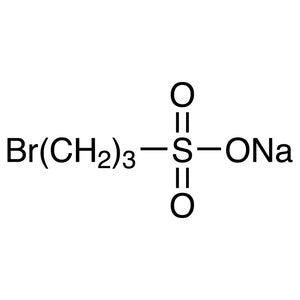
1,3-Dibromopropane is a chemical compound widely used as a building block in various chemical reactions, particularly in the synthesis of organic compounds. It plays a crucial role in laboratory settings where researchers aim to create new molecules through synthetic pathways. Its molecular structure provides a versatile platform for chemical modifications, making it an essential reagent in organic chemistry. This compound is commonly employed in substitution reactions and addition reactions, contributing to the development of complex organic structures. Due to its reactivity, it is a preferred choice for synthetic chemists seeking to explore new reaction mechanisms and functional group transformations.
The chemical properties of 1,3-dibromopropane make it a favored reagent in laboratory applications. It exhibits high reactivity towards nucleophiles, bases, and alkali metals, enabling a wide range of chemical transformations. Its ability to participate in ring-closure reactions and substitution reactions further enhances its utility in synthetic chemistry. The compound’s stability under controlled conditions allows for predictable outcomes in experimental setups, ensuring reliable results. These characteristics make it a valuable tool for researchers working on the synthesis of heterocyclic and non-heterocyclic compounds.
In Indonesian laboratories, 1,3-dibromopropane is frequently used in research focused on pharmaceuticals, materials science, and organic chemistry. It is commonly found in university laboratories and research institutions that conduct synthetic chemistry experiments. Its availability and chemical versatility make it a sought-after compound for scientists aiming to develop new compounds and materials. Its use is integral to advancing chemical research in Indonesia, supporting both academic and industrial applications.
- Organic synthesis applications benefit from 1,3-dibromopropane due to its reactivity in substitution and ring closure reactions, enabling the creation of complex molecular structures.
- Pharmaceutical research utilizes this compound as a building block for synthesizing new drug molecules, leveraging its ability to form various functional groups.
- Material science applications rely on 1,3-dibromopropane for developing new polymers and organic materials through controlled chemical reactions.
- Academic research in chemistry uses this compound to explore reaction mechanisms and functional group transformations in synthetic pathways.
- Industrial chemical processes incorporate 1,3-dibromopropane for producing intermediates used in the manufacture of specialty chemicals and organic compounds.
| Brand | TCI |
|---|---|
| CAS number | 109-64-8 |
| Molecular formula | — |
| Purity | — |
| Category | Chemistry > Building Blocks > Non-Heterocyclic Building Blocks |
| Pack sizes | Available in various quantities as per supplier specifications |
| Physical form | Liquid |
| Storage | Store in a cool, dry place away from light and incompatible materials |
1,3-Dibromopropane should be stored in a cool, dry environment to maintain its chemical stability. It is recommended to keep the compound in a sealed container to prevent exposure to air and moisture. Suitable storage containers include glass or high-density polyethylene bottles, which are resistant to chemical reactions. Due to its reactivity, it should be kept away from strong bases, alkali metals, and nucleophilic reagents. Always ensure proper ventilation when handling this compound to minimize inhalation risks. Laboratory personnel should wear appropriate personal protective equipment, including gloves and safety goggles, to ensure safe handling and prevent accidental contact.
—
Produk Terkait
-
2,2-Dibromopropane TCI D1409
Regular price Rp 4.559.100,00Regular price -
1,2-Dibromopropane TCI D0203
Regular price From Rp 1.035.300,00Regular price -
2-Bromopropane TCI B0639
Regular price From Rp 477.750,00Regular price -
1-Bromopropane TCI B0638
Regular price From Rp 505.050,00Regular price -
1,2,3-Tribromopropane TCI T0355
Regular price From Rp 505.050,00Regular price -
2,3-Dibromopropene TCI D0205
Regular price Rp 2.757.300,00Regular price -
Sodium3-Bromopropanesulfonate TCI B1707
Regular price From Rp 2.862.300,00Regular price -
Methyl2,3-Dibromopropionate TCI M3182
Regular price From Rp 743.400,00Regular price