

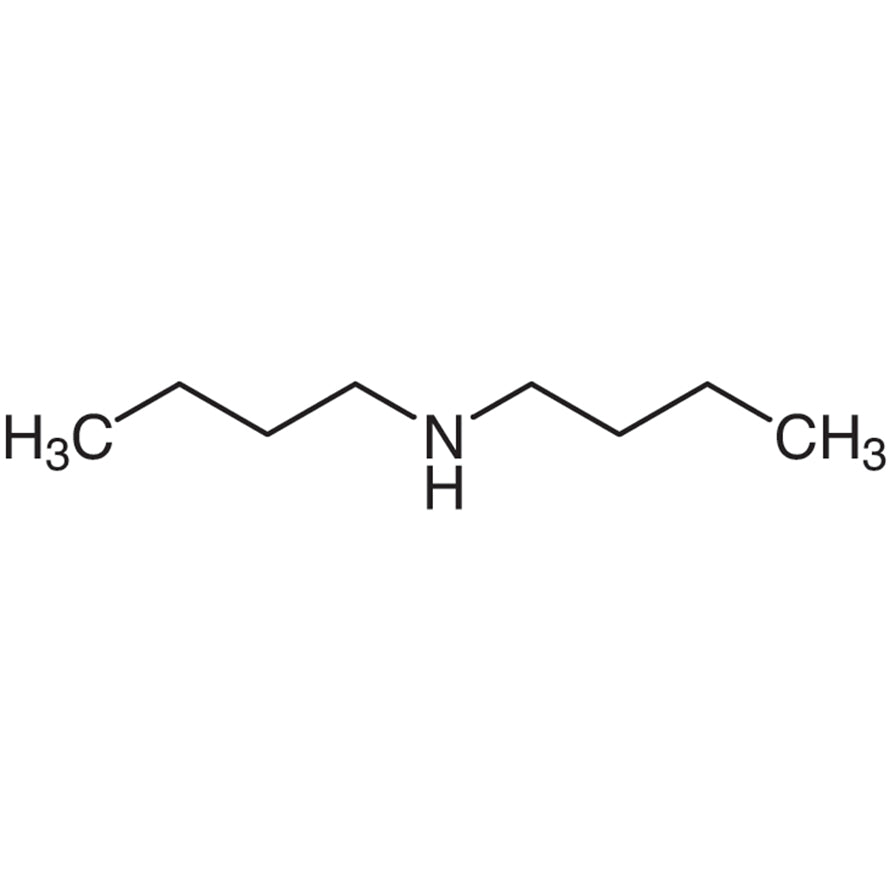
Dibutylamine (DBA), with the CAS number 111-92-2, is a secondary amine widely used in laboratory settings for its reactivity and versatility. As a fundamental building block in organic chemistry, it plays a crucial role in the synthesis of complex molecules. Its ability to form bonds with various functional groups makes it an essential reagent in chemical reactions. DBA is commonly employed in the development of pharmaceuticals, industrial chemicals, and organic compounds, serving as a key component in many synthetic pathways.
DBA is valued for its solubility in organic solvents and its stability under controlled conditions. Its chemical structure, featuring a nitrogen atom, allows it to participate in a variety of reactions, including substitution, reduction, and condensation. The compound’s solubility in solvents like ethylamine enhances its utility in reactions requiring high solubility. Additionally, its reactivity with different functional groups makes it a preferred choice for chemists seeking to modify molecular structures.
In Indonesian laboratories, DBA is frequently used in organic chemistry research, particularly in studies involving nitrogen-containing compounds. Its role in synthesizing pharmaceuticals and industrial chemicals is well-established. Due to its hazardous nature, it is handled with care, ensuring safety and compliance with laboratory protocols. Its presence in research projects underscores its importance in both academic and industrial chemical applications.
Related TCI products
- TCI D1078 102-83-0 3-(Dibutylamino)propylamine
- TCI I0096 5041-09-8 Isobutylamine Hydrochloride
- TCI T3770 485831-34-3 N,N,N',N'-Tetrakis[4-(diisobutylamino)phenyl]-1,4-phenylenediamine
- TCI D6338 90134-10-4 4-(Dibutylamino)benzaldehyde
- TCI D3260 57771-09-2 4-(Dibutylamino)salicylaldehyde
- TCI T3876 4182-80-3 N,N,N',N'-Tetrakis[4-(dibutylamino)phenyl]-1,4-phenylenediamine
- Organic synthesis reactions benefit from DBA’s ability to form nitrogen bonds, making it ideal for creating complex molecular structures.
- Pharmaceutical research utilizes DBA as a building block in the development of new drug compounds due to its reactivity and solubility.
- Industrial chemical production relies on DBA for its role in synthesizing a wide range of organic compounds with high efficiency.
- Analytical chemistry applications often use DBA as a reagent in chromatographic and spectroscopic analyses due to its chemical stability.
- Environmental studies incorporate DBA in the analysis of nitrogen-containing pollutants, leveraging its solubility and reactivity in aqueous systems.
| Brand | TCI |
|---|---|
| CAS number | 111-92-2 |
| Molecular formula | — |
| Purity | — |
| Category | Chemistry > Building Blocks > Non-Heterocyclic Building Blocks |
| Pack sizes | Available in various sizes as per supplier specifications |
| Physical form | Liquid |
| Storage | Store in a cool, dry, well-ventilated area away from heat and direct sunlight |
Dibutylamine should be stored in a cool, dry, and well-ventilated area, away from heat and direct sunlight. It is recommended to use sealed containers made of materials compatible with its chemical properties, such as glass or stainless steel. Due to its volatility and potential toxicity, proper personal protective equipment, including gloves, goggles, and a lab coat, should be worn during handling. It is essential to ensure adequate ventilation in the laboratory to prevent the accumulation of vapors. DBA should never be stored near incompatible substances such as oxidizers or strong acids. Always follow established safety protocols to minimize exposure and ensure a safe working environment.
—
Produk Terkait
-
3-(Dibutylamino)propylamine TCI D1078
Regular price From Rp 769.650,00Regular price -
IsobutylamineHydrochloride TCI I0096
Regular price From Rp 823.200,00Regular price -
N,N,N',N'-Tetrakis[4-(diisobutylamino)phenyl]-1,4-phenylenediamine TCI T3770
Regular price From Rp 2.094.750,00Regular price -
4-(Dibutylamino)benzaldehyde TCI D6338
Regular price From Rp 2.677.500,00Regular price -
4-(Dibutylamino)salicylaldehyde TCI D3260
Regular price Rp 5.380.200,00Regular price -
N,N,N',N'-Tetrakis[4-(dibutylamino)phenyl]-1,4-phenylenediamine TCI T3876
Regular price From Rp 2.386.650,00Regular price -
N,N,N',N'-Tetrakis(4-dibutylaminophenyl)-1,4-benzoquinoneDiiminiumBis(hexafluoroantimonate) TCI T3072
Regular price From Rp 3.075.450,00Regular price -
6-(Dibutylamino)-1,3,5-triazine-2,4-dithiol TCI D3265
Regular price From Rp 717.150,00Regular price


![485831-34-3 N,N,N',N'-Tetrakis[4-(diisobutylamino)phenyl]-1,4-phenylenediamine - AMI Scientific](http://amiscientific.com/cdn/shop/files/TCI2510T3770.jpg?v=1767144326&width=533)


![4182-80-3 N,N,N',N'-Tetrakis[4-(dibutylamino)phenyl]-1,4-phenylenediamine - AMI Scientific](http://amiscientific.com/cdn/shop/files/TCI2510T3876.jpg?v=1768819814&width=533)

