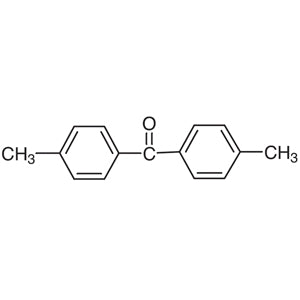
4,4'-Dimethylbenzophenone is a chemical compound widely used in various organic reactions, particularly in the synthesis of aromatic and heterocyclic compounds. This compound plays a crucial role in laboratory settings by serving as a key reagent in photchemical reactions or as an activator in chemical illumination processes. Its unique ability to absorb ultraviolet light and emit visible light makes it highly valuable in applications requiring light-sensitive reactions. Due to its stability and reactivity, it is a preferred choice for researchers aiming to develop complex molecular structures.
One of the main reasons 4,4'-Dimethylbenzophenone is favored is its high purity and stable molecular structure. These properties ensure consistent results in experimental procedures, making it reliable for both academic and industrial research. Additionally, its high melting point allows it to maintain its integrity under various reaction conditions, which is essential for experiments that require controlled thermal environments. The compound’s versatility in different chemical processes further enhances its appeal among chemists and researchers.
In Indonesian laboratories, 4,4'-Dimethylbenzophenone is commonly used in organic chemistry research, especially in the study of aromatic compounds and photoreactions. It is a staple in research institutions and universities, where it supports the development of new compounds and the exploration of chemical materials with potential industrial and medical applications. Its role in photchemical synthesis makes it an essential tool for advancing chemical research in the region.
Related TCI products
- Photocatalytic reactions benefit from this compound’s ability to absorb UV light and emit visible light, enhancing reaction efficiency in synthetic processes.
- Organic synthesis of aromatic compounds relies on its stability and reactivity, making it a key reagent in complex molecule creation.
- Chemical illumination processes use its light-emitting properties to activate or enhance reaction pathways in controlled environments.
- Research into photoreactive materials utilizes its UV absorption and visible light emission for developing new light-sensitive compounds.
- Industrial and medical compound development leverages its properties for creating materials with potential applications in various sectors.
| Brand | TCI |
|---|---|
| CAS number | 611-97-2 |
| Molecular formula | — |
| Purity | — |
| Category | Chemistry > Building Blocks > Non-Heterocyclic Building Blocks |
| Pack sizes | Available in standard laboratory quantities |
| Physical form | Solid |
| Storage | Store in a cool, dry place away from direct sunlight |
This compound should be stored in a cool, dry environment, away from direct sunlight and sources of heat to maintain its stability and purity. It is recommended to use airtight containers made of glass or inert plastic to prevent contamination and moisture absorption. Due to its photoreactive nature, it should be handled in a well-ventilated area to minimize exposure to UV light. Laboratory personnel should wear appropriate personal protective equipment, such as gloves and safety goggles, when handling this material. Proper labeling and storage conditions are essential to ensure safe usage and long-term preservation of the compound.
—
Produk Terkait
-
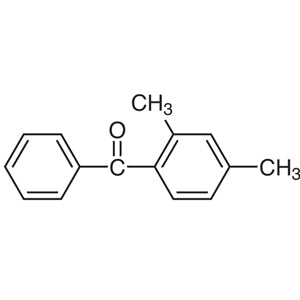
2,4-Dimethylbenzophenone TCI D3458
Regular price Rp 3.180.450,00Regular price -
3,4-Dimethylbenzophenone TCI D3289
Regular price Rp 1.353.450,00Regular price -
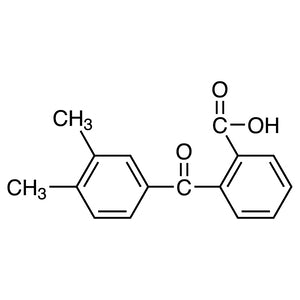
3',4'-Dimethylbenzophenone-2-carboxylicAcid TCI D2978
Regular price From Rp 717.150,00Regular price -
2,4,5-Trimethylbenzophenone TCI T2062
Regular price Rp 1.140.300,00Regular price -
2,2',4,4'-Tetramethylbenzophenone TCI T1232
Regular price From Rp 2.809.800,00Regular price -
4-Phenylbenzophenone TCI P1116
Regular price Rp 1.776.600,00Regular price -
4-Methylbenzophenone TCI M1248
Regular price From Rp 1.140.300,00Regular price -
3-Methylbenzophenone TCI M1247
Regular price From Rp 1.167.600,00Regular price