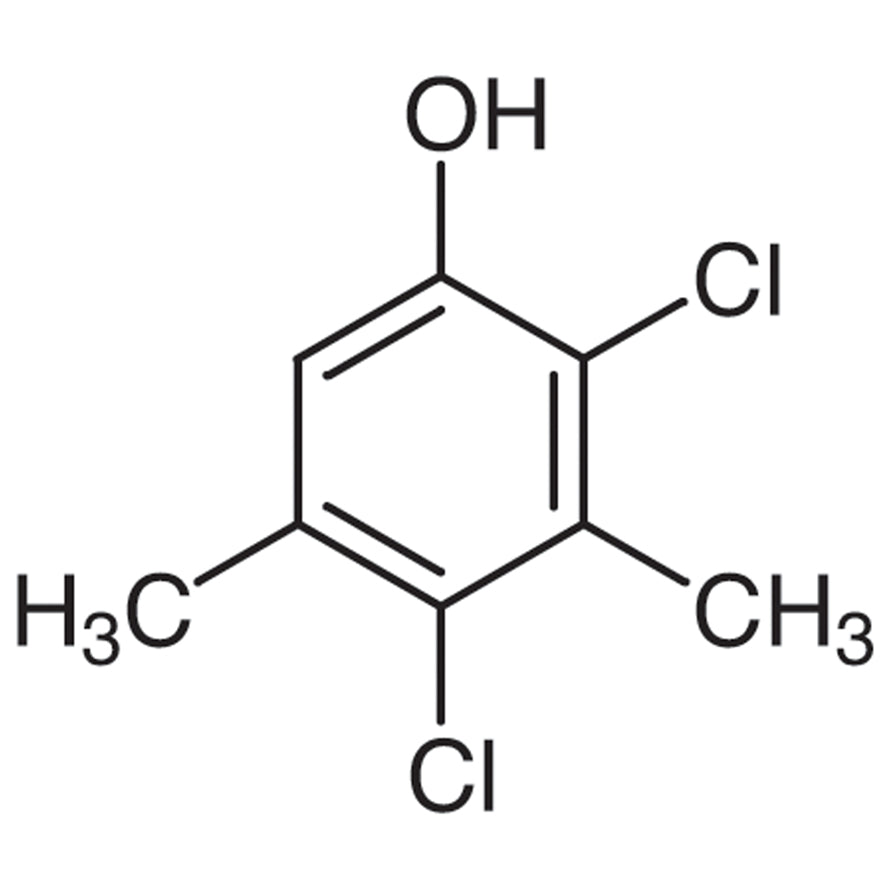
2,4-Dichloro-3,5-dimethylphenol is a chemical compound widely used in laboratory settings for its versatility in chemical experiments and molecular synthesis. As a key building block in organic chemistry, it plays a vital role in the development of aromatic compounds and phenolic derivatives. This compound is commonly utilized in research involving substitution reactions and oxidation processes, where its structural characteristics make it a valuable reagent. Its presence in various chemical applications underscores its importance in both academic and industrial research environments.
The chemical properties of 2,4-Dichloro-3,5-dimethylphenol make it a preferred choice for laboratory use. Its polar nature allows it to dissolve in organic solvents such as ethyl acetate and chloroform, enhancing its utility in different experimental setups. The presence of two chlorine atoms and two methyl groups contributes to its chemical stability and controlled reactivity, making it suitable for precise and accurate experiments. Additionally, its high purity and consistent quality ensure reliable results in laboratory procedures, especially in applications requiring reproducibility.
In Indonesian laboratories, 2,4-Dichloro-3,5-dimethylphenol is extensively used in research related to biological activity, including antioxidant and antimicrobial studies. Its role in synthesizing compounds with specific functional groups makes it a critical component in drug development and material science. Due to its stability and reactivity, it is frequently employed in both academic and industrial research, supporting a wide range of chemical investigations.
- Used in the synthesis of phenolic derivatives due to its aromatic structure and functional groups, enabling the creation of complex organic molecules.
- Applied in antioxidant research because of its ability to participate in redox reactions, making it suitable for studying free radical scavenging mechanisms.
- Utilized in antimicrobial studies as a building block for developing compounds with potential bioactive properties against microorganisms.
- Employed in organic synthesis for substitution reactions, where its chlorine and methyl groups provide structural versatility and reactivity.
- Incorporated in material science research for the development of functional materials with specific chemical properties and stability.
| Brand | TCI |
|---|---|
| CAS number | 133-53-9 |
| Molecular formula | — |
| Purity | — |
| Category | Chemistry > Building Blocks > Non-Heterocyclic Building Blocks |
| Pack sizes | Available in various quantities as per standard laboratory requirements |
| Physical form | Solid, crystalline or powder depending on the batch |
| Storage | Store in a cool, dry place away from light and moisture |
This compound should be stored in a cool, dry environment, away from direct sunlight and sources of heat. It is recommended to use airtight containers made of glass or polyethylene to prevent contamination and maintain its chemical integrity. Due to its polar nature, it should be kept separate from incompatible substances such as strong oxidizers or acids. In laboratory settings, proper personal protective equipment (PPE) should always be worn when handling this material to ensure safety. Regular monitoring of storage conditions is essential to maintain the compound's stability and effectiveness for research purposes.
—
Produk Terkait
-
4-Triphenylmethylphenol TCI T1654
Regular price Rp 3.180.450,00Regular price -
2-Bromo-4,5-dimethylphenol TCI B5394
Regular price From Rp 3.127.950,00Regular price -
4-Bromo-3-methylphenol TCI B3658
Regular price From Rp 1.644.300,00Regular price -
4-Bromo-3,5-dimethylphenol TCI B2146
Regular price From Rp 1.087.800,00Regular price -
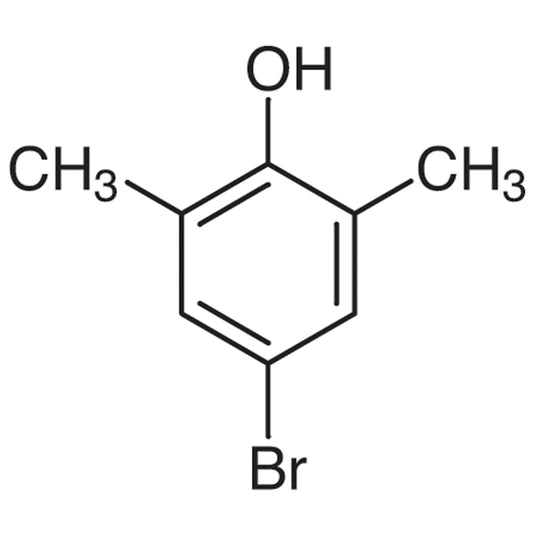
4-Bromo-2,6-dimethylphenol TCI B2060
Regular price From Rp 3.260.250,00Regular price -
2-tert-Butyl-4-ethylphenol TCI B1810
Regular price Rp 795.900,00Regular price -
2-Amyl-5-methylphenol TCI A2710
Regular price From Rp 1.510.950,00Regular price -
2,3,6-Trimethylphenol TCI T0877
Regular price From Rp 664.650,00Regular price