

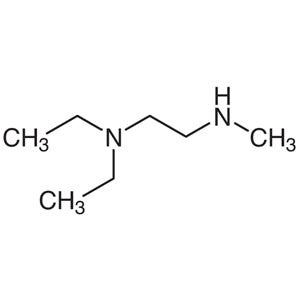
TCI D1297 N,N-Diethyl-N'-methylethylenediamine (CAS 104-79-0) is a short-chain aliphatic diamine built on an ethylenediamine skeleton with asymmetric substitution. One nitrogen atom carries two ethyl groups, making it a tertiary amine, while the other nitrogen carries a single methyl group and therefore remains a secondary amine that still holds a reactive hydrogen. As a non-heterocyclic building block, this compound is widely used in organic synthesis laboratories to introduce basic side chains into target molecules — a strategy common in the design of pharmaceutically active compounds and functional materials.
The property that makes this material valuable is the presence of two nitrogen centres with different levels of reactivity within a single molecule. The more accessible secondary amine generally reacts first in acylation, alkylation, and nucleophilic aromatic substitution, while the tertiary amine survives as a basic group that improves water solubility through salt formation. This difference in reactivity delivers natural selectivity without requiring complicated protecting-group strategies, which shortens synthetic routes and reduces the number of steps a chemist must run to reach an intended substitution pattern.
In Indonesian laboratories, the compound is handled as a basic liquid that is hygroscopic and tends to absorb moisture from the surrounding air. Because of this, it is typically used in synthesis groups within universities, research institutes, and industrial R&D units that already work with anhydrous reagents and controlled dispensing practices. It is normally drawn in small portions as an intermediate rather than as a bulk consumable, supporting exploratory and route-development work in medicinal chemistry and functional materials research.
Related TCI products
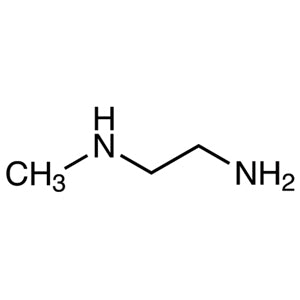
- TCI M0518 109-81-9 N-Methylethylenediamine
- TCI T2515 110-18-9 N,N,N',N'-Tetramethylethylenediamine [for Electrophoresis]
- TCI B3246 102-11-4 N-Benzyl-N,N'-dimethylethylenediamine
- TCI T0742 142-25-6 N,N,N'-Trimethylethylenediamine
- TCI T0147 110-18-9 N,N,N',N'-Tetramethylethylenediamine
- TCI E0294 110-72-5 N-Ethylethylenediamine
- Introduction of basic side chains into target molecules, where the tertiary amine remains available as a basic centre after the secondary nitrogen has been coupled to the scaffold.
- Nucleophilic aromatic substitution on activated aryl halides, in which the more accessible secondary amine reacts preferentially and installs the diamine fragment in a single step.
- Acylation chemistry, where the reactive secondary N–H is converted to an amide while the diethyl-substituted tertiary nitrogen is left untouched as a basic handle.
- Selective alkylation sequences that exploit the built-in reactivity difference between the two nitrogen centres, avoiding the need for complicated protecting-group strategies.
- Preparation of pharmaceutically active compounds and functional materials, where a basic amine tail is required to improve aqueous solubility through salt formation.
| Brand | TCI |
|---|---|
| CAS number | 104-79-0 |
| Molecular formula | — |
| Purity | — |
| Category | Chemistry > Building Blocks > Non-Heterocyclic Building Blocks |
| Pack sizes | supplied in the standard TCI catalogue pack sizes for this product |
| Physical form | basic liquid; hygroscopic and prone to absorbing atmospheric moisture |
| Storage | keep tightly closed in a cool, dry place, protected from moisture |
- Chemical name: N,N-Diethyl-N'-methylethylenediamine
Store the container tightly closed in a cool, dry, well-ventilated area away from moisture, acids, and oxidising agents. Because the compound is hygroscopic and readily absorbs water from the air, the bottle should be opened only briefly and resealed immediately; transferring under an inert atmosphere or using a septum and syringe helps preserve quality across repeated withdrawals. Keep the material in its original tightly sealed container or in a compatible, chemically resistant vessel with a secure closure. Handle in a fume hood while wearing chemical-resistant gloves, safety goggles, and a laboratory coat, since the substance is basic and can irritate skin, eyes, and the respiratory tract. Avoid contact with skin and inhalation of vapours, and consult the manufacturer's safety data sheet before use.
—
Produk Terkait
-
N-Methylethylenediamine TCI M0518
Regular price From Rp 1.908.900,00Regular price -
N,N,N',N'-Tetramethylethylenediamine[forElectrophoresis] TCI T2515
Regular price From Rp 477.750,00Regular price -
N-Benzyl-N,N'-dimethylethylenediamine TCI B3246
Regular price From Rp 3.232.950,00Regular price -
N,N,N'-Trimethylethylenediamine TCI T0742
Regular price From Rp 1.220.100,00Regular price -
N,N,N',N'-Tetramethylethylenediamine TCI T0147
Regular price From Rp 505.050,00Regular price -
N-Ethylethylenediamine TCI E0294
Regular price From Rp 743.400,00Regular price -
N,N-DimethylethylenediamineDihydroiodide TCI D5616
Regular price From Rp 795.900,00Regular price -
N,N-DimethylethylenediamineDihydrobromide TCI D5615
Regular price From Rp 505.050,00Regular price
![110-18-9 N,N,N',N'-Tetramethylethylenediamine [for Electrophoresis] - AMI Scientific](http://amiscientific.com/cdn/shop/files/TCI2510T2515.jpg?v=1767142980&width=533)


