N,N,N'-Trimethylethylenediamine (TME) is a versatile chemical compound widely used in laboratory settings for its reactivity and utility in synthetic processes. As a building block in organic chemistry, TME plays a crucial role in the synthesis of complex molecules by facilitating molecular chain modifications and structural transformations. Its ability to participate in various reaction types, including nucleophilic, substitution, and covalent reactions, makes it an essential reagent for chemists. TME is particularly valuable in applications where functional group attachment and molecular connectivity are required.
The chemical properties of TME, such as its reactivity with functional groups like halides, amines, and carboxylates, make it a preferred choice for synthetic chemists. Its stability under certain conditions ensures reliable performance during experiments, reducing the risk of degradation or unwanted side reactions. This stability, combined with its high reactivity, allows for consistent results in laboratory settings. Additionally, TME's compatibility with a wide range of solvents and reaction conditions enhances its applicability across different synthetic pathways.
In Indonesian laboratories, TME is commonly used in research and development projects, especially in the fields of organic chemistry, pharmaceuticals, and materials science. Its low molecular weight and high reactivity make it ideal for applications requiring efficient chemical transformations. The availability of TME ensures that it remains a practical and accessible choice for researchers working on complex molecular synthesis and functional group modification.
Related TCI products
- TCI B3246 102-11-4 N-Benzyl-N,N'-dimethylethylenediamine
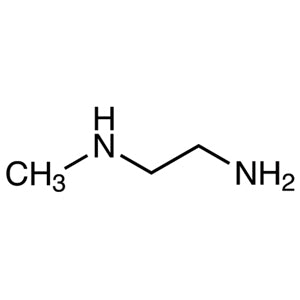
- TCI M0518 109-81-9 N-Methylethylenediamine
- TCI E0294 110-72-5 N-Ethylethylenediamine
- TCI D5616 244234-52-4 N,N-Dimethylethylenediamine Dihydroiodide
- TCI D5615 1245570-04-0 N,N-Dimethylethylenediamine Dihydrobromide
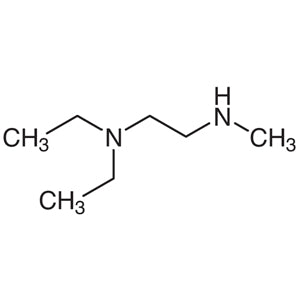
- TCI D1297 104-79-0 N,N-Diethyl-N'-methylethylenediamine
- Organic synthesis where TME is used to modify molecular chains and introduce functional groups due to its reactivity and compatibility with various reaction conditions.
- Pharmaceutical research involving the synthesis of complex drug molecules, as TME enables the formation of stable intermediates and facilitates molecular connectivity.
- Material science applications where TME is employed to create polymers and functional materials through its ability to form covalent bonds with other compounds.
- Analytical chemistry experiments requiring the use of TME as a reagent for the preparation of standard solutions and the modification of sample matrices.
- Environmental studies involving the synthesis of compounds for the development of new catalysts and chemical processes that mimic natural reactions.
| Brand | TCI |
|---|---|
| CAS number | 142-25-6 |
| Molecular formula | — |
| Purity | — |
| Category | Chemistry > Building Blocks > Non-Heterocyclic Building Blocks |
| Pack sizes | Available in various quantities as per standard laboratory supply formats |
| Physical form | Liquid |
| Storage | Store in a cool, dry place away from direct sunlight and incompatible materials |
TME should be stored in a cool, dry environment, away from direct sunlight and sources of heat. It is recommended to keep it in a sealed container to prevent evaporation and contamination. The chemical is compatible with most standard laboratory glassware and plastic containers, provided they are chemically inert. Due to its reactivity, it should be handled with care, using appropriate personal protective equipment such as gloves and safety goggles. Avoid contact with incompatible substances like strong oxidizing agents. Ensure proper ventilation in the workspace to minimize exposure to vapors. Regular monitoring of storage conditions is advised to maintain the integrity and safety of the compound.
—
Produk Terkait
-
N-Benzyl-N,N'-dimethylethylenediamine TCI B3246
Regular price From Rp 3.285.450,00Regular priceRp 2.313.150,00Sale price From Rp 3.285.450,00 -
N-Methylethylenediamine TCI M0518
Regular price From Rp 1.908.900,00Regular priceRp 1.334.550,00Sale price From Rp 1.908.900,00 -
N-Ethylethylenediamine TCI E0294
Regular price From Rp 743.400,00Regular priceRp 519.750,00Sale price From Rp 743.400,00 -
N,N-DimethylethylenediamineDihydroiodide TCI D5616
Regular price From Rp 795.900,00Regular priceRp 556.500,00Sale price From Rp 795.900,00 -
N,N-DimethylethylenediamineDihydrobromide TCI D5615
Regular price From Rp 505.050,00Regular priceRp 352.800,00Sale price From Rp 505.050,00 -
N,N-Diethyl-N'-methylethylenediamine TCI D1297
Regular price From Rp 1.378.650,00Regular priceRp 963.900,00Sale price From Rp 1.378.650,00 -
N,N'-Dimethylethylenediamine TCI D0720
Regular price From Rp 1.246.350,00Regular priceRp 871.500,00Sale price From Rp 1.246.350,00 -
N,N-Dimethylethylenediamine TCI D0719
Regular price From Rp 664.650,00Regular priceRp 464.100,00Sale price From Rp 664.650,00