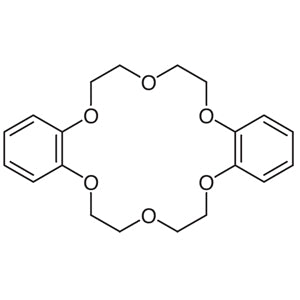
Dibenzo-18-crown 6-Ether is a chemical compound widely used in laboratory settings for its ability to form stable metal complexes. This reagent plays a crucial role in synthetic chemistry and analytical processes, particularly in the study of metal ion interactions. Its unique structure allows it to selectively bind to alkali metal ions such as sodium and potassium, making it an essential tool for researchers working with metal complexes. The compound is commonly found in both qualitative and quantitative analyses, where its chelating properties are leveraged to isolate and identify specific ions.
One of the key attributes of Dibenzo-18-crown 6-Ether is its high affinity for certain metal ions, which makes it a preferred choice in complexation reactions. Its molecular structure, featuring an 18-membered ring, enables efficient and selective binding, ensuring reliable results in analytical procedures. The compound’s stability and consistency in performance make it a trusted reagent in various laboratory applications. Its ability to form stable complexes also simplifies the handling and analysis of metal ions, reducing the risk of interference from other substances.
In Indonesian laboratories, Dibenzo-18-crown 6-Ether is extensively used in chemical research, particularly in analytical and synthetic applications. It is a staple in academic and industrial research settings, supporting a wide range of experiments that require precise metal ion interactions. Its versatility and effectiveness have made it a standard reagent in many laboratories across Indonesia, contributing to the advancement of chemical studies and analytical techniques.
Related TCI products
- Metal Ion Complexation Analysis: This compound is ideal for analyzing metal ions due to its ability to form stable complexes, allowing for accurate identification and quantification in solution.
- Organic Synthesis Reactions: It is frequently used in synthetic processes where metal ion coordination is required to facilitate reaction mechanisms and improve yield.
- Qualitative Analysis of Alkali Metals: Its high selectivity for sodium and potassium ions makes it a valuable tool in determining the presence of these ions in unknown samples.
- Ion Exchange Studies: The compound's chelating properties are useful in ion exchange experiments, where it can selectively bind and release specific metal ions.
- Environmental Sample Analysis: It is applied in environmental research to detect and quantify trace metal ions in water and soil samples.
| Brand | TCI |
|---|---|
| CAS number | 14187-32-7 |
| Molecular formula | — |
| Purity | — |
| Category | Chemistry > Synthetic Reagents > Chelation/Complexation Compounds |
| Pack sizes | Available in various quantities as per standard laboratory reagent packaging |
| Physical form | Solid powder or crystalline solid, depending on the batch |
| Storage | Store in a cool, dry place away from moisture and direct sunlight |
Dibenzo-18-crown 6-Ether should be stored in a cool, dry environment to maintain its chemical integrity and prevent degradation. It is recommended to keep the compound in a sealed container to avoid exposure to moisture, which could affect its performance. Suitable storage containers include glass or high-density polyethylene (HDPE) bottles, which provide a barrier against environmental contaminants. In laboratory settings, it is important to handle the compound with care, using appropriate personal protective equipment (PPE) such as gloves and safety goggles. Avoid direct contact with skin and inhalation of dust, as it may cause irritation. Proper labeling and storage conditions ensure the safety of both the compound and the laboratory personnel.
—
Produk Terkait
-
Bis(1,4-phenylene)-34-crown10-Ether TCI B2245
Regular price Rp 12.587.400,00Regular price -
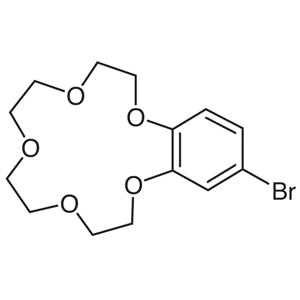
4'-Bromobenzo-15-crown5-Ether TCI B2189
Regular price From Rp 5.194.350,00Regular price -
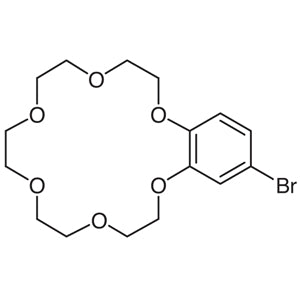
4'-Bromobenzo-18-crown6-Ether TCI B2181
Regular price From Rp 5.089.350,00Regular price -
Benzo-18-crown6-Ether TCI B1539
Regular price From Rp 1.538.250,00Regular price -
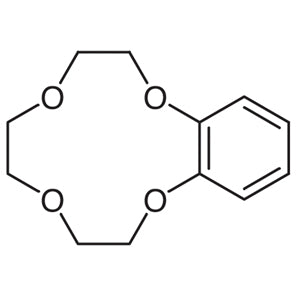
Benzo-12-crown4-Ether TCI B1249
Regular price From Rp 2.439.150,00Regular price -
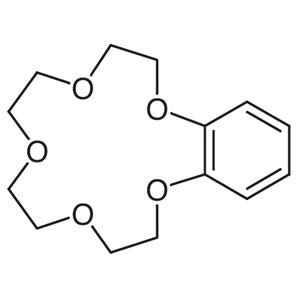
Benzo-15-crown5-Ether TCI B1154
Regular price From Rp 1.724.100,00Regular price -
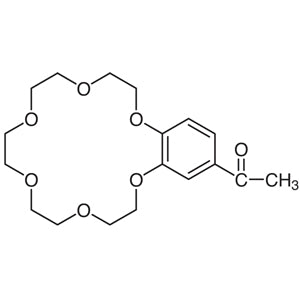
4'-Acetylbenzo-18-crown6-Ether TCI A1604
Regular price Rp 9.461.550,00Regular price -
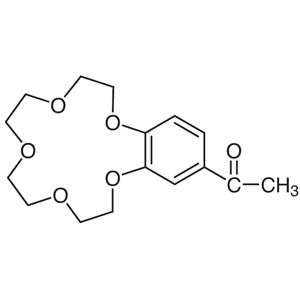
4'-Acetylbenzo-15-crown5-Ether TCI A1603
Regular price Rp 3.578.400,00Regular price