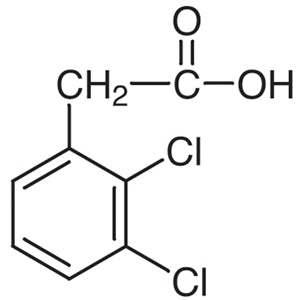
2,4-Dichlorophenylacetic Acid (2,4-DPCA) is a chemical compound widely used in laboratory settings for the synthesis of complex organic molecules. As a key building block in chemical reactions, it plays a crucial role in the development of various compounds, including pharmaceuticals, pesticides, and industrial chemicals. Its versatility makes it an essential tool for chemists engaged in molecular structure design and functional group modification. In the laboratory, 2,4-DPCA is often employed as a starting material for reactions that require substitution or hydrolysis processes, contributing to the creation of new chemical entities with specific properties.
The chemical properties of 2,4-DPCA, including its stability and reactivity, make it a preferred choice for synthetic chemists. It can readily interact with a variety of reagents, enabling the formation of diverse derivatives. Its ability to undergo substitution and hydrolysis reactions makes it particularly useful in the synthesis of bioactive compounds. The compound’s predictable behavior under different reaction conditions ensures reliable results, which is vital in research and development environments. These characteristics make it a valuable asset in both academic and industrial laboratories.
In Indonesian laboratories, 2,4-DPCA is commonly used in organic chemistry research, especially in pharmaceutical and industrial chemistry applications. Its availability supports local researchers in conducting experiments and developing new compounds with potential clinical or industrial applications. The compound’s widespread use in these settings highlights its importance in advancing scientific knowledge and innovation within the chemical sciences.
- Synthesis of Bioactive Compounds: 2,4-DPCA is ideal for creating compounds with biological activity due to its reactivity and ability to undergo substitution reactions.
- Pharmaceutical Research: It is used in the development of new drugs, as it can be modified to produce various functional groups essential for drug design.
- Industrial Chemistry Applications: The compound is valuable in the production of pesticides and other industrial chemicals due to its structural versatility.
- Organic Structure Modification: Its role in functional group substitution makes it suitable for building complex molecular frameworks in synthetic chemistry.
- Hydrolysis Reaction Studies: The compound’s reactivity enables it to be used in reactions that require hydrolysis, aiding in the study of chemical degradation processes.
| Brand | TCI |
|---|---|
| CAS number | 19719-28-9 |
| Molecular formula | — |
| Purity | — |
| Category | Chemistry > Building Blocks > Non-Heterocyclic Building Blocks |
| Pack sizes | Available in various quantities as per standard laboratory supply formats |
| Physical form | Solid, crystalline appearance |
| Storage | Store in a cool, dry place away from moisture and direct sunlight |
2,4-Dichlorophenylacetic Acid should be stored in a cool, dry environment to maintain its chemical stability. It is recommended to keep the compound in a sealed container to prevent exposure to moisture and air, which could lead to degradation. Suitable containers for storage include glass or high-density polyethylene (HDPE) bottles with tight-fitting lids. In laboratory settings, it is important to handle the compound with appropriate personal protective equipment, such as gloves and safety goggles, to ensure safety during handling and experimentation. Proper labeling of storage containers is also essential to prevent accidental misuse. The compound should be kept away from incompatible materials, such as strong oxidizing agents, to avoid any potential chemical reactions. Regular inspection of storage conditions ensures the compound remains in optimal condition for use in research applications.
—
Produk Terkait
-
2,3-DichlorophenylaceticAcid TCI D2931
Regular price From Rp 1.246.350,00Regular price -
2,6-DichlorophenylaceticAcid TCI D1897
Regular price Rp 3.155.250,00Regular price -
3,4-DichlorophenylaceticAcid TCI D1813
Regular price From Rp 928.200,00Regular price