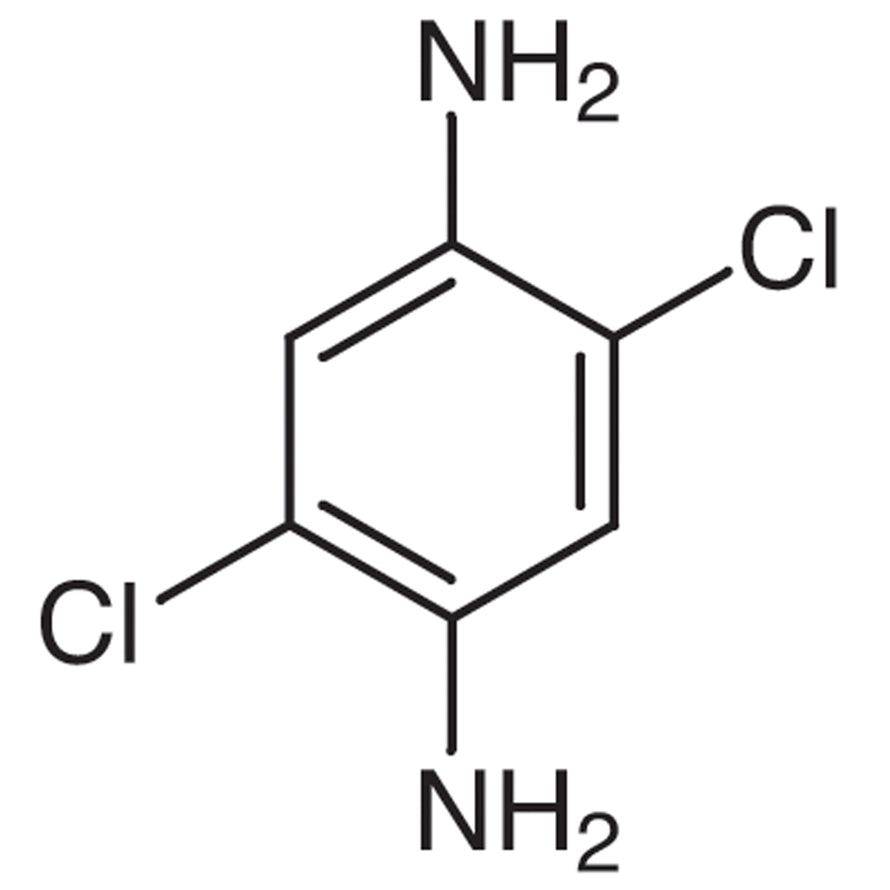
2,5-Dichloro-1,4-phenylenediamine is a chemical compound widely used in laboratory settings for the synthesis of complex molecules. This material serves as a key building block in materials science, particularly in the development of covalent organic frameworks (COFs). Its role as a linker is critical in connecting basic chemical units to form porous structures with unique properties. Due to its reactivity and structural versatility, it is highly valued in both chemical and material research environments.
The compound's aromatic structure, combined with two amino groups, makes it an ideal candidate for functionalization and cross-linking. The presence of chlorine atoms at positions 2 and 5 enhances its reactivity, allowing it to participate in substitution or coupling reactions with various molecules. These properties make it a preferred choice for creating materials with tailored functionalities. Its chemical stability and compatibility with a wide range of reagents further contribute to its popularity in advanced research applications.
In Indonesian laboratories, 2,5-Dichloro-1,4-phenylenediamine is commonly used in material science research, especially in the synthesis of COFs and other porous materials. Its availability in different packaging sizes ensures convenience for both small-scale and larger research projects. It is a staple in chemical synthesis and structural engineering experiments, supporting the development of materials with applications in energy, catalysis, and gas storage.
- Covalent Organic Frameworks (COFs) synthesis: This compound serves as a versatile linker to connect organic units, enabling the formation of porous, crystalline materials with tunable properties.
- Chemical synthesis of functional materials: Its reactivity and amino groups allow for the creation of materials with specific functionalities, such as catalytic activity or gas adsorption.
- Material science research: It is used to develop advanced materials with unique structural and chemical properties, supporting innovations in energy and environmental applications.
- Cross-linking in polymer chemistry: The amino groups enable the formation of stable networks, making it useful in the development of new polymer-based materials.
- Functionalization of porous structures: Its ability to undergo substitution reactions allows for the modification of COFs and other porous materials to enhance their performance.
| Brand | TCI |
|---|---|
| CAS number | 20103-09-7 |
| Molecular formula | — |
| Purity | — |
| Category | Materials Science > Material Building Blocks > Covalent Organic Frameworks (COFs) Linkers |
| Pack sizes | Available in various packaging sizes for laboratory use |
| Physical form | Solid, typically in crystalline form |
| Storage | Store in a cool, dry place away from moisture and direct sunlight |
This compound should be stored in a cool, dry environment to maintain its chemical integrity. It is recommended to use airtight containers to prevent exposure to moisture and air, which can affect its stability. Due to its reactivity, it should be handled in a well-ventilated area, preferably under a fume hood, to minimize inhalation risks. Proper personal protective equipment, such as gloves and safety goggles, should be worn when handling the material. It is important to avoid contact with skin and eyes, and to ensure that spillage is promptly cleaned up using appropriate safety protocols. The compound is not classified as hazardous under standard classifications, but standard laboratory safety practices should always be followed.
—
Produk Terkait
-
4-Chloro-1,2-phenylenediamine TCI C0255
Regular price From Rp 848.400,00Regular price -
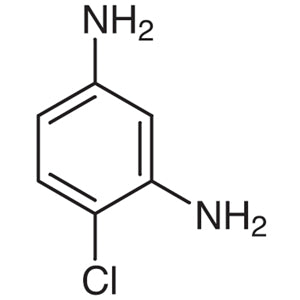
4-Chloro-1,3-phenylenediamine TCI C0710
Regular price From Rp 2.279.550,00Regular price -
4-Nitro-1,2-phenylenediamine TCI D0103
Regular price From Rp 1.035.300,00Regular price -
4-Nitro-1,3-phenylenediamine TCI D0104
Regular price Rp 2.518.950,00Regular price -
2-Nitro-1,4-phenylenediamine TCI D0105
Regular price From Rp 743.400,00Regular price -
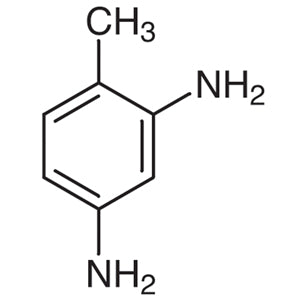
2,4-Diaminotoluene TCI D0123
Regular price Rp 955.500,00Regular price -
2,6-Diaminotoluene TCI D0124
Regular price From Rp 1.035.300,00Regular price -
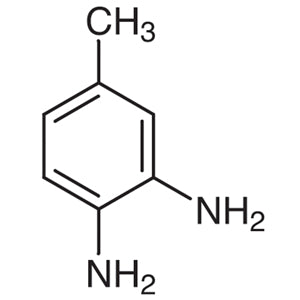
3,4-Diaminotoluene TCI D0125
Regular price Rp 1.776.600,00Regular price