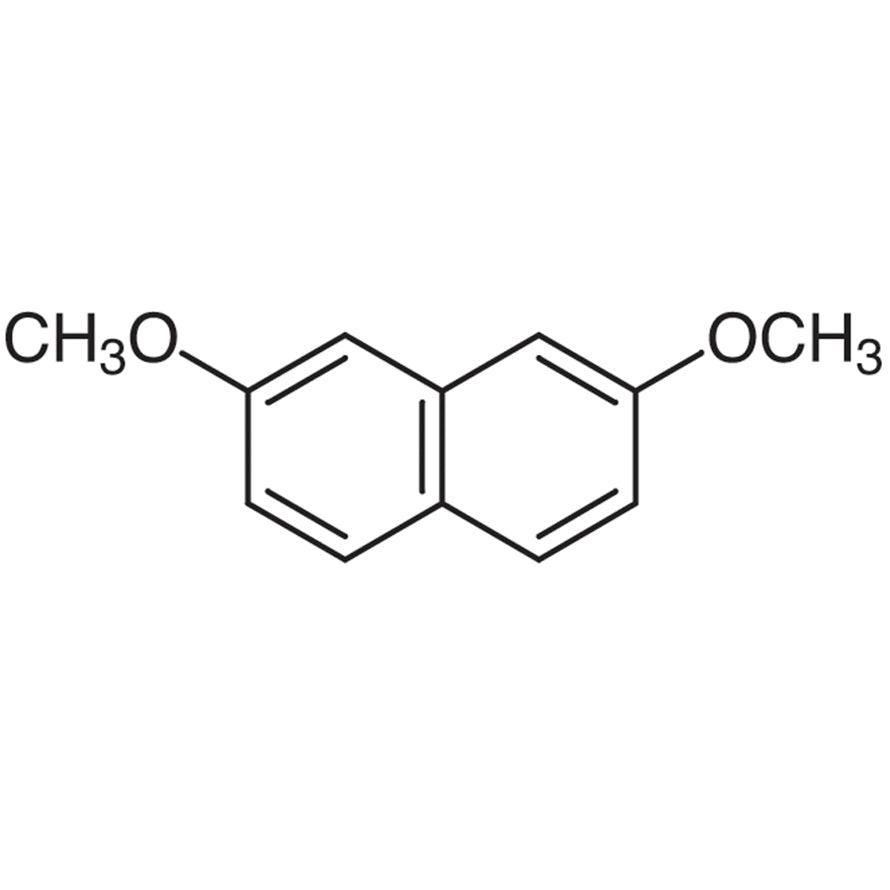
2,7-Dimethoxynaphthalene is a chemical compound widely used in organic reactions for the synthesis of complex molecules. As a key building block in chemical research, it serves as a foundational material for constructing larger molecular structures. This compound is commonly found in chemical laboratories, where it plays a crucial role in various synthetic processes. Its versatility makes it a valuable tool for chemists working on diverse projects, from basic research to industrial applications.
The compound's chemical properties make it a preferred choice for laboratory use. It exhibits stability and reactivity, allowing it to interact effectively with a range of reagents. Its molecular structure, featuring two methoxy groups at positions 2 and 7, contributes to its relatively low polarity, enabling solubility in organic solvents such as ethyl acetate and chloroform. These characteristics make it ideal for substitution and coupling reactions. Additionally, its relatively high melting and boiling points facilitate separation and isolation processes in the lab.
In Indonesian laboratories, 2,7-Dimethoxynaphthalene is frequently used in organic chemistry research, particularly in the synthesis of heterocyclic and aromatic compounds. It is a common requirement in academic and research institutions focused on pure and applied chemistry. Its application extends to various experimental setups, supporting both teaching and advanced research activities.
Related TCI products
- Organic synthesis applications benefit from its reactivity and stability, making it suitable for building complex molecular structures.
- It is ideal for substitution reactions due to its low polarity and solubility in organic solvents, enhancing reaction efficiency.
- Coupling reactions often utilize this compound because of its structural versatility and compatibility with various reagents.
- It supports the synthesis of heterocyclic compounds, which are essential in pharmaceutical and material science research.
- Its high melting point aids in purification processes, making it useful in isolation and separation techniques.
| Brand | TCI |
|---|---|
| CAS number | 3469-26-9 |
| Molecular formula | — |
| Purity | — |
| Category | Chemistry > Building Blocks > Non-Heterocyclic Building Blocks |
| Pack sizes | Available in standard laboratory quantities |
| Physical form | Solid |
| Storage | Store in a cool, dry place away from light |
This compound should be stored in a cool, dry place, away from direct light to maintain its chemical integrity. It is recommended to use airtight containers to prevent contamination and moisture absorption. Due to its chemical stability, it does not require refrigeration but should be kept in a secure location to avoid accidental exposure. Laboratory personnel should handle it with care, using appropriate personal protective equipment when necessary. Proper labeling of storage containers ensures safe handling and easy identification. Always ensure that the workspace is well-ventilated to minimize any potential risks associated with its use.
—
Produk Terkait
-
2,6-Dimethoxynaphthalene TCI D3519
Regular price From Rp 3.021.900,00Regular price -
2-Bromo-3-methoxynaphthalene TCI B3403
Regular price From Rp 1.776.600,00Regular price -
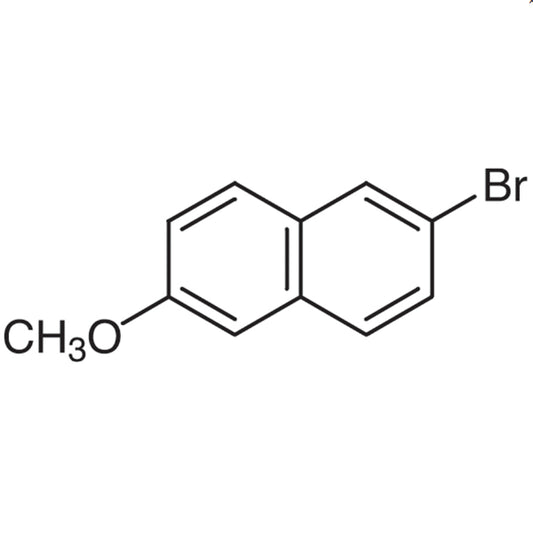
2-Bromo-6-methoxynaphthalene TCI B1547
Regular price From Rp 2.545.200,00Regular price -
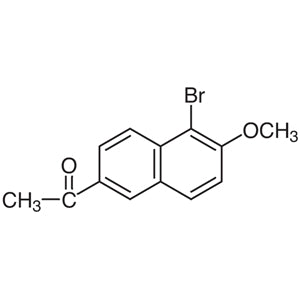
6-Acetyl-1-bromo-2-methoxynaphthalene TCI A1584
Regular price Rp 1.618.050,00Regular price -
2-Ethoxynaphthalene TCI N0431
Regular price Rp 795.900,00Regular price -
7-Methoxynaphthalen-2-ol TCI M3891
Regular price Rp 2.359.350,00Regular price -
3-Methoxynaphthalen-2-ol TCI M3568
Regular price Rp 4.479.300,00Regular price -
2-Methoxynaphthalene TCI M0117
Regular price From Rp 557.550,00Regular price