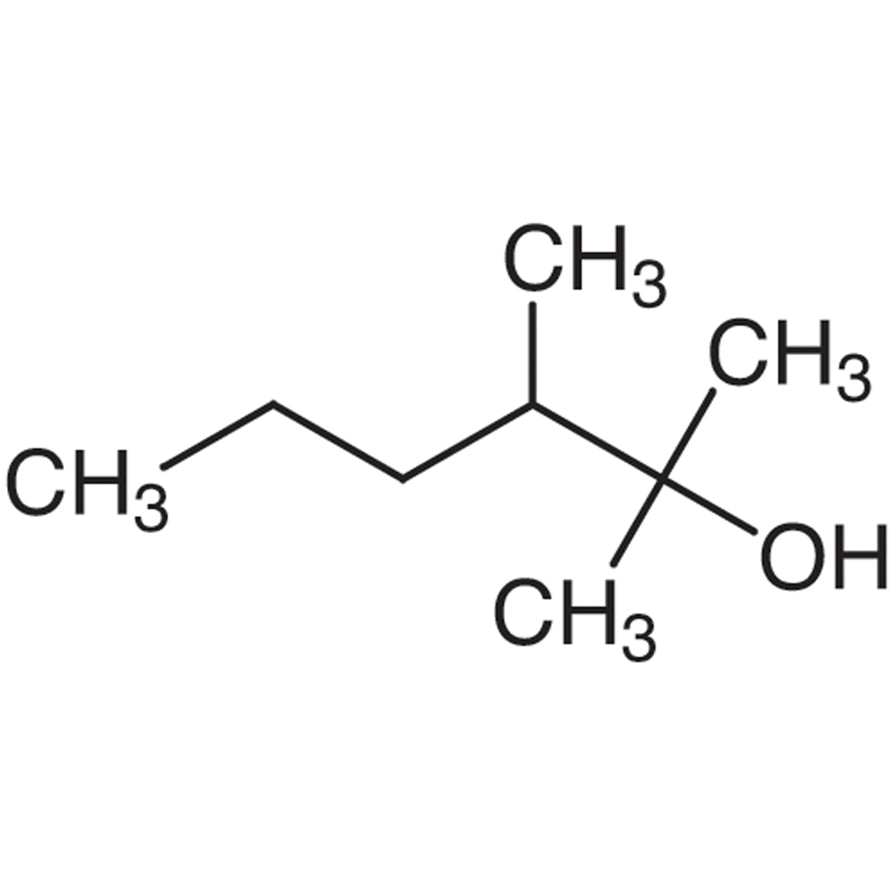
2,3-Dimethyl-2-hexanol is an organic compound widely used in chemical reactions for the synthesis of complex molecules. As a building block in organic chemistry, it plays a key role in the development of compounds with specific structural features. Its versatility makes it an essential component in various laboratory processes, supporting both academic and industrial research. This compound is particularly valued for its ability to participate in a range of chemical transformations, making it a fundamental tool in synthetic chemistry.
The chemical properties of 2,3-Dimethyl-2-hexanol, including its stability and reactivity under specific conditions, make it a preferred choice for laboratory use. Its molecular structure, featuring two methyl groups and one alkyl group, contributes to its reactivity in substitution and elimination reactions. These characteristics allow it to be a reliable precursor in the synthesis of aromatic and heterocyclic compounds. Its chemical stability ensures consistent performance in controlled environments, enhancing its utility in research settings.
In Indonesian laboratories, 2,3-Dimethyl-2-hexanol is commonly used in organic chemistry research, especially in the synthesis of complex compounds. It is frequently found in studies related to industrial and pharmaceutical synthesis, where high-quality raw materials are essential. Its role as a building block supports the development of new compounds, contributing to advancements in chemical research and application.
- Synthesis of complex aliphatic compounds requiring specific structural building blocks
- Organic reactions involving substitution and elimination mechanisms due to its reactivity
- Development of aromatic and heterocyclic compounds as a precursor material
- Research in pharmaceutical synthesis where high-purity starting materials are essential
- Industrial chemical production requiring reliable and consistent chemical intermediates
| Brand | TCI |
|---|---|
| CAS number | 19550-03-9 |
| Molecular formula | — |
| Purity | — |
| Category | Chemistry > Building Blocks > Non-Heterocyclic Building Blocks |
| Pack sizes | Available in standard laboratory quantities |
| Physical form | Liquid |
| Storage | Store in a cool, dry place away from direct sunlight |
This compound should be stored in a cool, dry environment, away from direct sunlight and sources of heat. It is recommended to use airtight containers made of glass or polyethylene to prevent contamination and evaporation. Proper ventilation is necessary when handling the material to avoid inhalation of vapors. Due to its chemical nature, it should be kept away from incompatible substances such as strong oxidizing agents. Always follow standard laboratory safety protocols when working with this compound to ensure safe handling and storage.
—
Produk Terkait
-
2,2-Dimethyl-3-hexanol TCI D1532
Regular price Rp 7.314.300,00Regular price -
2,5-Dimethyl-3-hexanol TCI D1969
Regular price From Rp 903.000,00Regular price -
3,4-Dimethyl-3-hexanol TCI D1970
Regular price Rp 2.730.000,00Regular price -
3,5-Dimethyl-3-hexanol TCI D1971
Regular price Rp 1.485.750,00Regular price -
2,3,4-Trimethyl-3-pentanol TCI D2436
Regular price From Rp 4.108.650,00Regular price -
2-Ethyl-1-hexanol TCI E0122
Regular price From Rp 477.750,00Regular price -
3-Ethyl-2-methyl-3-pentanol TCI E0481
Regular price Rp 4.320.750,00Regular price -
5,5-Dimethyl-2,4-oxazolidinedione TCI D0003
Regular price From Rp 1.510.950,00Regular price