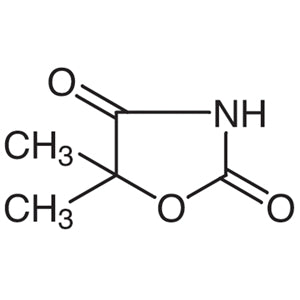
2,5-Dimethyl-3-hexanol is an organic compound widely utilized as a foundational building block in chemical synthesis. It plays a crucial role in laboratories where complex molecules are being developed, particularly in the creation of compounds with extended carbon chains. This compound is valued for its simplicity and versatility, making it a key component in various synthetic pathways. Its chemical stability and controlled reactivity allow it to be reliably used in multiple experimental setups without compromising the integrity of the final product.
The compound's non-polar nature makes it highly soluble in organic solvents such as ethylamine and acetone, which is essential for its application in substitution, esterification, and reduction reactions. This solubility profile enhances its utility in a range of chemical processes. Additionally, its lack of heterocyclic groups ensures that it maintains chemical purity, making it ideal for applications requiring high levels of purity and minimal contamination. These characteristics contribute to its popularity among chemists and researchers.
In Indonesian laboratories, 2,5-Dimethyl-3-hexanol is commonly used in organic chemistry research, educational settings, and industrial applications. Its availability and reliability make it a preferred choice for both academic and practical research. The compound's straightforward structure and predictable behavior allow it to be integrated seamlessly into various experimental protocols, supporting both teaching and innovation in the field of chemistry.
- Organic synthesis experiments benefit from 2,5-Dimethyl-3-hexanol due to its role as a building block in creating complex carbon chain structures.
- It is ideal for esterification reactions because of its solubility in organic solvents and its ability to participate in nucleophilic substitution.
- In reduction reactions, this compound serves as a versatile intermediate that can be manipulated under controlled conditions for desired outcomes.
- Its non-polar nature makes it suitable for use in solvent-based reactions where organic solvents are required.
- In educational settings, it is used to demonstrate fundamental chemical reactions and synthetic pathways to students.
| Brand | TCI |
|---|---|
| CAS number | 19550-07-3 |
| Molecular formula | — |
| Purity | — |
| Category | Chemistry > Building Blocks > Non-Heterocyclic Building Blocks |
| Pack sizes | Available in standard laboratory quantities |
| Physical form | Liquid |
| Storage | Store in a cool, dry place away from direct sunlight |
This compound should be stored in a cool, dry environment, away from direct sunlight and sources of heat. It is recommended to use airtight containers made of glass or high-density polyethylene to prevent contamination and evaporation. Due to its non-polar nature, it is important to handle it with appropriate personal protective equipment, such as gloves and safety goggles, to ensure safety during handling. In laboratory settings, it should be kept in a well-ventilated area to minimize exposure to vapors. Proper labeling of containers is essential for safe storage and handling. Always follow standard laboratory safety protocols when working with this compound.
—
Produk Terkait
-
2,2-Dimethyl-3-hexanol TCI D1532
Regular price Rp 7.314.300,00Regular price -
2,3-Dimethyl-2-hexanol TCI D1967
Regular price Rp 1.167.600,00Regular price -
3,4-Dimethyl-3-hexanol TCI D1970
Regular price Rp 2.730.000,00Regular price -
3,5-Dimethyl-3-hexanol TCI D1971
Regular price Rp 1.485.750,00Regular price -
2,3,4-Trimethyl-3-pentanol TCI D2436
Regular price From Rp 4.108.650,00Regular price -
2-Ethyl-1-hexanol TCI E0122
Regular price From Rp 477.750,00Regular price -
3-Ethyl-2-methyl-3-pentanol TCI E0481
Regular price Rp 4.320.750,00Regular price -
5,5-Dimethyl-2,4-oxazolidinedione TCI D0003
Regular price From Rp 1.510.950,00Regular price