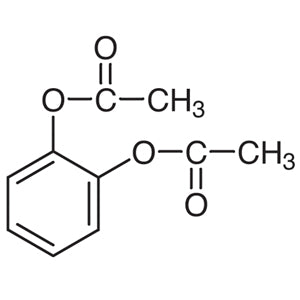
TCI D2044 1,2-Diacetoxybenzene is a non-heterocyclic building block that represents the diacetate form of catechol — a benzene compound bearing two adjacent hydroxyl groups, both of which have been esterified with acetic acid. In the laboratory, this material serves as a source of the catechol framework in a form that is more stable and easier to handle than free catechol itself. It is used both as a synthetic intermediate and as a model substrate in research on hydrolysis reactions, enzymatic catalysis, and mechanistic studies of aromatic esters.
The characteristic that most often drives its selection is its relative stability. The free hydroxyl groups of catechol are well known to oxidize readily to quinones, particularly under basic conditions or on exposure to air, whereas the diacetate form is considerably more resistant and can therefore be stored and reacted with far greater confidence. The two acetate groups can be removed in a controlled manner through basic hydrolysis or enzymatic reaction, and this behaviour is in fact exploited in many experiments. The aromatic ring itself remains available for substitution reactions, while the ortho substitution pattern imparts a distinctive electronic and steric character that is useful in molecular design.
In Indonesian laboratories, this compound is typically encountered in organic synthesis and physical organic chemistry work at universities and research institutes, where a protected catechol framework is needed as a starting point or as a well-behaved reference substrate. It suits teaching and research settings in which free catechol would be inconveniently sensitive to air and base, and it fits routine bench-scale work on ester reactivity, catalysis, and stepwise deprotection strategies.
- Protected catechol source in organic synthesis, supplying the ortho-dihydroxybenzene framework in an esterified form that resists the oxidation to quinones seen with free catechol.
- Model substrate for ester hydrolysis studies, since its two acetate groups can be cleaved in a controlled way under basic conditions to follow reaction progress and behaviour.
- Substrate for enzymatic catalysis research, where esterase- or lipase-type activity can be examined through the controlled enzymatic removal of the acetate groups from the aromatic ring.
- Reference compound in reaction mechanism investigations of aromatic esters, because the ortho arrangement of the two ester groups gives distinctive electronic and steric behaviour.
- Starting material for aromatic substitution chemistry, as the ring remains reactive toward substitution while the acetate groups mask and protect the adjacent hydroxyl positions.
| Brand | TCI |
|---|---|
| CAS number | 635-67-6 |
| Molecular formula | — |
| Purity | — |
| Category | Chemistry > Building Blocks > Non-Heterocyclic Building Blocks |
| Pack sizes | available in standard TCI laboratory pack sizes; please confirm the currently offered packaging when ordering |
| Physical form | — |
| Storage | keep in a tightly closed original container, protected from moisture and away from basic materials |
- Catalogue code: D2044
Store the material in its tightly closed original container in a cool, dry, well-ventilated area, away from moisture and from basic or strongly nucleophilic substances that could promote hydrolysis of the acetate groups. Glass containers with chemically resistant closures are appropriate for transfers and for any working aliquots. Handle in a fume hood using safety glasses, gloves, and a laboratory coat, and avoid inhalation of dust or contact with skin and eyes. Keep containers clearly labelled, return them promptly after weighing, and dispose of residues and contaminated materials through the laboratory's chemical waste procedure. Always consult the manufacturer's safety data sheet before use.
—
Produk Terkait
-
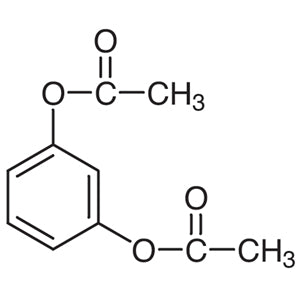
1,3-Diacetoxybenzene TCI R0046
Regular price From Rp 795.900,00Regular price -
1,4-Diacetoxybenzene TCI D1803
Regular price From Rp 1.035.300,00Regular price -
3-Acetoxybenzaldehyde TCI A2467
Regular price Rp 4.213.650,00Regular price -
4-Acetoxybenzaldehyde TCI A1467
Regular price From Rp 530.250,00Regular price -
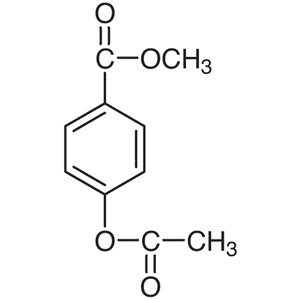
Methyl4-Acetoxybenzoate TCI A1227
Regular price Rp 1.167.600,00Regular price -
4-AcetoxybenzoicAcid TCI A0885
Regular price From Rp 823.200,00Regular price -
3,4-Diacetoxybenzaldehyde TCI D2042
Regular price From Rp 2.466.450,00Regular price -
1,2,4-Triacetoxybenzene TCI T0976
Regular price Rp 2.571.450,00Regular price