4-Acetoxybenzoic Acid is a versatile chemical compound widely used in organic synthesis reactions within laboratory settings. It serves as a fundamental building block in the development of various chemical compounds, including pharmaceuticals, industrial chemicals, and pharmacological agents. Its molecular structure combines a carboxylic acid group with an acetoxybenzyl group, contributing to its reactivity and utility in chemical transformations. This compound is essential for researchers aiming to synthesize complex molecules through substitution or esterification reactions.
The compound’s chemical properties make it a preferred choice for laboratory applications. It exhibits stability under controlled conditions, though it remains sensitive to heat and air exposure. Its solubility in organic solvents such as ethyl acetate and ethanol allows for efficient use in reactions requiring such solvents. Additionally, its mild odor and non-toxic nature at low concentrations enhance its safety profile, making it suitable for routine use in laboratory environments. These characteristics contribute to its reliability and ease of handling in chemical processes.
In Indonesian laboratories, 4-Acetoxybenzoic Acid is commonly utilized in chemical research, particularly in the field of pharmacology. It plays a key role in the synthesis of various compounds, supporting both academic and industrial research initiatives. Its availability and chemical properties make it a valuable resource for chemists working on drug development and other chemical synthesis projects. Its use aligns with the needs of Indonesian laboratories focused on advancing chemical and pharmaceutical sciences.
- Organic Synthesis: 4-Acetoxybenzoic Acid is widely used in the synthesis of pharmaceutical compounds and industrial chemicals due to its reactivity and structural versatility.
- Pharmacological Research: It serves as a key intermediate in the development of new drugs and medicinal compounds, supporting research in pharmaceutical science.
- Esterification Reactions: The compound is ideal for esterification processes, where it acts as a functional group donor in the formation of ester derivatives.
- Chemical Education: It is commonly used in teaching laboratories for demonstrating organic reaction mechanisms and functional group transformations.
- Industrial Chemistry: Its use in the production of various chemical products makes it valuable for both academic and industrial research settings.
| Brand | TCI |
|---|---|
| CAS number | 2345-34-8 |
| Molecular formula | — |
| Purity | — |
| Category | Chemistry > Building Blocks > Non-Heterocyclic Building Blocks |
| Pack sizes | Available in various quantities as per standard laboratory supply options |
| Physical form | Solid, typically in crystalline or powder form |
| Storage | Store in a cool, dry place away from heat and direct sunlight |
4-Acetoxybenzoic Acid should be stored in a cool, dry environment to maintain its chemical stability. It is recommended to keep it in airtight containers to prevent exposure to air and moisture, which may affect its integrity. While it is generally non-toxic in small quantities, standard laboratory safety protocols should be followed when handling it. Avoid prolonged exposure to high temperatures, as this may compromise its properties. Proper labeling and storage conditions ensure its effectiveness and safety in laboratory use. Always ensure that storage areas are well-ventilated and free from potential contaminants.
—
Produk Terkait
-
4-Acetoxybenzaldehyde TCI A1467
Regular price From Rp 530.250,00Regular priceRp 370.650,00Sale price From Rp 530.250,00 -
3-Acetoxybenzaldehyde TCI A2467
Regular price Rp 4.213.650,00Regular priceRp 2.946.300,00Sale price Rp 4.213.650,00 -
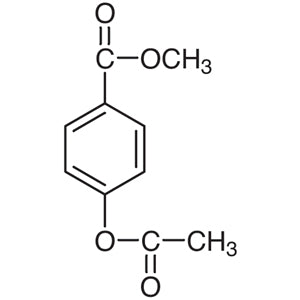
Methyl4-Acetoxybenzoate TCI A1227
Regular price Rp 1.220.100,00Regular priceRp 868.350,00Sale price Rp 1.220.100,00 -
1,2,4-Triacetoxybenzene TCI T0976
Regular price Rp 2.571.450,00Regular priceRp 1.797.600,00Sale price Rp 2.571.450,00 -
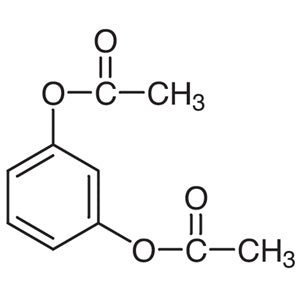
1,3-Diacetoxybenzene TCI R0046
Regular price From Rp 795.900,00Regular priceRp 556.500,00Sale price From Rp 795.900,00 -
1,2-Diacetoxybenzene TCI D2044
Regular price Rp 3.605.700,00Regular priceRp 2.521.050,00Sale price Rp 3.605.700,00 -
3,4-Diacetoxybenzaldehyde TCI D2042
Regular price From Rp 2.466.450,00Regular priceRp 1.724.100,00Sale price From Rp 2.466.450,00 -
1,4-Diacetoxybenzene TCI D1803
Regular price From Rp 1.035.300,00Regular priceRp 723.450,00Sale price From Rp 1.035.300,00